
10 Best Fall Hikes in Yellowstone National Park
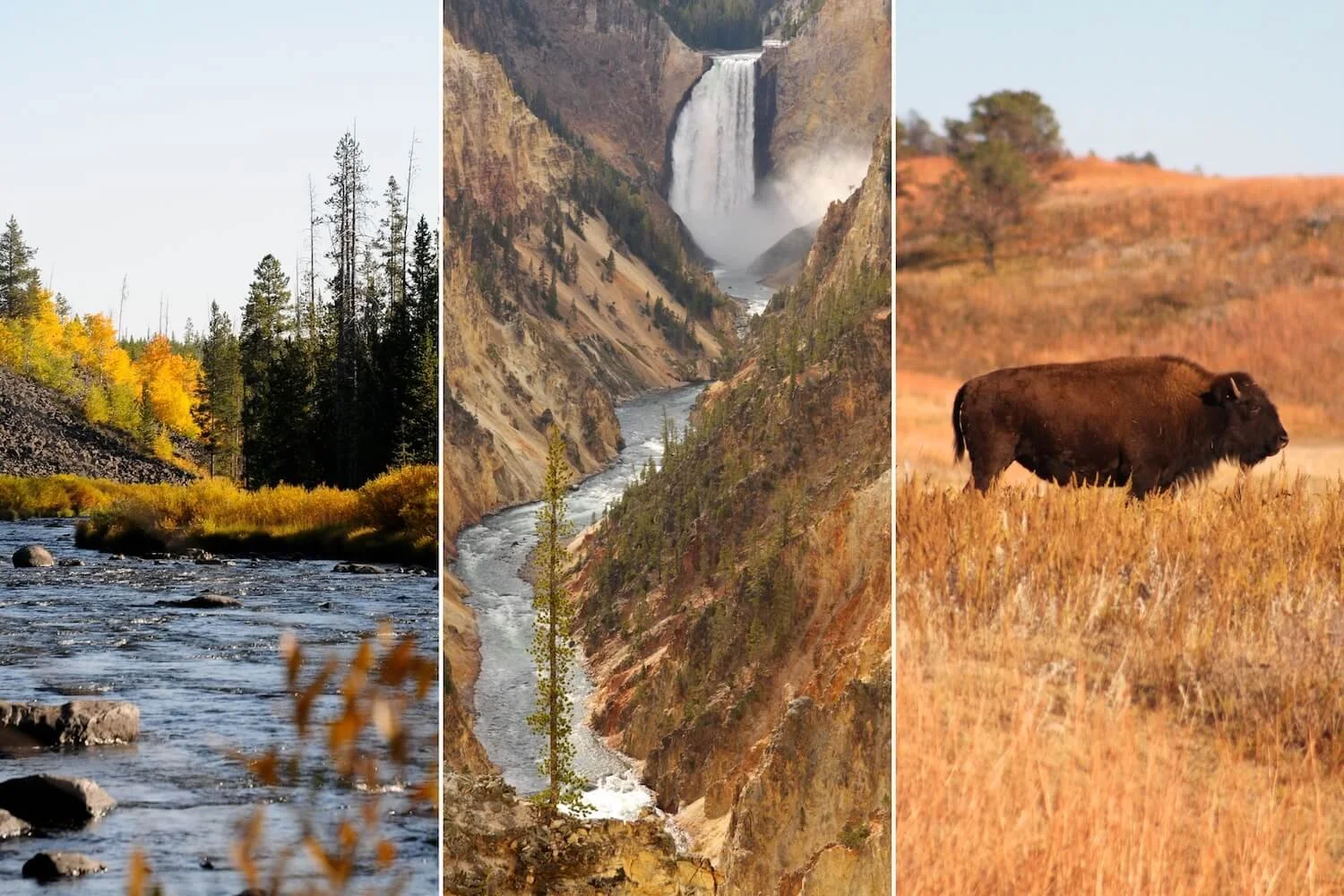
If you're planning a hiking trip to Yellowstone, early September is one of the best times to visit. Most trails are still fully accessible, daytime temperatures are comfortable, mornings are crisp, and the summer crowds have started to thin.
If you're pairing Yellowstone with Grand Teton National Park, it's one of our favorite times to visit both. Snow has often started collecting on the highest peaks while aspens begin turning brilliant shades of gold, creating some of the prettiest scenery of the year.
Unlike New England, Yellowstone isn't known for dramatic fall foliage. Instead of fiery reds and oranges, fall here is a little more subtle. Golden aspens brighten the valleys, elk bugle across the park during the rut, and cool, clear days make long hikes far more enjoyable than they can be during the heat of summer.
We've explored Yellowstone in every season, including several weeks in late September and early October, and these are the ten trails we'd recommend if you're visiting in the fall.
Table of Contents
👋 Meet Your Guides: We're Jonathan and Kelly, and we love Yellowstone National Park. So much so that we've been a dozen+ times, bought fixer-upper cabins outside Yellowstone's North Entrance, and are turning an old park ranger hut into year-round Christmas magic. Now, we're on a mission to make Yellowstone simpler and more magical for everyone who visits!
1. Grand Prismatic Overlook
Distance: 1.2 miles round trip
Difficulty: Easy
If you're looking for one of the most iconic hikes in Yellowstone, start here. The short spur trail to the Grand Prismatic Overlook leads to one of the best views in the entire park.
From above, you can finally appreciate just how enormous the spring is and see the vibrant rings of orange, yellow, and blue that make it one of Yellowstone's most recognizable landmarks.
We most enjoy visiting this area later in the day. On a warm afternoon, there's often less steam lingering over Grand Prismatic than on a cold morning, making it easier to appreciate the famous colors from above. Afterward, walk the Midway Geyser Basin around sunset. It's one of our favorite ways to end a day in Yellowstone!
2. Trout Lake Trail
Distance: 1.2 miles round trip
Difficulty: Short but steep
Trout Lake sits just outside Lamar Valley, making it an easy stop during one of Yellowstone's best wildlife drives.
After your hike, spend the rest of the morning or evening working your way through Lamar Valley looking for wolves, bears, bison, or bugling elk.
If you're already headed to Lamar, this is an easy way to stretch your legs without committing half a day to a longer hike.
3. Storm Point Trail
Distance: 2.3 miles round trip
Difficulty: Easy
If you're hoping to combine a hike with beautiful views of Yellowstone Lake, Storm Point is one of the best choices in the park.
The trail begins by crossing open meadows. Once you reach Storm Point, you'll be treated to wide-open views across Yellowstone Lake with the Absaroka Mountains rising in the distance.
Unlike some of Yellowstone's higher elevation hikes, Storm Point usually remains a great option well into the fall. It's short, relatively easy, and offers a completely different landscape than the geyser basins or canyon trails.
4. Elephant Back Mountain
Distance: About 3.5 miles round trip
Difficulty: Moderate
If you're looking for a more traditional hiking experience, Elephant Back Mountain is a great choice.
Many of Yellowstone's most popular hikes revolve around geysers, waterfalls, or geothermal features, but Elephant Back is different. It's a pleasant climb through the forest to a beautiful overlook above Yellowstone Lake.
We wouldn't drive across the park just to hike it, but if you're already exploring the Lake area and want a classic trail with a rewarding view, this one’s worth considering.
5. Bunsen Peak
Distance: About 4.5 miles round trip
Difficulty: Moderate
Bunsen Peak is one of Yellowstone's best summit hikes that somehow still flies under the radar. The climb is steady without being overwhelming, and the views from the top stretch across Mammoth Hot Springs, Swan Lake Flats, and the surrounding mountains.
If you're staying in Gardiner or exploring Mammoth, this is one of the easiest big-view hikes to add to your itinerary. It's also a great backup if Mount Washburn isn't an option later in the season.
6. Lone Star Geyser Trail
Distance: About 5 miles round trip
Difficulty: Easy
Lone Star Geyser feels like Yellowstone before it became Yellowstone. The trail follows an old service road through the forest before ending at a massive cone geyser tucked away beside the Firehole River. Unlike Old Faithful, there are no hotels, gift shops, or crowds gathered around a boardwalk. Just a handful of people who made the walk, hoping to experience something special.
That's what makes this hike so much fun. You might have to wait around for an eruption, but if you're lucky, you'll get to see the geyser shoot water nearly 50 feet into the air with only a few other people standing nearby. It's an experience that can feel shockingly personal in a park that welcomes millions of visitors each year.
Even without an eruption, this hike offers a peaceful walk through the forest and one of Yellowstone's quieter corners.
7. Beaver Ponds Loop
Distance: 5 miles round trip (or shorter out-and-back options)
Difficulty: Moderate
Beaver Ponds doesn't usually make the "must-do" lists, but it's one of Yellowstone's most underrated hikes, especially in the fall.
Starting near Mammoth Hot Springs, the trail climbs through open hillsides before winding past ponds, meadows, and pockets of aspen that become especially pretty as the leaves begin to change.
This is one of those hikes where the journey is the destination, since you’re not hiking to a single dramatic overlook or waterfall. If you're already spending time exploring Mammoth Hot Springs, it's easy to pair the two together.
8. Clear Lake & Ribbon Lake Loop
Distance: 5.8 miles
Difficulty: Moderate
This is the hike we'd recommend if you've already visited Artist Point and want to experience a different side of Canyon.
The loop takes you through the forest, past geothermal features, and around Clear Lake and Ribbon Lake before connecting with the canyon rim near Artist Point. We like hiking it in this direction so you can finish with some of the Grand Canyon of the Yellowstone's most iconic views.
9. Seven Mile Hole
Distance: About 10 miles round trip
Difficulty: Strenuous
If you want to hike all the way to the bottom of the Grand Canyon of the Yellowstone, Seven Mile Hole is the trail to do it.
The trail starts along the canyon rim before dropping more than 1,000 feet over 2.3 miles to the Yellowstone River.
Fall is one of our favorite times to tackle a long, strenuous hike like this. Cooler September temperatures can make the climb back out of the canyon more enjoyable than it would be during the heat of summer.
10. Sepulcher Mountain
Distance: 11 miles
Difficulty: Strenuous
If you're looking for the biggest challenge on this list, this is it.
Starting near Mammoth Hot Springs, the trail climbs 3,400 feet through forests and open meadows before reaching the 9,652-foot summit.
It's a full-day hike, but you'll be rewarded with expansive views over northern Yellowstone and the surrounding mountains.
Tips for Hiking Yellowstone in the Fall
Start your longer hikes early. Not just for parking, but because afternoon weather is more unpredictable in September and daylight disappears much earlier than it does in midsummer.
Dress for a 30-degree temperature swing. It's not unusual to start a hike in the 30s or 40s and finish in the upper 60s or low 70s. Layers are your friend. (Here’s how we pack for Yellowstone.)
Carry bear spray, and know how to use it. September is an active time for both black bears and grizzlies as they prepare for winter. Keep your bear spray somewhere you can reach it quickly, and hike in groups of 3 or more whenever possible. (Read next: Yellowstone Safety: 8 Must-Know Tips for Hikers, Campers, and Visitors)
Don't assume every trail will be open. Trail conditions can change quickly in the fall, especially at higher elevations, so always check current conditions before heading out.
What about Mount Washburn and Avalanche Peak? Both are incredible hikes, but grizzlies are known to frequent these areas in the fall while feeding on whitebark pine nuts. NPS recommends against hiking them in September and October, and trails can close because of recent bear activity, so check current conditions before heading out and have a backup hike in mind.
Frequently Asked Questions
When is the best time to hike in Yellowstone in the fall?
If hiking is your priority, we recommend visiting during the first half of September. Most trails are still open, temperatures are comfortable, and you'll have the best chance of hiking higher-elevation trails before early snow arrives.
Are Yellowstone hiking trails open in October?
Many are, but it depends on the trail and the weather. Lower elevation hikes often remain accessible well into October, while higher elevation hikes can receive snow in September. Always check current trail conditions before heading out.
Do I need bear spray for hiking in Yellowstone?
Yes! Carry bear spray on every hike in Yellowstone, regardless of the season. Fall is an especially important time because bears are actively feeding before winter.
Which Yellowstone hike has the best fall colors?
Yellowstone's fall colors are more subtle than destinations like New England or Colorado, but you'll find beautiful golden aspens around Trout Lake, Beaver Ponds, and parts of the Mammoth area. If you're visiting both Yellowstone and Grand Teton, the Tetons tend to deliver the more dramatic fall scenery.
What's the best easy hike in Yellowstone during the fall?
Storm Point, Lone Star Geyser, and the Grand Prismatic Overlook are all excellent choices if you're looking for a shorter or easier hike with a big payoff.
More on Yellowstone
🏡 Staying Near the North Entrance? Explore the Cozy Yellowstone Compound, our collection of cabins just minutes from the park gate.
🧳 Not Sure What to Pack? Check out our detailed Yellowstone Packing List.
🦬 Still in Planning Mode? Take our Yellowstone Traveler Quiz and get our free Yellowstone Planning Playbook.
📚 Want a Step-by-Step Plan with Customizable Itineraries? Our Yellowstone Travel Guide walks you through where to stay, what to do, and how to structure your days in every month of the year. It’s the easiest way to plan Yellowstone with confidence you’re not missing anything.