
How We Visited All 8 Alaska National Parks in One Trip
We wanted to know if it was actually possible to visit all eight of Alaska’s national parks in one trip. So we gave ourselves 21 days and started planning.
Planning an Alaska national parks road trip sounds simple enough… until you realize five of the eight parks can't be reached by road. Some require commercial flights. Others require bush planes, water taxis, ferries, or boats. Add in a short summer season, limited availability, weather cancellations, and thousands of miles between destinations, and we quickly realized the magnitude of the challenge we’d taken on.
Over the next several months, we compared flight schedules, bush plane operators, lodging, rental cars, and campground reservations. We debated whether to access Gates of the Arctic and Kobuk Valley from Coldfoot, Kotzebue, or Bettles. We learned that flights you expect to be simple often route back through Anchorage, and that one hard-to-get reservation at Katmai could reshape the order of an entire trip.
Eventually, all the pieces fit together. Three weeks. Eight national parks. One Great Alaskan Road Trip.
If you're wondering whether it's actually possible to visit all eight Alaska national parks in one trip, the answer is yes. We did it. But after planning this trip and then actually living it, I can also tell you this: visiting Alaska national parks is unlike planning almost any other national park vacation. It's not just the distances that make it difficult, but figuring out how dozens of moving pieces fit together into one itinerary that actually works.
In this article, I'll walk through how we approached that challenge, the biggest planning decisions we made, what surprised us most, and whether I'd recommend trying to visit all eight Alaska national parks in one trip.
Why We Decided to Visit All Eight Alaska National Parks
By the end of our 2022 Travel Season, Alaska was the one place we couldn't stop thinking about.
We were sitting in an Airbnb outside Acadia National Park in Ellsworth, Maine, wrapping up a fall trip through New England, when we started doing something we rarely do: planning our next adventure before the current one was over.
By then, we had been traveling in seasons for two years, and spent most of the year before that on the road. We were used to planning trips that lasted for months. We knew how to build long routes, work from the road, travel with Lincoln, and move from one destination to the next.
As we started thinking about what might come next, Alaska felt like a natural progression. It was bigger, more remote, and more adventurous than anywhere we had traveled before. It was also the one idea neither of us could shake.
So, from that Airbnb in Ellsworth, we started doing a little research. It took about ten minutes to realize that if we wanted to visit Alaska next summer, we were already behind.
Our first idea was to do what we had done for the previous few years: drive to Alaska and spend an entire summer there. We loved the idea of having months to explore without trying to fit everything into a traditional vacation.
But the practical side of that idea worked against us. Driving from Texas to Alaska and back would take a significant portion of the season before we even accounted for the time we wanted to spend there. Traveling with Lincoln meant flying wasn't an easy alternative. The mileage, time, and cost of putting together an entire season in Alaska would be substantial, and the deeper we got into the research, the more we realized that many of the experiences we cared about would still require expensive flights, boats, and tours after we arrived.
That was when we started considering a completely different kind of trip. What if we took the time completely off and treated it like a three-week sabbatical?
I was working for myself as a copywriter, so I had flexibility over my schedule, but I still needed to arrange client projects and deadlines around three weeks of being unavailable. Jonathan was working in a corporate role and had enough vacation time to make a three-week trip possible, although asking to use that much at once would require its own conversation. We would also have to leave Lincoln at home, plan the rest of our 2023 Travel Season around the trip, and set a much larger budget than we had ever spent on a single vacation.
Even with all of that, the idea immediately excited us.
If we were going all the way to Alaska, we knew we wouldn't be satisfied visiting only one or two parks without at least asking whether we could reach the others. The more we researched Alaska’s parks, the more curious we became. Could we really connect all of them in one trip?
Most people aren’t planning Alaska with that goal, but we couldn't let it go.
So our mission became clear: take three weeks completely off and see whether we could visit all eight Alaska national parks in one trip. We knew three weeks wouldn't allow us to spend several days in every park, but our goal was to physically enter each park, set foot in it whenever conditions allowed, and experience enough of it to feel like we had actually visited.
Then came months of research, hours of comparing routes, and pages upon pages in a Google Doc as we tried to figure out how to make it happen.
Here’s what that looked like.
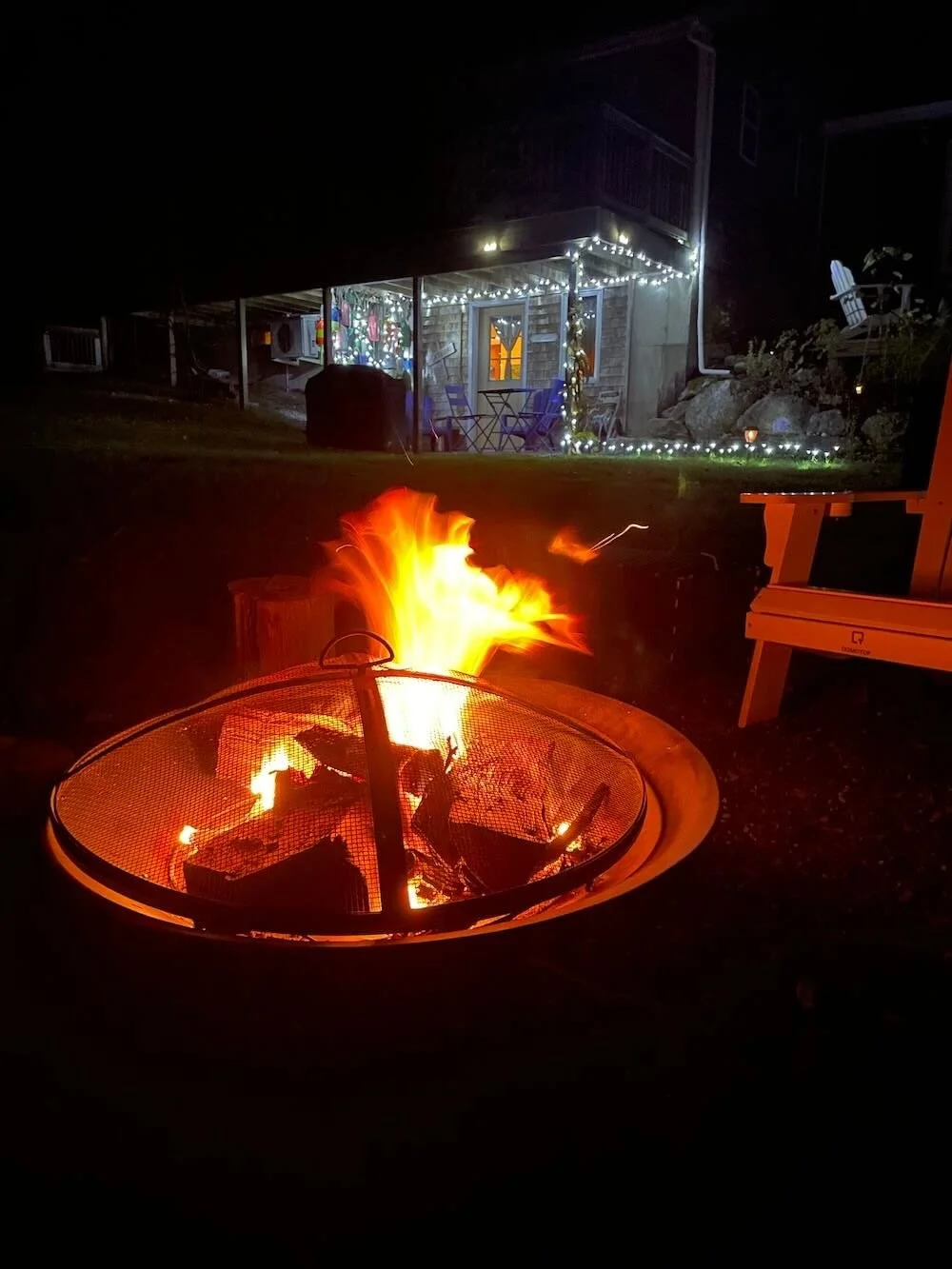
This Airbnb in Ellsworth, Maine, is where our Great Alaskan Road Trip began!
How Alaska's National Parks Are Laid Out
Before we looked at specific flights, lodging, or activities, we needed to understand where Alaska's national parks actually were. So the first thing we did was open a map.
Unlike the national parks in say Utah, where you can drive from one park to the next, Alaska's parks are spread across an enormous state. Some are connected by highways, while others don't have roads leading into them at all.
As we started mapping everything out, the parks naturally fell into four groups.
First were the three parks we could build a road trip around: Kenai Fjords, Wrangell-St. Elias, and Denali. Those could all be connected by rental car, even if some of the drives were long.
Next was Glacier Bay. It sits in Southeast Alaska, so we knew it would have to be its own leg of the trip.
Then came Katmai and Lake Clark. We'd need to fly to both parks, so those became separate planning puzzles.
Finally, there were Gates of the Arctic and Kobuk Valley. These are two of the most remote national parks in the United States, and just figuring out the different ways to reach them became its own research project. Should we fly from Coldfoot? Kotzebue? Bettles? Could we visit both parks on the same flight? Would we have enough time on the ground?
By this point, we hadn't booked a single reservation. We were simply trying to understand the puzzle.
Once we knew where each park was and what it actually took to reach it, we could finally move on to the next question: How do we connect all of this into one trip?
Start With Geography, Then Transportation, Then Availability
On a map, the route looked fairly straightforward. We'd start in Glacier Bay, fly to Anchorage, road trip to Kenai Fjords, Wrangell-St. Elias, and Denali, then figure out where Katmai, Lake Clark, Gates of the Arctic, and Kobuk Valley fit best.
Then we started researching transportation.
How do we get to Gustavus? Should we fly to Katmai from Anchorage or Fairbanks? Do we access Gates of the Arctic and Kobuk Valley from Coldfoot or Kotzebue? Can we visit multiple parks on the same day? Which routes require a rental car? Bush planes? A water taxi?
Those questions alone took a while to answer, then we started putting actual dates on the calendar and realized our "perfect" route on the map didn't really matter.
Some flights only operated on certain days. Some flightseeing tours only had certain dates available. Brooks Camp campground reservations disappear almost immediately when they open. Brooks Lodge uses a lottery system about a year and a half in advance. (We had already missed that.) Glacier Bay Lodge books up months ahead.
By the time we were ready to start making reservations, we had multiple versions of the same itinerary that looked completely different from one another. One solved transportation but added an extra hotel night. Another saved money but required an extra commercial flight. Another looked great until we realized the tour we wanted didn't even operate on the day we'd planned to be there. We'd compare the tradeoffs one decision at a time until something else broke.
Book the Hardest Reservations First
Not every stop carries the same risk. Some reservations are easy to change, while others can reshape your entire trip. Katmai was probably the best example of this.
Originally, we planned to visit from Anchorage. Then the only Brooks Camp availability we could make work fell later in the trip, when we'd already be much closer to Fairbanks. So Katmai moved. Which changed our flights. Which changed where we spent the night before. Which changed the order of the parks around it.
That happened over and over again because every decision affected the next one.
That's one of the biggest lessons we learned while planning this trip. Visiting Alaska’s national parks isn’t just about finding the information for how to do it, but about figuring out how all the information fits together.
Glacier Bay Lodge determined when the Southeast Alaska portion of the trip happened. Our Gates of the Arctic flight influenced whether we stayed in Coldfoot another night or continued south. Even our rental car mattered because we didn't want to pay for days we'd be flying to remote parks without it.
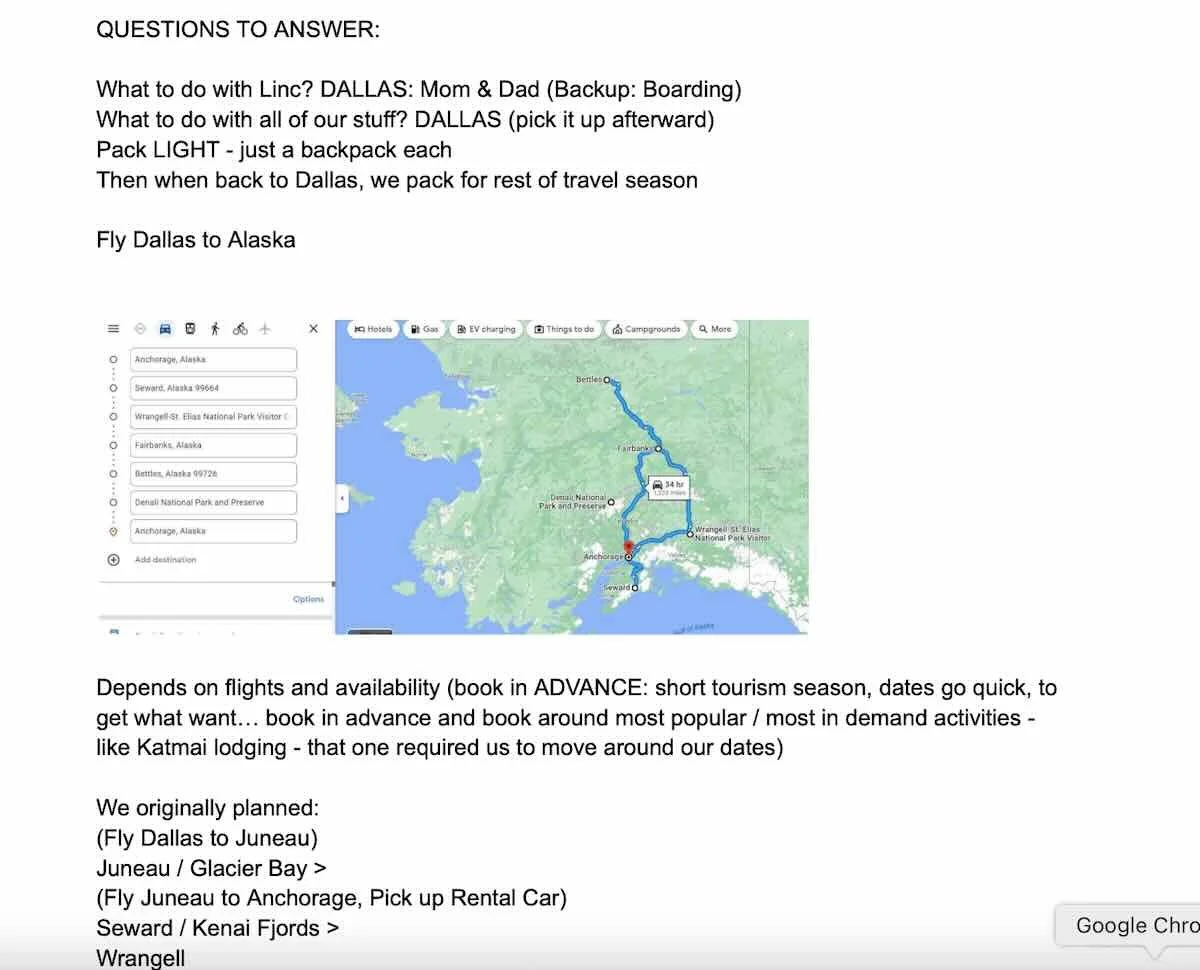
I work best in a Google doc for planning. This one was 20 pages long by the end.
Then, Fill in the Gaps
Once those anchor reservations were on the calendar, everything else became much easier. Hotels, driving days, and shorter activities could move around them if needed.
We were no longer trying to figure out whether we could reach all eight national parks. We were deciding what we wanted to do once we got there and how to use the time between our anchor reservations well.
For example, we knew when we needed to arrive in Gustavus for Glacier Bay, when our flightseeing tour would leave Coldfoot for Gates of the Arctic and Kobuk Valley, when we could get into Brooks Camp, when we needed to be in Denali, and when we would fly from Anchorage to Lake Clark.
Now we were asking… Should we add glacier ice climbing? Do we have time for dog sledding? Is Chena Hot Springs worth the stop? Can we squeeze in rafting before driving to Fairbanks?
We got to think about the trip beyond the eight national parks, and also started planning the less exciting things that become very important during a three-week trip.
Where could we do laundry? When would we pick up camping gear in Anchorage? Where would we buy bear spray and bug nets? Did our lodging have a kitchen? Where could we get food before driving into a place with few options? Which days required packed lunches? Could we leave our bags somewhere after checkout?
We even printed our confirmations and itinerary because we knew we would spend part of the trip without reliable cell service.
The Biggest Things That Surprised Us
As our itinerary became clearer, these are the things that surprised us most.
Anchorage Became Our Reset Point
We expected Anchorage to be where we picked up our rental car and where we flew home. It ended up appearing throughout the itinerary.
We flew into Anchorage after Glacier Bay, drove through it between Seward and Wrangell-St. Elias to pick up camping gear, returned before Katmai, passed through again on the way to Denali, and came back for our flight to Lake Clark. It was where we repacked, bought supplies, parked the rental car while we flew elsewhere, ate familiar meals, and reset before the next part of the trip.
Anchorage also made the most sense as a flight hub. When we compared ways to reach Kotzebue, King Salmon, and other remote destinations, we repeatedly found that flights either started in Anchorage or routed through it anyway. Even when another airport looked closer on a map, it was not always the simpler place to begin.
That matters when you are building your own Alaska national parks itinerary. Returning to Anchorage can look like backtracking, but it may give you better commercial flight options, easier rental car logistics, more places to stay, and somewhere useful to spend a flex day if a bush plane flight is delayed.
Combining Remote Parks Can Save Time, but Not Necessarily Money
We spent a lot of time comparing ways to reach Gates of the Arctic and Kobuk Valley.
One option was to visit Gates of the Arctic from Coldfoot and make a separate trip to Kotzebue for Kobuk Valley. That could have cost less, but it would have required another commercial flight, another place to stay, more time in transit, and additional flex days in case either flight was canceled.
We ultimately paid more to visit both parks on one flightseeing trip from Coldfoot. That gave us one operator, one scheduled flight, and the possibility of landing in both parks on the same day. We also added time over the Arrigetch Peaks and planned time on the Kobuk Sand Dunes.
The weather still had the final say. A storm was moving through Kobuk Valley on the morning of our flight, and our pilot warned us that we might have to turn around before reaching the park. We chose to try. The weather held long enough for us to enter Kobuk Valley and land on an unnamed lake, but not long enough to explore the sand dunes on foot.
The more convenient plan still came with risk. It simply concentrated that risk into one day instead of spreading it across several flights and reservations.
Flex Days Help When They Are in the Right Place
We built flexibility around the bush plane portions of the trip because those were the reservations most likely to be affected by weather. We had an extra day after Gates of the Arctic and Kobuk Valley and another after Lake Clark.
Those days were not blank because we lacked ideas. We knew exactly how we would use them if the flights operated as planned. After Coldfoot, we could continue to Chena Hot Springs for an actual bed, hot water, laundry, and a much-needed break. After Lake Clark, we could spend the day in Anchorage or move our flight home forward.
Both flights operated on their original dates, so we used the first flex day to rest at Chena and discovered that leaving Alaska one day early was nearly $900 cheaper than taking our original flight home.
A flex day works best when it is close enough to the weather-dependent reservation to be useful and based somewhere you would be happy to spend the time anyway. Adding an extra day in the middle of a rigid driving route does not help much if a canceled flight near the end of the trip is the problem.
Packing Light Made the Transportation Easier
We each brought two carry-on backpacks for the three-week trip. That was partly a packing challenge, but it was also a transportation decision.
We were moving through commercial airports, climbing into small planes, taking a water taxi to Brooks Camp, changing lodging frequently, and carrying camping gear for parts of the trip. Large suitcases would have made almost every transition harder.
Packing light meant repeating clothes and planning laundry stops. The laundromat in Seward was unexpectedly closed, so we found a hotel that allowed us to use its coin-operated machines. Later, we used the laundry room at Chena Hot Springs. By the end of the trip, we could pack and leave our Denali hotel in about 12 minutes.
We did not bring every piece of gear from home. We picked up inexpensive camping equipment and mosquito supplies in Anchorage, kept them in the rental car until we needed them, and avoided hauling them through the flights to Glacier Bay at the beginning of the trip.
A Three-Week Itinerary Still Needs Recovery Time
We planned something memorable almost every day because this was a once-in-a-lifetime trip and we wanted to use our time well. By Day 8, our bodies were already feeling the combination of long travel days, early mornings, hiking, kayaking, dog sledding, and ice climbing.
The night at Chena Hot Springs was the reset we needed. It sat naturally between Coldfoot and our return south, and it gave us a hot soak and access to laundry after camping north of the Arctic Circle in temperatures that dropped into the low 40s.
We would still plan an active trip. Those experiences were the reason we went. But I would protect at least one stop that can become a recovery day without creating a problem elsewhere in the itinerary.
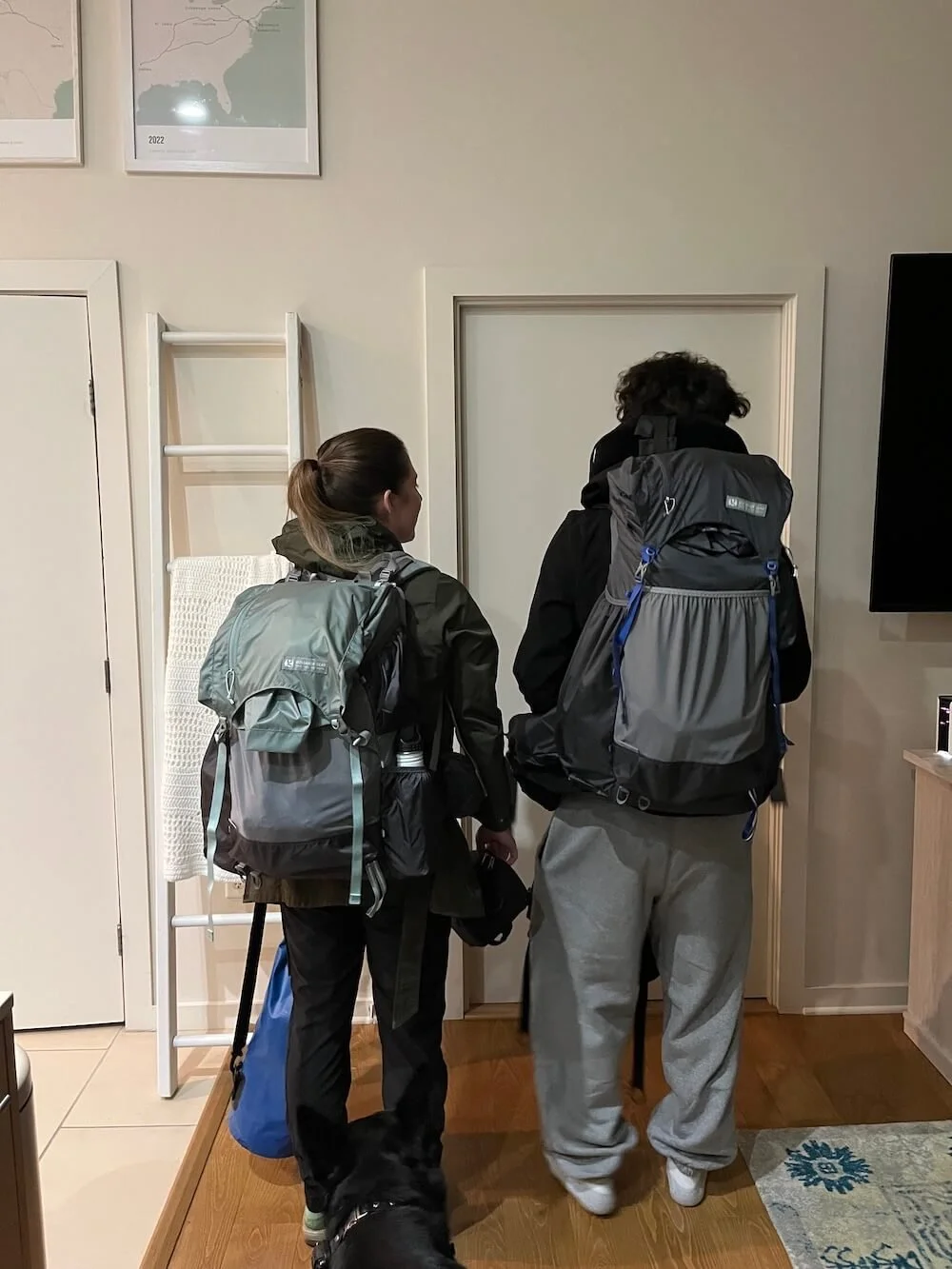
The morning of our Great Alaskan Road Trip! Timestamped: Jun 24 2023, 3 54 31 AM
Could You Visit All 8 Alaska National Parks in Less Than 21 Days?
Technically, maybe.
But I would not plan to do it in much less time.
Our 21 days included several long travel days, including driving from Seward to McCarthy, McCarthy to Fairbanks, Fairbanks to Coldfoot, Coldfoot to Chena Hot Springs, Chena to Anchorage, and Anchorage to Denali. We took multiple commercial flights to reach Glacier Bay, flew to King Salmon for Katmai, boarded bush planes for three other parks, and scheduled two separate flex days for weather.
We also wanted to do more than arrive, take a picture, and leave. We spent three nights in Glacier Bay, four in Seward, two near McCarthy, two nights at Brooks Camp and King Salmon, and three in Denali. Gates of the Arctic and Kobuk Valley shared a full-day flightseeing trip, and Lake Clark took the final day of the trip.
Could we have removed Chena Hot Springs, shortened Seward, skipped activities, driven later into the night, and flown home without a Lake Clark flex day? Yes. That might save a few days. It would also make an already ambitious itinerary more vulnerable to delays and give you less time to experience the parks you worked so hard and spent so much money to reach.
For us, 21 days was the right amount of time to accomplish the mission. It was not a slow trip. We often arrived somewhere, unpacked, explored for a day or two, packed again, and kept moving. There were places we would have happily stayed longer, but I would not have wanted to squeeze all eight parks into a substantially shorter trip.
Would I Recommend Visiting All 8 Alaska National Parks in One Trip?
In a heartbeat.
If you have the time, the budget, and the desire to make this the focus of your trip, visiting all eight Alaska national parks in 21 days is the adventure of a lifetime.
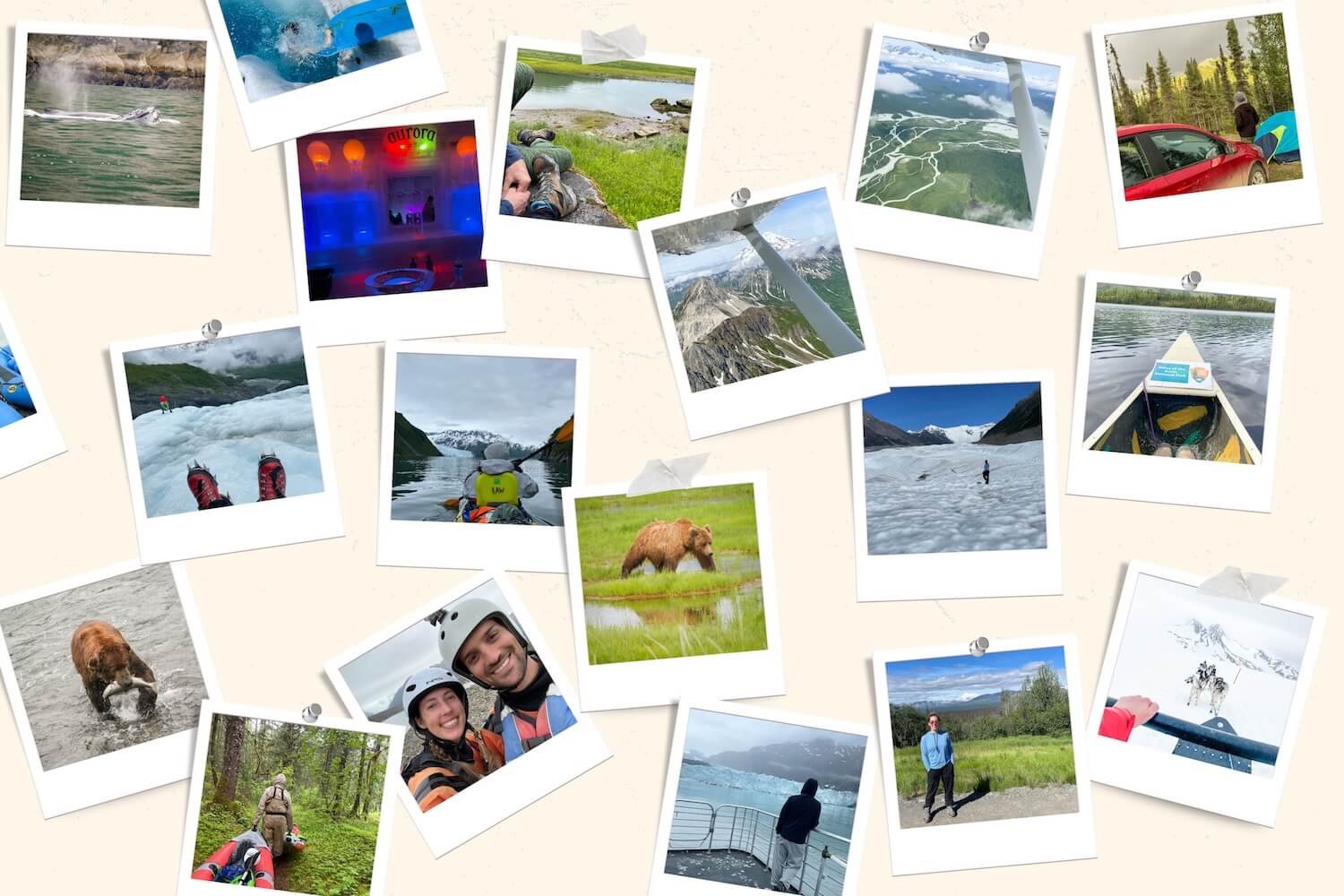
We kayaked beneath calving glaciers in Glacier Bay, went dog sledding and ice climbing near Kenai Fjords, walked on Root Glacier in Wrangell-St. Elias, flew over the Arrigetch Peaks in Gates of the Arctic, landed in Kobuk Valley ahead of a storm, camped with brown bears in Katmai, traveled Denali Park Road, and flew through the Aleutian Range to reach our eighth and final park in Lake Clark. We also used a shared outhouse in McCarthy, tent camped in the cold north of the Arctic Circle, developed a toe infection, tore holes in our boots, and dug a missing memory card out of a hotel trash can.
I would do it again because the intensity was part of the fun. We were on a mission, and every time a plane landed, a weather window held, or another national park came into view, we were one step closer to something that had felt wildly ambitious when we started planning.
I also know this trip is not realistic for everyone. Three weeks is a significant amount of time away from work, and the remote parks require expensive transportation. Most travelers will visit Alaska's national parks in groups over two or three trips instead.
The three road-accessible parks make a natural trip: Kenai Fjords, Wrangell-St. Elias, and Denali.
Katmai and Lake Clark can both be reached from the Anchorage area and make sense to research together, especially for travelers interested in bear viewing.
Glacier Bay can be part of a Southeast Alaska trip through Juneau and Gustavus.
Gates of the Arctic and Kobuk Valley can be paired for travelers working toward all 63 national parks or specifically seeking Alaska's most remote parks.
You do not need to visit all eight at once to benefit from understanding how the full route works. Even combining two or three parks requires coordinating flights, driving times, lodging, and the reservations that determine your dates.
If I Were Planning This Trip Again
I would still start exactly the same way. I'd open a map, figure out how each park can actually be reached, and sketch out a rough route based on geography. Then I'd immediately start researching transportation, what's available, and how each option changes the rest of the trip.
I'd also identify the experiences that matter most and book the hardest reservations first. Where you stay at Katmai matters more than which hike you choose in Denali. A hard-to-get flightseeing tour matters more than a restaurant reservation. Lock in the pieces with the fewest options, then build everything else around them.
Another tip is to keep every piece of planning in one place. Our Google Doc eventually became 20 pages long with flight numbers, reservation confirmations, campground notes, driving times, backup plans, and packing reminders.
But if I'm being honest... I wouldn't start from scratch. I'd start with all the work we've already done.
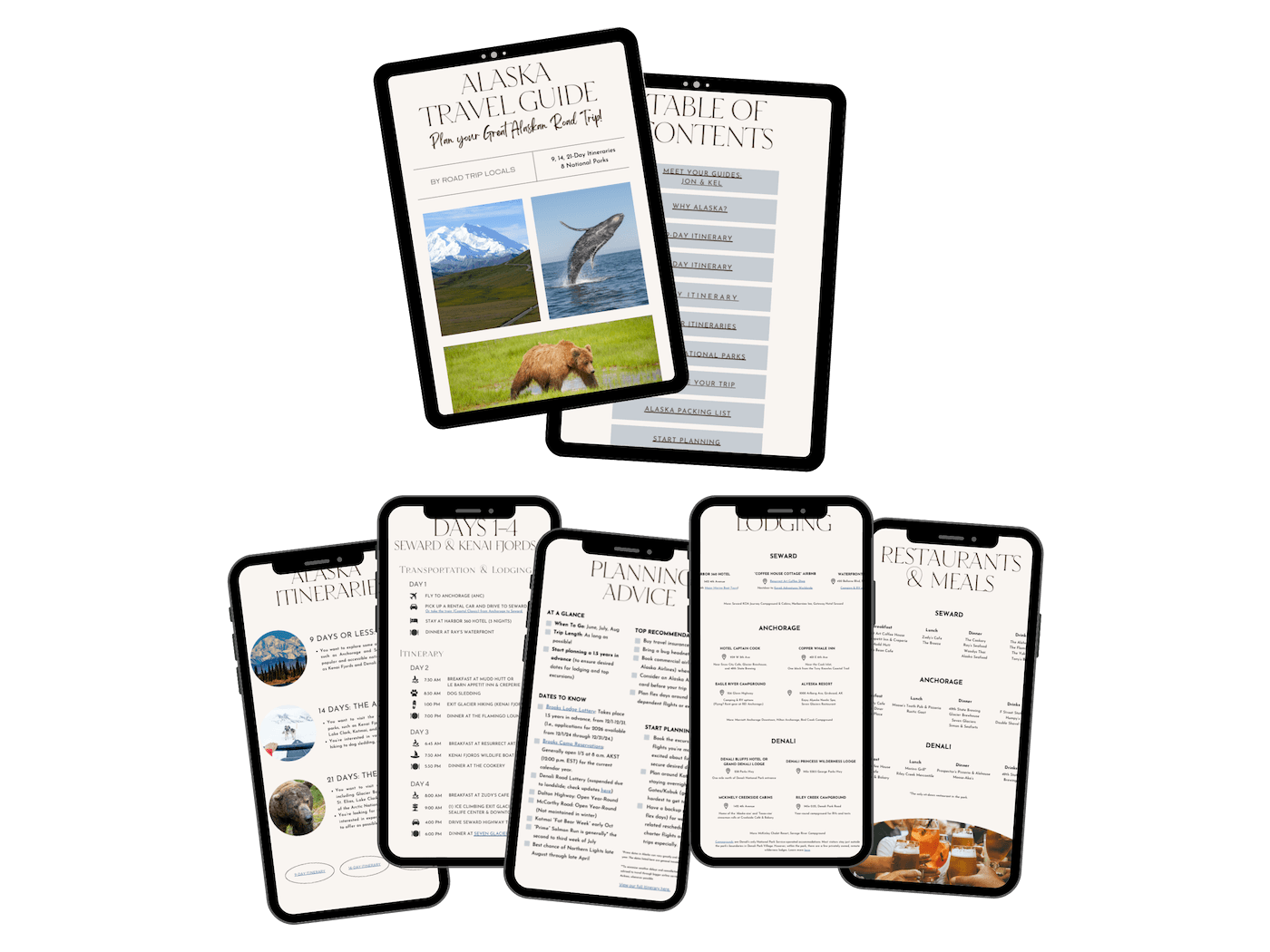
The exact 21-day itinerary we used to visit all eight Alaska national parks now lives inside our Alaska National Parks Travel Guide. It's the only place we share that complete itinerary, along with the transportation logistics, route planning, lodging recommendations, packing lists, and planning lessons that came out of months of trial and error.
Even if your goal isn't all eight parks, the guide is built to help. Some travelers use it to plan the three road-accessible parks. Others are trying to combine Katmai and Lake Clark. Others are working toward all 63 national parks and just need to figure out Gates of the Arctic and Kobuk Valley.
Whatever your route looks like, you don't have to solve the puzzle from the beginning.
Planning wasn't the only thing I wanted help with before this trip. I was intimidated by Alaska.
It felt bigger, wilder, and more unfamiliar than anywhere we'd ever traveled before. So I started watching as many episodes of Alone as I could. Not because I wanted to learn survival skills, but because I wanted the wilderness to feel a little less unfamiliar. I wanted to get used to seeing bears, remote landscapes, floatplanes, and life far from roads and towns. By the time our trip arrived, Alaska didn't feel quite so intimidating anymore.
That's why we wrote Alaska Diaries.
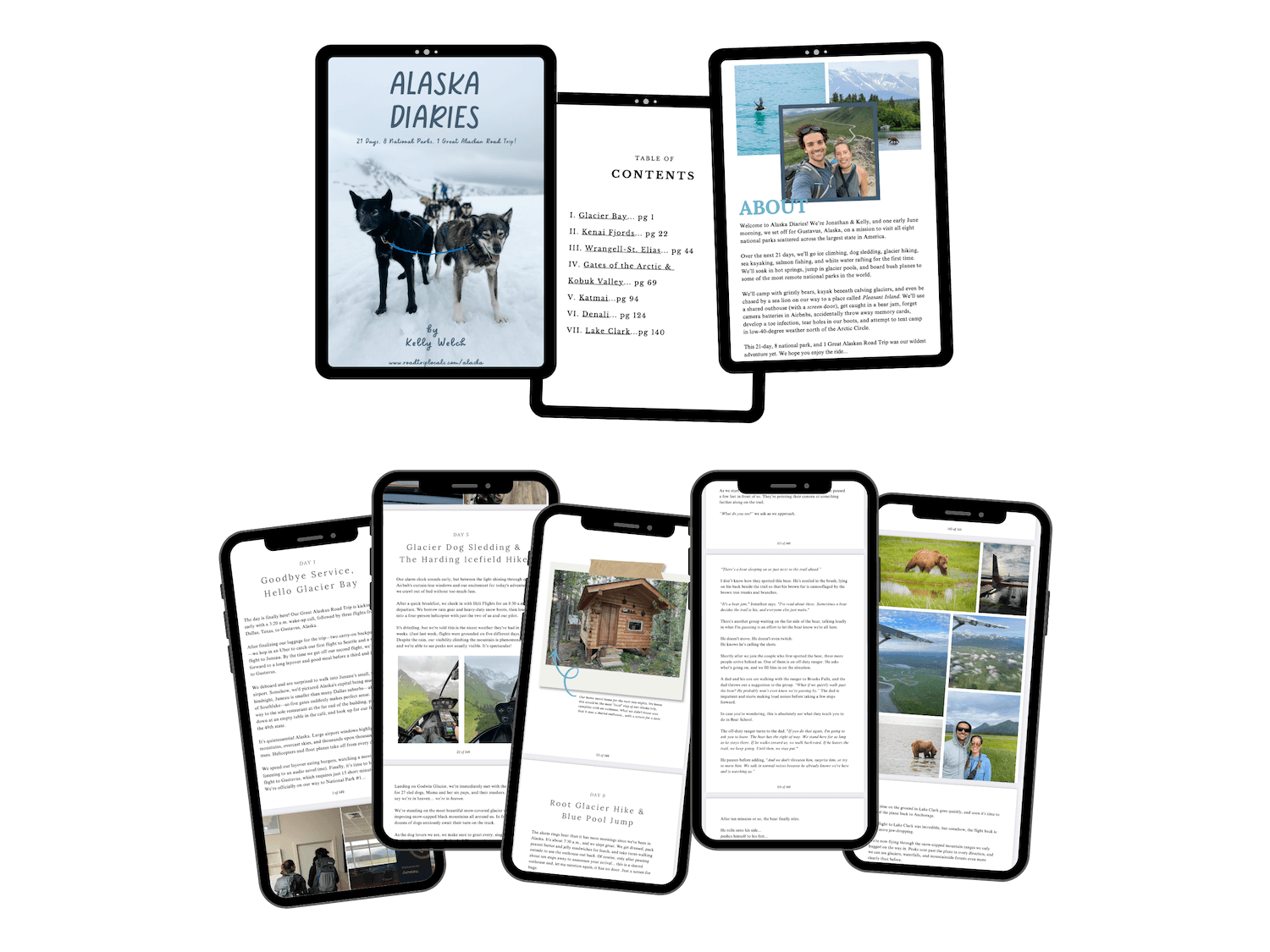
It's not another planning guide. It's a day-by-day retelling of our Great Alaskan Road Trip, complete with photos and all the stories that don't belong in an itinerary. The bush planes. The grizzly bears. The glacier kayaking. The dog sledding. The Arctic Circle camping. The shared outhouse.
You can read it simply because it's a fun adventure story, or you can use it the same way I watched Alone before our trip. To make Alaska feel a little more familiar before you experience it yourself.
Continue Planning Your Alaska Adventure
📖 Alaska National Parks Travel Guide: Our complete planning guide with our exact 21-day itinerary, transportation logistics, park guides, lodging recommendations, packing lists, and planning tips for visiting one park, several parks, or all eight.
📚 Alaska Diaries: An immersive day-by-day travelogue of our Great Alaskan Road Trip, complete with photos and stories to help Alaska feel a little more familiar before you go.
🎒 Alaska Packing List: The exact gear, clothing, and travel essentials we packed (and what we'd leave at home next time) after three weeks exploring all eight Alaska national parks.