
Yellowstone in June: Early vs Late June (Which is Best)
June is one of the easiest and most rewarding times to visit Yellowstone. Everything is open, wildlife is still active, and for a short window, especially in early June, you get a version of the park that still feels a little calmer before peak summer arrives.
We’ve spent a lot of time in Yellowstone year-round, and June is one of our favorite months. You can drive the entire park, see incredible wildlife, and spend full days outside without dealing with the extremes of winter or the busiest crowds of July and August.
That said, June isn’t perfect, and knowing what to expect can make a big difference in how your trip actually feels. Here’s what it’s really like to visit Yellowstone in June.
Table of Contents
👋 Meet Your Guides: We're Jonathan and Kelly, and we love Yellowstone National Park! So much so that we've been a dozen+ times, bought fixer-upper cabins outside Yellowstone’s North Entrance, and are turning an old park ranger hut into year-round Christmas magic. Now, we’re on a mission to make Yellowstone simpler and more magical for everyone who visits.
Want our best Yellowstone tips in one place? Check out our Yellowstone Travel Guide, packed with maps, itineraries, and everything you need to explore year-round.
Is June a Good Time to Visit Yellowstone?
June is one of the most balanced months to visit Yellowstone. You get full access to the park, strong wildlife activity, and comfortable weather all at the same time. It’s one of the few months where everything is available to you at once.
But June is also a transition month. As June goes on, the park starts shifting into peak summer, and that change affects crowds, wildlife patterns, and even what’s open and accessible. If your dates are flexible, timing within the month matters more than you might expect.
Why We Love Early June
If we had to choose, early June would be right at the top of our list. This is when Yellowstone hits a really unique overlap. You still have baby animals across the park, bears are active and easier to spot, and all park roads are finally open.
Earlier in the spring, you get incredible wildlife but limited access. Later in the summer, everything is open but wildlife becomes harder to find and crowds pick up.
Early June sits right in the middle. You’ll still see bison calves, elk calves, and a lot of movement in places like Lamar Valley and Hayden Valley, especially in the morning or later in the evening. It’s also one of the better times of year for bears, particularly in Lamar, Hayden, and the Tower area.
And just as important, everything is open. All park roads are accessible in early June, which means you can connect the entire park without working around seasonal closures. Memorial Day weekend is usually the first time that happens for the year, but it’s also one of the busiest weekends of the year. Early June is that window right after, so you get full access with a little more breathing room before summer fully settles in.
What Changes by Late June
By the second half of the month, Yellowstone starts to feel more like peak summer. Traffic builds, parking fills up faster, and popular areas get busier throughout the day. Wildlife is still there, but a little less concentrated than earlier in the month.
At the same time, there are some real upsides to visiting later in June. More trails are open as snow continues to melt, especially at higher elevations. Wildflowers become more widespread across the park, and the landscape starts to look more like vibrant summer.
The weather is also a bit more consistent day-to-day, which can make planning a little easier. Late June is still a great time to visit; it just comes with a different rhythm.
When June Might Not Be the Best Fit
June is one of the most well-rounded months in Yellowstone, but it’s not perfect for every type of trip.
If hiking is your top priority, early June can still be limiting. Some higher elevation trails may be snow-covered or muddy, and those don’t reliably open until later in the season. By late June, you’ll have more access, but later summer months and even early fall tend to be better for hiking in Yellowstone.
Trail closures can also come into play this time of year. June is peak activity for bears, especially mothers with cubs, and certain areas temporarily close to reduce the risk of encounters. These closures shift throughout the season, so it’s something you’ll want to check before heading out.
And then there are the crowds. June is when things start to ramp up. Early in the month can still feel manageable, but by late June, traffic builds and popular areas get busier. It’s all still very doable, but you have to plan around crowds a bit more.
What’s Still Opening in June
Most of Yellowstone is open by June, but not everything opens at the same time. There’s still a small rolling opening schedule throughout the month, and that can make a difference if you’re planning specific activities.
For example, if you show up at the beginning of June expecting to book a guided fishing trip or rent a boat on Yellowstone Lake, those don’t usually start right away. In 2026, guided fishing trips, sightseeing charters, motorboat rentals, and lake tours from Bridge Bay Marina don’t begin until June 12.
Same idea with parts of the park’s lodging and campgrounds.
Lake General Store opens around early June (June 5 in 2026)
Lake Lodge Cabins follow shortly after (June 10 in 2026)
Grant Village Campground doesn’t open until late June (June 26 in 2026)
Lewis Lake Campground opens mid-month (June 15 in 2026)
And up in the Tower-Roosevelt area, which is one of our favorite parts of the park in June for bear watching, things are still coming back to life.
Roosevelt Lodge Cabins typically open in early June (June 5 in 2026)
Horseback riding starts around the same time
The Old West Dinner Cookout usually begins just after (June 6 in 2026)
None of this is a big deal if your plans are flexible, but if you’re planning your trip around something specific, like horseback riding, boating, or staying in a certain area, these dates can shape when you’ll want to visit in June.
How Crowded Is Yellowstone in June? (And How to Avoid the Worst of It)
June is the start of Yellowstone’s busy season, but it ramps up throughout the month. Early June can still feel manageable. Late June starts to feel like summer.
Here’s what that means in real life:
Parking lots fill by mid-morning at major stops
Traffic slows down around wildlife sightings
Popular areas like Old Faithful and Grand Prismatic get crowded midday
Here’s how we approach June:
Start early (before 8am whenever possible)
Plan your biggest stops in the morning or evening
Use mid-day for drives, food, or less crowded areas
If you adjust your timing, June is still very doable when it comes to crowds.
Wildlife in Yellowstone in June (Best Places to Go)
June is one of the most dynamic months for wildlife in Yellowstone because it sits right in that overlap between spring behavior and full summer access.
Early in the month, animals are still very active and easier to spot. You’ll see bison calves and elk calves across the park, and there’s still a strong chance of seeing bears moving through the valleys, especially in places like Lamar Valley, Hayden Valley, and around the Tower-Roosevelt area.
As the month goes on, things start to shift a bit. Wildlife doesn’t disappear, but it spreads out more, and sightings can feel less concentrated than they do earlier in June. It’s still a great time for wildlife overall, but you’ll want to be a little more intentional about timing. Early mornings and evenings make a big difference.
Where to See Wildlife in June
Once you understand how wildlife behaves in June, the next question is where to focus your time. The short answer is: areas along the Northern Range, including Lamar Valley and the Mammoth to Tower corridor, are some of the most consistent places for sightings.
Here are a few key areas:
Lamar Valley: Lamar Valley is one of the most consistent places in Yellowstone to see animals year-round. It’s also one of the easiest places to scan for wildlife. If you see cars pulled over or spotting scopes set up along the road, that’s usually your signal that something is nearby.
Hayden Valley: Hayden Valley feels similar to Lamar but sits more centrally in the park, which makes it easier to work into your day. Like Lamar, timing matters here. Early morning and evening are when it really comes to life.
Tower-Roosevelt Area (especially for black bears): This is one of those areas that people either rush through or completely miss, but in June, it’s worth slowing down. The lower elevation here thaws earlier than other parts of the park, which means food sources show up sooner. That’s why this area is one of the more reliable spots for black bear sightings, especially along the roadside near Tower Fall.
Slough Creek: If you’re hoping to see wolves, this is one of the areas to spend time. It’s not guaranteed (and wolf watching usually requires patience), but June is when wolf activity can still be visible, especially near den sites. The open landscape makes it easier to spot movement compared to more forested areas.
Gardiner to Mammoth (an underrated stretch): This is one of the easiest places to casually see wildlife without going out of your way. The drive between Gardiner and Mammoth is often filled with elk and pronghorn. It’s especially active in the early morning and evening, and it’s one of the reasons we like staying near the North Entrance.
East Entrance / Fishing Bridge Area: This is a less talked about area, but it can be surprisingly good for grizzly sightings, especially along the stretches between Tower, Canyon, and the East Entrance. It’s not as consistent as Lamar or Hayden, but it’s worth paying attention if you’re driving through.
Really interested in seeing wildlife in Yellowstone? Keep reading about our favorite places in this post: 12 Best Places to See Wildlife in Yellowstone
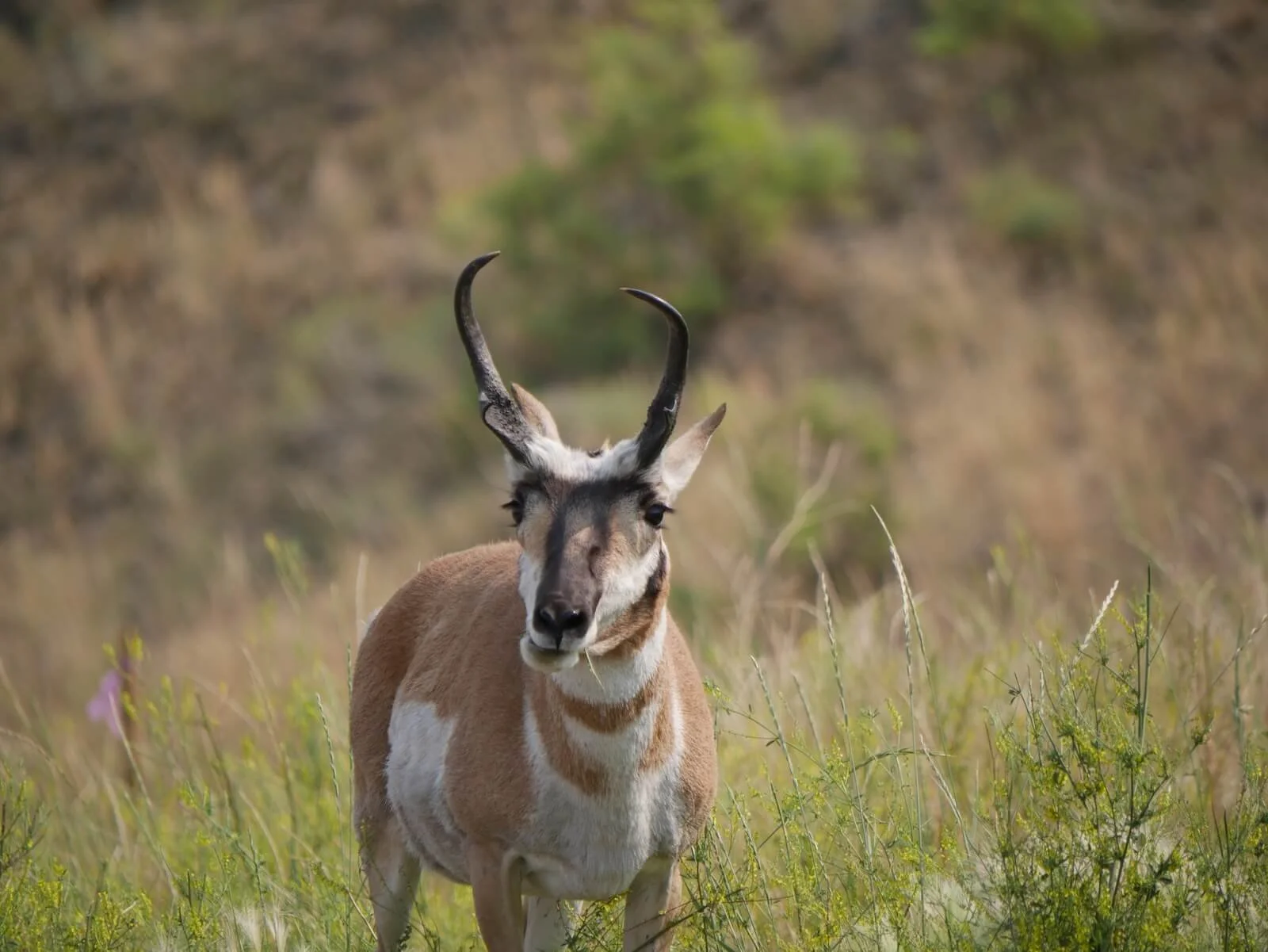
Pronghorn along the road between Gardiner and Mammoth
Best Things to Do in Yellowstone in June
In June, you’ve got full road access, strong wildlife activity, powerful waterfalls, and long daylight hours. The challenge isn’t finding things to do, but deciding how to structure your time so you don’t spend your entire trip in the car or stuck in mid-day crowds.
Here’s how we’d approach it.
Wildlife Watching
If wildlife is even slightly important to you, this should be one of your top priorities in June. The biggest difference-maker is timing.
Early mornings and evenings are when animals are moving, feeding, and more visible across the valleys. Midday, especially once it warms up and traffic increases, things slow down a lot.
If we had to choose, we’d plan at least one early morning in Lamar Valley and one in either Tower-Roosevelt or Hayden Valley, depending on what wildlife you’re most hoping to see. That alone gives you a much better shot at seeing bears, wolves, bison, and elk than casually driving through at noon.
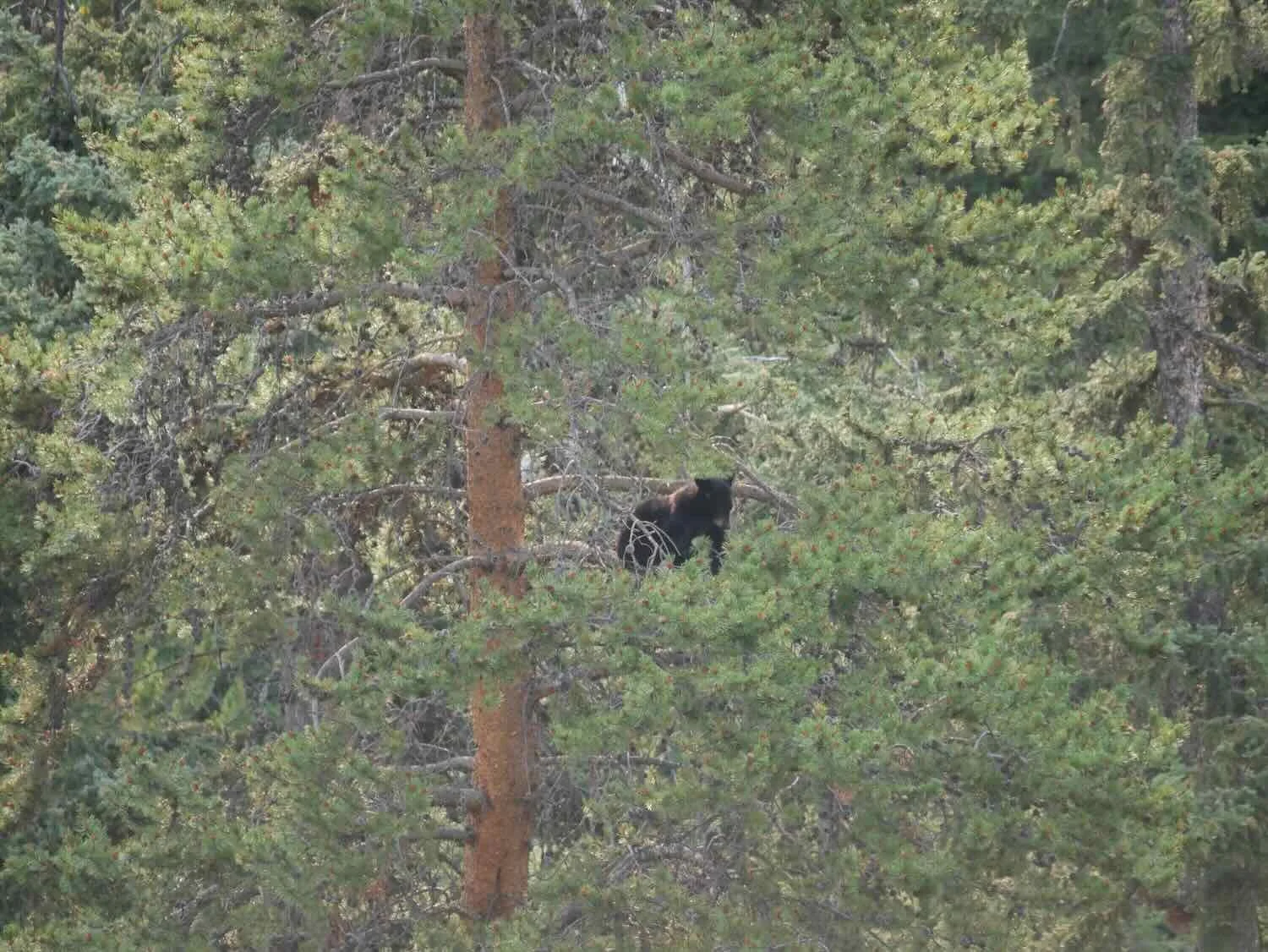
Black bear in a tree near Tower Fall
Driving the Grand Loop
Yellowstone finally becomes fully drivable in June. It’s the first full month of the year where all park roads are open the entire time, which makes planning a lot simpler. You don’t have to think about closures or work around partial access, so you can go anywhere in the park whenever you want.
The Grand Loop is what ties it all together. It’s a 142-mile, figure-eight-shaped road that connects all the major areas of Yellowstone. If it’s your first trip, this is the route you’ll follow, whether you realize it or not.
If you start in the north near Mammoth, you’ll head toward Tower. From there, we recommend the detour to Lamar Valley. After that, the road drops down to the Grand Canyon of the Yellowstone, where you’ll find some of the most dramatic views in the park.
As you continue west, you’ll pass through Norris Geyser Basin and into the heart of Yellowstone’s geothermal areas, including Grand Prismatic Spring and Old Faithful. From there, the loop continues past Yellowstone Lake and back up through Hayden Valley, before reconnecting to the northern part of the park.
The loop is straightforward and easy to follow in any direction, but distances in Yellowstone are deceiving. In June, especially later in the month, traffic starts to build and drives take longer than you expect. Wildlife sightings can slow things down even more, and parking at major stops fills up quickly by mid-morning.
That’s why we recommend breaking the loop into sections instead of trying to do it all in one day. Spend one day focusing on the northern half, including Mammoth, Lamar Valley, Tower, and maybe the Grand Canyon of the Yellowstone. Then spend another day exploring the geyser basins, including Norris, Old Faithful, Grand Prismatic, and West Thumb Geyser Basin. You’ll still cover the same ground, but it feels completely different when you’re not rushing through it.
We map all of this out in our Yellowstone Travel Guide, including exactly how we’d structure 1, 2, 3-4, and 5+ day trips so you’re not wasting time driving back and forth across the park.

Seeing Yellowstone’s Waterfalls at Their Peak
If waterfalls are on your list, June is one of the best times to be in the park. Snowmelt is still feeding the rivers, which means waterfalls are at or near their strongest flow of the entire year. You’ll notice it most at the Grand Canyon of the Yellowstone, where the Lower Falls feel louder, bigger, and more dramatic than later in the summer.
Instead of just stopping at one overlook, take the time to walk to a few different viewpoints. Artist Point is the most popular (and for good reason), but the Brink of the Lower Falls gives you a completely different perspective, and is worth the short-but-steep trek.
Exploring Geyser Basins
Places like Old Faithful and Grand Prismatic Spring are some of the most iconic stops in Yellowstone, and June is a great time to see them. Everything is open, boardwalks are accessible, and the weather is usually comfortable enough to take your time exploring.
But this is also where you’ll feel the crowds the most. If you show up late morning through mid-afternoon, expect full parking lots and a lot of people. It’s not a bad experience, but you’ll have to deal with logistics more than if you visit these places earlier or later in the day.
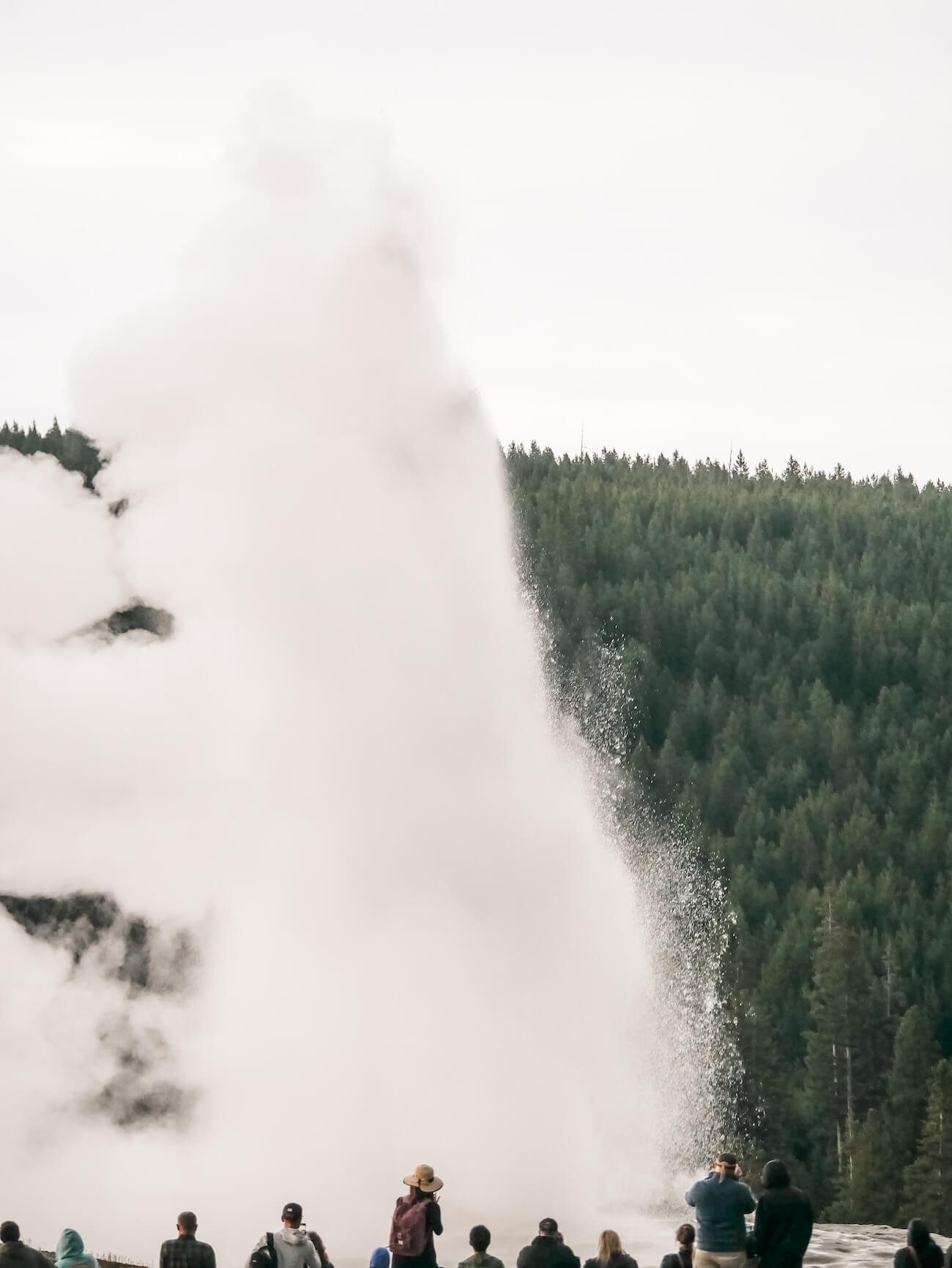
Old Faithful Geyser erupting
Hiking (What’s Open and What’s Not)
June is a good hiking month in Yellowstone, but with some limitations. Lower elevation trails are usually in great shape by this point, especially boardwalks and popular routes near major attractions. If you’re looking for shorter hikes or scenic walks, you’ll have plenty of options.
Higher elevation trails are a different story. Depending on the year and snowpack, some of the more alpine hikes may still be snow-covered or muddy earlier in the month. By late June, more of these start to open up, but it’s not something to assume without checking current conditions.
❓FAQ: Yellowstone in June
Where should I stay for a June trip to Yellowstone?
Just about everything is open, so technically you can stay anywhere, but not all locations feel the same once you factor in wildlife, crowds, and how you want your days to flow.
If wildlife is a priority, staying near the North Entrance in Gardiner, Mammoth, or even Tower is a great option. If your trip is more focused on geysers and first-time sightseeing, West Yellowstone, Old Faithful, or Canyon Village can make sense for central access, but you’ll trade some of that quieter, wildlife-focused experience for busier days and more traffic.
If you have enough time, the best setup is often a split stay: part of your trip near the geyser basins, and part near the Northern Range. We break this down more in our full guide on where to stay in Yellowstone (worth reading before you book anything).

How do you get to Yellowstone in June?
June is one of the easiest months to get to Yellowstone because all entrances are open and fully accessible by car. You don’t have to think about winter road closures or oversnow travel. Most people fly into Bozeman, Jackson Hole, or West Yellowstone, depending on where they’re staying.
From Bozeman, it’s about a 1.5-hour drive to either the North or West Entrance. Our guide on driving to Yellowstone breaks down the best routes, airports, and what to expect depending on where you’re coming from.
What should I pack for Yellowstone in June?
June might look like summer on the calendar, but Yellowstone doesn’t fully commit to that idea yet. Mornings can still feel cold, afternoons warm up nicely, and rain can show up without much warning. You’ll want to be ready for all of it without overpacking. The biggest thing is layers.
We usually bring a mix of lighter daytime clothes and a couple of warmer layers for early mornings and evenings, something like a fleece or light jacket that you can throw on quickly. Even in June, it can feel chilly if you’re out early for wildlife.
A rain layer is also worth having. You may not need it every day, but when you do, you’ll be glad it’s in your bag. Footwear matters more than people expect this time of year, too. Trails can still be muddy from snowmelt, especially earlier in June, so having shoes with good traction (and ideally some level of water resistance) makes a big difference.
And if wildlife is on your list, don’t skip binoculars. It’s one of those things that completely changes the wildlife watching experience, especially in places like Lamar Valley where animals can be far off in the distance. You’ll also want the basics like sun protection and bug spray, especially as the month goes on and things warm up.
We put together a full Yellowstone packing list with everything we actually bring and use, including exact layers and gear we love.
What’s the weather actually like in June?
Most days fall somewhere in the 60s to 70s, which makes it one of the most comfortable times to be outside in Yellowstone, but it’s not consistent. Mornings can feel cold, especially if you’re out early for wildlife. Rain is always possible. And some higher elevations will still be holding onto snow longer.
Can you see bears in Yellowstone in June?
Yes, and June is one of the better months to see bears in Yellowstone! Early June is especially strong for bear sightings. They’re active, moving through the valleys, and easier to spot than later in the summer when they spread out more. By late June, sightings are still possible, but a little less frequent. If this is high on your list, focus your time in places like Lamar Valley, Hayden Valley, and the Tower area, and go early or late in the day.
How many days do you need for Yellowstone in June?
For most people, 3 to 5 days is a really solid amount of time. That gives you enough flexibility to break up the Grand Loop, spend time on wildlife viewing, and explore geyser basins without rushing. If you only have 2 days, you can still see a lot, but you’ll need to be more intentional with your plan.
We map out realistic day-by-day options inside our Yellowstone Travel Guide so you’re not trying to piece it together last minute.
What’s the biggest surprise about Yellowstone in June?
The biggest surprise is how much the month changes depending on when you go. Early June can still feel quiet and wildlife-heavy, while late June starts to feel like full summer. The other thing is how much timing matters. You can have two completely different experiences in the same place depending on when you show up. A packed parking lot at noon can feel overwhelming, but that same spot early in the morning or later in the evening feels completely different. That’s really the key to June. It’s not just where you go, but when you go!
Keep Planning Your Trip to Yellowstone National Park
Yellowstone is incredible, but planning it can feel overwhelming at first. Our Yellowstone Travel Guide includes everything we wish we knew before our first trip.
Built over 10 years and a dozen+ trips, it’s packed with insider tips, detailed maps, and season-by-season itineraries so you can experience the best of the park, whether that’s summer days on the trail or spring wildlife sightings.

Save this for later
Hover over the image below and click on the red “Save” button in the upper lefthand corner of the image to save this on Pinterest for later. (If you’re on mobile, you might have to tap the image first to see the red ‘Save’ button.)

More on Yellowstone
🏡 Staying Near the North Entrance? Explore the Cozy Yellowstone Compound in Gardiner, our small collection of cabins just minutes from the park gate.
🧳 Not Sure What to Pack? Check out our detailed Yellowstone Packing List, so you’re prepared for summer heat, shoulder-season cold snaps, or full winter conditions.
🦬 Still in Planning Mode? Browse all of our Yellowstone blog posts for wildlife guides, seasonal breakdowns, scenic drives, and practical tips from years of visiting Yellowstone.
📚 Want a Step-by-Step Plan? Our All-Seasons Yellowstone Travel Guide walks you through where to stay, how to structure your days, and what to expect in every month of the year.