
Best Hikes Near Yellowstone’s North Entrance
Yellowstone’s North Entrance is best known for wildlife watching and scenic driving, but there are also some excellent hikes nearby.
One of the biggest mistakes people make when planning a Yellowstone trip is underestimating how spread out the park actually is. Depending on where you’re staying, driving to a trailhead can easily take one to three hours (one way) once you factor in road construction, wildlife jams, and traffic. This is especially true if you’re staying at the northernmost edge of the park near Gardiner, Mammoth Hot Springs, or Yellowstone’s North Entrance.
This guide focuses specifically on hikes along Yellowstone’s Northern Range, so you spend less time crossing the park and more time hiking, wildlife watching, and exploring the areas around Mammoth, Tower-Roosevelt, and Lamar Valley.
Trails in this area tend to involve more open terrain and valleys than many of the geothermal-rich hikes farther south. It’s important to know you’re hiking in active wildlife country, meaning bears, bison, elk, wolves, and other wildlife regularly move through the area. Trail closures, bear management areas, and wildlife safety are all regular parts of hiking in Yellowstone.
Table of Contents
👋 Meet Your Guides: We're Jonathan and Kelly, and we love Yellowstone National Park. So much so that we've been a dozen+ times, bought fixer-upper cabins outside Yellowstone’s North Entrance, and are turning an old park ranger hut into year-round Christmas magic. Now, we’re on a mission to make Yellowstone simpler and more magical for everyone who visits!
📚 Want our best Yellowstone tips in one place? Check out our Yellowstone Travel Guide, packed with maps, itineraries, and everything you need to explore year-round.
🏡 Visiting Yellowstone’s North Entrance? Explore the Cozy Yellowstone Compound in Gardiner, our small collection of cabins near Yellowstone’s only year-round entrance.
Best Hikes Within 15 Minutes of Yellowstone’s North Entrance
These are our favorite hikes within 15 minutes of Yellowstone’s North Entrance at Gardiner, MT.
Mammoth Hot Springs Upper & Lower Terraces
Best for: Short walks, first-day exploring, geothermal scenery without committing to a longer hike
The Mammoth boardwalks are some of the easiest walks near Yellowstone’s North Entrance and work well when you want to stretch your legs without dedicating half the day to hiking. Because Mammoth sits so close to Gardiner, it’s also one of the easiest areas to revisit multiple times throughout a trip.
Wraith Falls Trail
Distance: About 1 mile round trip
Best for: Easy stop between Mammoth and Tower
Wraith Falls is one of the easiest short hikes along the Northern Range. The trail crosses open sagebrush terrain before reaching a small waterfall cascading down the hillside. This works especially well as a quick stop on wildlife-focused driving days when you do not want a major hiking commitment.
Beaver Ponds Loop
Distance: About a 5-mile loop
Best for: Longer hike close to Gardiner without driving into Yellowstone’s Interior
Beaver Ponds is a good option when Mammoth feels busy, but you want a longer trail close to the North Entrance. The hike climbs above Mammoth before looping through meadows, ponds, rolling hillsides, and scattered forest with views across the Northern Range. Elk are commonly seen here, especially during spring and fall.
Bunsen Peak Trail
Distance: About 4.5 miles round trip
Best for: Big views close to Gardiner
Bunsen Peak is one of the best hikes near Yellowstone’s North Entrance if you want elevation gain and wide views without driving far. From the summit, you can see Gardner Canyon, Mammoth Hot Springs, the Gallatin Range, and large sections of northern Yellowstone. The climb feels steeper than you expect, especially on hot afternoons.
Sepulcher Mountain Trail
Distance: About 11 miles round trip from Mammoth
Best for: Bigger day hike with fewer crowds than Bunsen
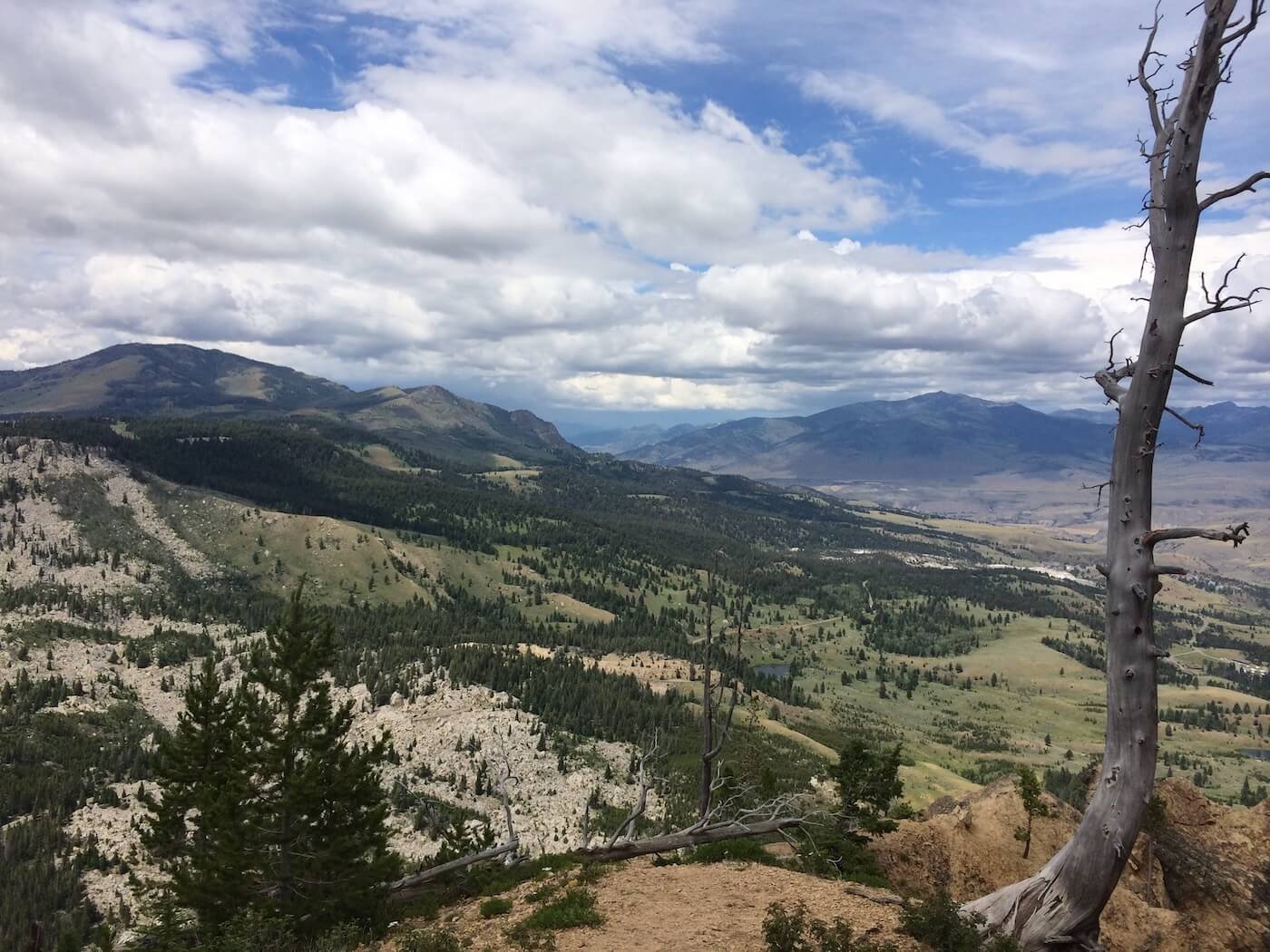
Sepulcher Mountain gets less attention than Bunsen Peak, and some hikers prefer it. The trail climbs steadily through forest and open terrain to wide views across Mammoth and the Northern Range. Because it’s longer and more strenuous, it’s usually less busy than some of the shorter hikes in the area.
Best Hikes 20-45 Minutes from the North Entrance
These are some of our favorite hikes located about 20-45 minutes from Yellowstone’s North Entrance at Gardiner, MT.
Upper and Lower Undine Falls via Lava Creek Trail
Best for: Waterfalls near Mammoth
This area gives you access to several shorter trail options near Lava Creek and the Undine Falls corridor. Because it sits east of Mammoth, traffic often thins out compared to the immediate Mammoth area.
Hellroaring Creek Trail to Yellowstone River
Distance: About 4 miles round trip
Best for: River canyon scenery and a more rugged feel
Hellroaring drops quickly toward the Yellowstone River and feels more remote than many trails closer to Mammoth. The suspension bridge crossing is one of the highlights of the hike. Remember that the steep downhill at the beginning becomes a steep uphill climb on the way back out.
Yellowstone River Picnic Area
Distance: About a 3.5 to 4-mile loop
Best for: Bighorn sheep and canyon views
This is one of the better hikes in Northern Yellowstone for open canyon scenery and wildlife viewing. The trail follows rolling terrain high above the Yellowstone River, and bighorn sheep are sometimes spotted throughout the surrounding cliffs and hillsides. Because much of the trail is exposed, summer afternoons can feel surprisingly hot and dry.
Hikes that are Worth the Longer Drive
These hikes are further from Yellowstone’s North Entrance, but we think are worth the longer drive. Especially if you’re heading out to explore Lamar Valley.
Trout Lake Loop
Distance: About 1 mile loop
Best for: Short scenic stop near Lamar Valley
Trout Lake works well if you’re already spending a day exploring Lamar Valley and Yellowstone’s Northeast Entrance. River otters and moose are occasionally spotted here.
Lamar Valley Trail
Best for: Wildlife-focused hiking
Most people experience Lamar Valley from roadside pullouts, but hiking into the valley gives you an even better sense of how large and open the landscape really is. Carry bear spray, stay alert, and expect wildlife activity throughout the area.
Dunraven Pass to Mount Washburn
Best for: Big summit views and a full hiking day
Mount Washburn is one of Yellowstone’s most popular summit hikes. It usually works best as the main activity for the day rather than something combined with extensive sightseeing elsewhere.
Tips for Hiking Near Yellowstone’s North Entrance
Start early to secure parking at trailheads, especially during summer.
Stay “bear aware”. Carry bear spray (and know how to use it before you head out for a hike).
Hike in groups of 3 or more whenever possible.
Check trail closures before heading out.
Download offline trail maps before entering the park. (We highly recommend downloading offline trail maps from AllTrails.)
Bring layers. Weather changes quickly in Yellowstone.
Read Next: Yellowstone Safety: 8 Must-Know Tips for Hikers, Campers, and Visitors
More on Yellowstone
🏡 Staying Near the North Entrance? Explore the Cozy Yellowstone Compound in Gardiner, our collection of cabins just minutes from the park gate.
🧳 Not Sure What to Pack? Check out our detailed Yellowstone Packing List, so you’re prepared for summer heat, winter cold, and everything in between.
🦬 Still in Planning Mode? Take our free Yellowstone Traveler Quiz to discover your travel style and get our free Yellowstone Planning Playbook.
📚 Want a Step-by-Step Plan with Customizable Itineraries? Our All-Seasons Yellowstone Travel Guide walks you through where to stay, how to structure your days, and what to expect in every month of the year.