
Most of our travel happens during what we call Travel Seasons, longer stretches when we’re living and working on the road for weeks or months at a time. Every Travel Season starts with the same two questions: Where are we going? How long are we staying?
Those decisions determine what our days look like, how stressed or relaxed we feel while traveling, and even how much we end up enjoying a place. Here’s a sneak peek behind our Travel Seasons and how we bring them to life.
This post is part of our Living on the Road series, where we share what it actually looks like to work remotely while traveling for weeks and months at a time. Keep reading:
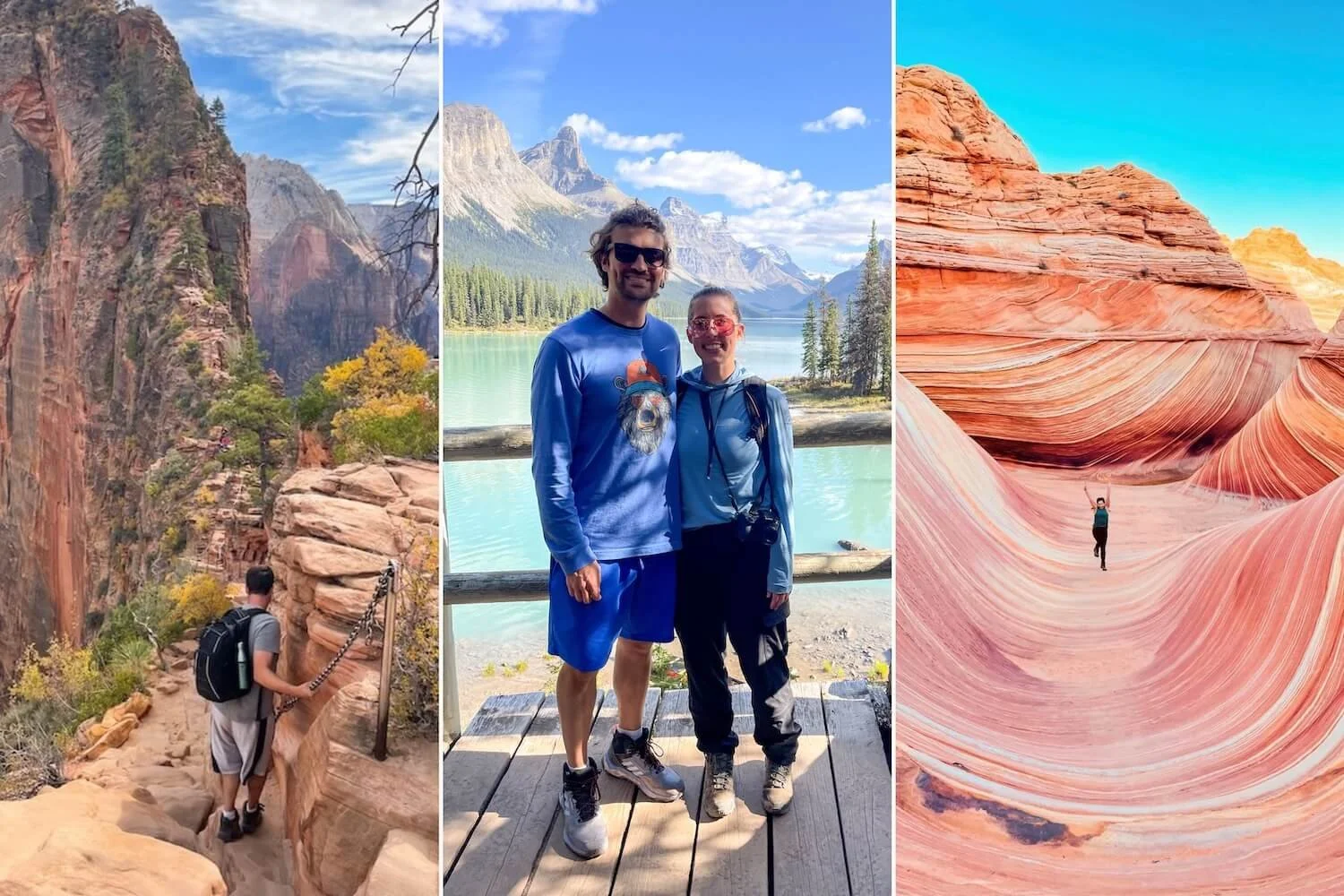
👋 Meet Us: We’re Jonathan and Kelly, and for five years, we lived on the road for weeks and months at a time... working full-time, building routines in new places, and turning everyday life into a series of road trips. We’ve spent our “Travel Seasons” exploring everywhere from the Canadian Rockies and Alaska’s highways to New England in the fall, and along the way, we’ve learned how to make life on the road feel normal, sustainable, and really, really fun.
What is a Travel Season?
Before we get into how we plan them, it might help to understand what a Travel Season looks like in real life. This isn’t a traditional vacation, since we’re still working full-time. We still have routines, responsibilities, and normal day-to-day life. The difference is that it’s happening somewhere new, and we’re prioritizing adventure as much as we can.
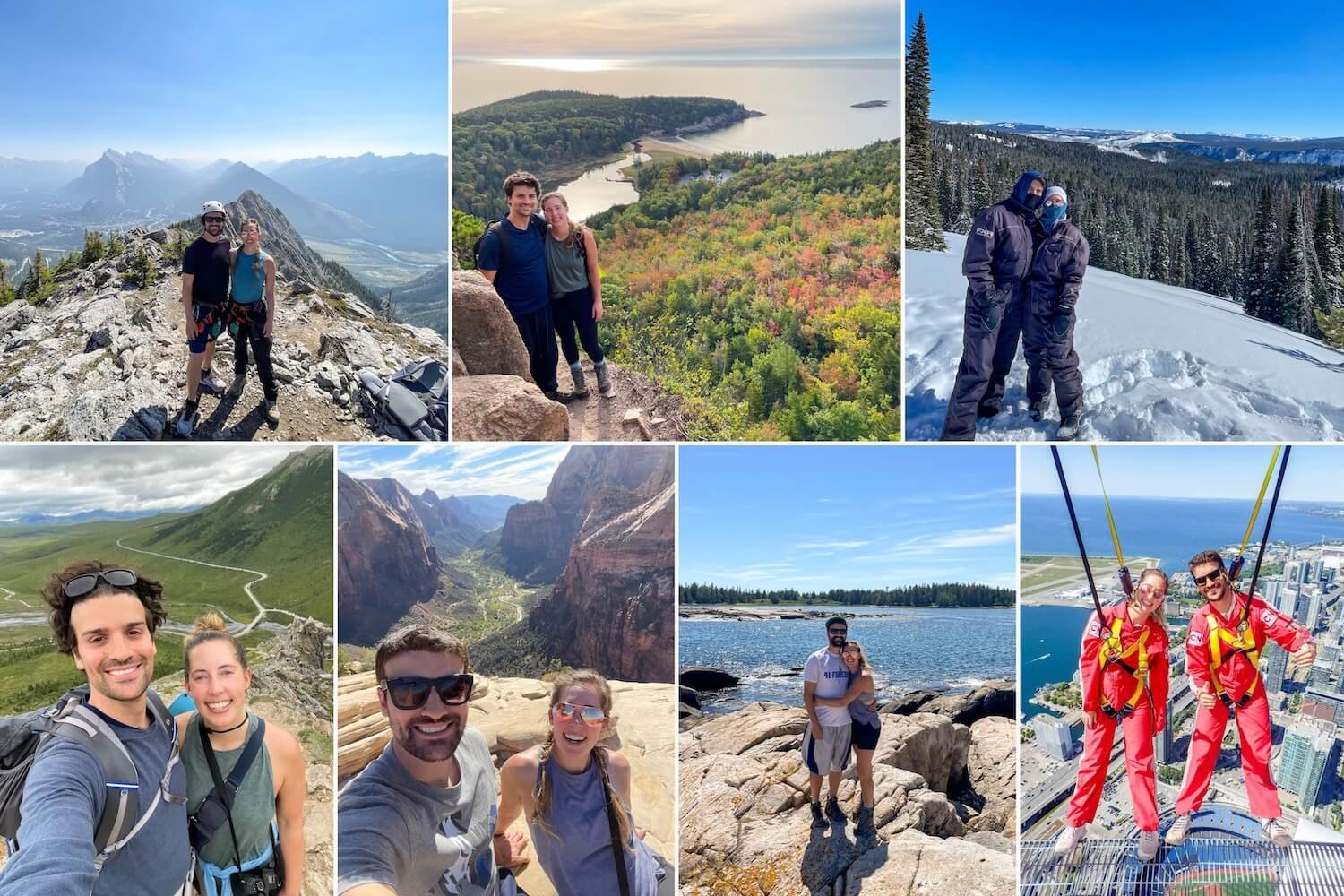
Our Travel Seasons have looked like:
Sometimes we move around a lot within a season. Sometimes we stay put longer. But the goal is always to see as much of a new area as possible, while building a version of our everyday life in a new town.
The Two Decisions That Shape Everything
Every Travel Season starts with: Where are we going? How long are we traveling?
For where we’re going, we usually think in terms of regions or goals for the season (i.e., to see fall in New England, to visit Alaska’s national parks, or to see as much of Utah and Colorado as possible). For how long we’re staying, we ask this question in two ways.
One, how long do we want to be on the road in total? After spending most of 2020 on the road, we realized we like having a home base, and our 2022 season in New England let us know five months is the most we want to be on the road right now. Two to three months is our sweet spot.
Second, how long do we want to stay in each specific location? (I.e., If we’re headed to New England, how long in Maine versus New Hampshire, etc.) We’ll start with the length of the trip as a whole, then move on to individual stays once we know where we’re going and what we’re most interested in experiencing while there.
Step One: Start With a Region, Not a Single Destination
When deciding where to go, we don’t start by picking exact towns or places to stay. We zoom out and think in terms of regions:
The Canadian Rockies
Alaska
A national park circuit
The Southeast in winter
New England in the fall
Summer in Colorado
This helps everything feel more connected from the start. Instead of jumping across the country, we’re building something that flows together.
From there, we sketch a loose route using a map. We’re not planning a detailed itinerary yet, just getting a general direction of what the season might look like:
What are the big anchor destinations? What are the top highlights we want to see and experience in the area?
What towns, attractions, or places of interest naturally fit between them?
What route and direction would feel like a smooth progression instead of backtracking?
This alone has made a huge difference in how we plan our travel seasons. Zig-zagging around might look fun on paper, but it gets exhausting fast in real life.
How We Decide Where To Go
As we’re thinking about where to go, we ask ourselves a few follow-up questions, like… What are we in the mood for right now? What do we actually want to see or experience? What would make this season feel exciting? Sometimes what we’re looking for is really clear. Other times, it starts with a small spark and builds from there.
For example, in 2020, that spark was White Sands National Park. We weren’t planning a New Mexico trip. In fact, the state wasn’t high on either of our travel wish lists. But once we saw pictures of White Sands National Park, we were sold… and that one destination turned into a six-week trip across the state.
The next year, our decision was more intentional. We had split our lives into the Basketball Season and the Travel Season at this point, so we would be traveling over the summer months. Coming off 2020, we knew we wanted to spend a lot of time outside while traveling, and considered places we’ve been wanting to visit. We also didn’t want to get on a flight, so we narrowed to places we can realistically drive to from Dallas and landed on Colorado and Utah. We mapped out a loop through those two states.
When it was time to plan our 2022 season, both timing and previous commitments helped shape where we went and how long we stayed. We already had a family beach trip scheduled for June and a wedding in early November, both on the East Coast. Since I’d always wanted to experience fall in New England, we decided to bookend the trip with those events and spend the months in between driving around New England. Once we committed to that idea, everything else started falling into place, including an unexpected detour into Ontario.
For 2023, we were driven by a specific goal: Alaska. We wanted to figure out whether it was actually possible to visit all 8 of Alaska’s national parks in a single trip. At the time, we couldn’t find many examples of people doing it, at least not in a way that felt realistic for us, so we spent months planning routes, logistics, transportation, weather windows, and backup plans. (We recapped this trip in Alaska Diaries, if you want to follow along.)
Somewhere along the way, that travel season turned into a complete bucket-list season. After Alaska, we followed the Rocky Mountain Range through the United States and Canada and spent the summer experiencing things we’d dreamed about for years: driving the Icefields Parkway, staying at the Fairmont Chateau Lake Louise, spending all four seasons in Yellowstone, and even ending the season at the Albuquerque Balloon Fiesta during an annular solar eclipse. It was a season for the books!
Then, at the end of 2023, life surprised us with fixer-upper cabins near Yellowstone’s North Entrance in Gardiner, Montana, which would completely shift our schedules, priorities, and flexibility over the next two years. (That eventually became our Cabin Chronicles series.)
By 2024, Jon was back in the office full-time, we had renovation projects happening in Montana, and our available travel time looked different. So instead of asking, “What’s the biggest adventure we can pull off?” we started asking, “What do we actually need right now?” The answer shaped both where we went and how long we stayed. Instead of planning another packed national park circuit, we chose a slower five-week trip through the Southeast and Florida Keys focused on warm weather, ocean views, rest, and easier logistics.
The pattern we’ve noticed is this: We follow the thing that feels interesting enough to build around. Sometimes that’s one national park, one state, a specific season, like fall in New England, or even just a general idea of “we want mountains” or “we want to be outside more”. Once we have that, everything else from the route to the timing becomes easier.
Step 2: Layer in Stops (Big and Small)
Once we have a general route, we start filling it in. Some stops are obvious:
National parks we’ve always wanted to visit
Scenic drives we’ve heard about
Cities or towns on our wish list
Activities or attractions on our bucket list
Other stops are more unexpected and come from research once we’re planning the details of our trip. We might stumble upon a random state park, a small town we hadn’t planned on, or even just a place that makes sense to break up a long drive. These “in-between” places have ended up being some of our favorites!
Read Next: How to Plan a Road Trip (A Road Trip Locals Guide)
Step 3: Let Seasonality Lead
This is one of the biggest factors in how we plan Travel Seasons. We don’t just ask, “Where do we want to go?” We ask, “Where makes sense right now?”
We’ve learned this through experience:
Yellowstone in winter is completely different than summer
Alaska only works logistically for a short window
Some places are best in shoulder seasons
Others are tough in peak heat or peak crowds
So instead of forcing a destination into the wrong time of year, we build our Travel Seasons around when places are at their best.
Alaska is a great example of this. Visiting Alaska’s national parks only works during a relatively short seasonal window because tours, ferries, wildlife access, road conditions, and weather all operate on tight timelines. Our entire itinerary was built around that window.
The Florida Keys are another example of this. After a really intense couple of years, we knew we wanted relaxation and slower days. Going in December meant we could spend weeks enjoying ocean views, tropical weather, and outdoor living at a time of year when we needed it most.
The same logic has shaped places we haven’t gone yet. Arizona has been high on our list for years, but we’ve intentionally held off on planning a big Arizona season in summer. Instead, we’re saving it for spring or fall, when hiking will feel more enjoyable.
Step 4: Decide How Long to Stay at Each Stop
Once we have a rough route, we start assigning time to each stop. At first, it was tempting to move constantly, spending a couple of nights here and a couple of nights there. But once we experienced the logistics of always packing, driving, and starting over (while trying to work full-time), it was a lot.
Now, we lean toward staying longer whenever we can. One-month stays are the sweet spot for us, long enough to feel like you’re living in an area, not just passing through, but short enough to keep you motivated to explore and experience the area.
However, one-month stays aren’t always practical. There are a lot of places we want to see on the road, so sometimes we have to just pass through an area. Here’s a rough breakdown of how we think about length of stay:
1-3 nights: pass-through stops or quick highlights
4-7 nights: enough time to explore and settle in a little bit, especially if we’re taking a day off during the week
2-4 weeks (or longer): the sweet spot for an area where life starts to feel normal
Longer stays give us time to unpack, figure out a routine, and most importantly, stop feeling like we’re just visiting and start feeling like we’re living there for a while. Plus, it gives us more weeknights and weekend days to explore! We’ll plan a lot of mini road trips to experience an area beyond where we’re staying.
Things That Influence Our Length of Stay
These are the things we always factor in when deciding how long to stay in one area.
Work schedule: If we have a busy stretch, we stay longer so we’re not stacking travel days on top of work.
How much there is to do in an area: Some places naturally fill more time. Others don’t. We don’t try to force it.
Cost: Longer stays are often cheaper per night, especially with weekly or monthly discounts. Highlight destinations are often more expensive, so we’ll prioritize shorter stays and using vacation days.
Our energy level: At the beginning of a travel season, it’s easier to have shorter stops. By the end of a season, we usually prefer to move around a lot less.
Every Travel Season is a balance between not rushing through a place just to check it off, while also not staying so long that we fall into the trap we do at home of waiting to explore.
More on Road Trip Locals
🚗 Want to read more from our Living on the Road series? Here’s What Daily Life on the Road Actually Looks Like.
🌎 Curious where we’ve been around the U.S. and Canada? Browse our Travel Seasons for real-life itineraries and practical tips from months spent living and working on the road.
🧳 Want to know exactly what we pack? Check out our complete Road Trip Packing List for the exact things we use and love on every trip!
🐻 In the mood for adventure? Read Alaska Diaries, a seven-part travelogue from the time we roadtripped Alaska to explore eight national parks in 21 days.
🦬 And if Yellowstone’s on your list, don’t miss our Yellowstone Travel Guide: your step-by-step companion to planning an unforgettable trip to Yellowstone National Park!