
8 Things We Rate When Booking Long-Term Lodging
After five years of living and working on the road, we know a bad stay doesn’t just affect your sleep. It affects your workday, mood, and downtime, and ultimately plays a big part in whether life on the road feels sustainable or exhausting.
It can even shape how you remember an entire destination. We still laugh about one particularly awful vacation rental in Angel Fire, New Mexico. The destination itself? Incredible. The stay? One of our worst. On the flip side, there are places like Winter Park, Colorado, that we still talk about years later because life there felt so easy and comfortable—largely thanks to the chalet we rented.
Over time, we stopped booking lodging based solely on aesthetics or price and started paying more attention to how a place would function in everyday life. Here’s what we look for when booking somewhere to stay for a week, a month, or anything in between.
This post is part of our Living on the Road series, where we share what it actually looks like to work remotely while traveling for weeks and months at a time. Read more:
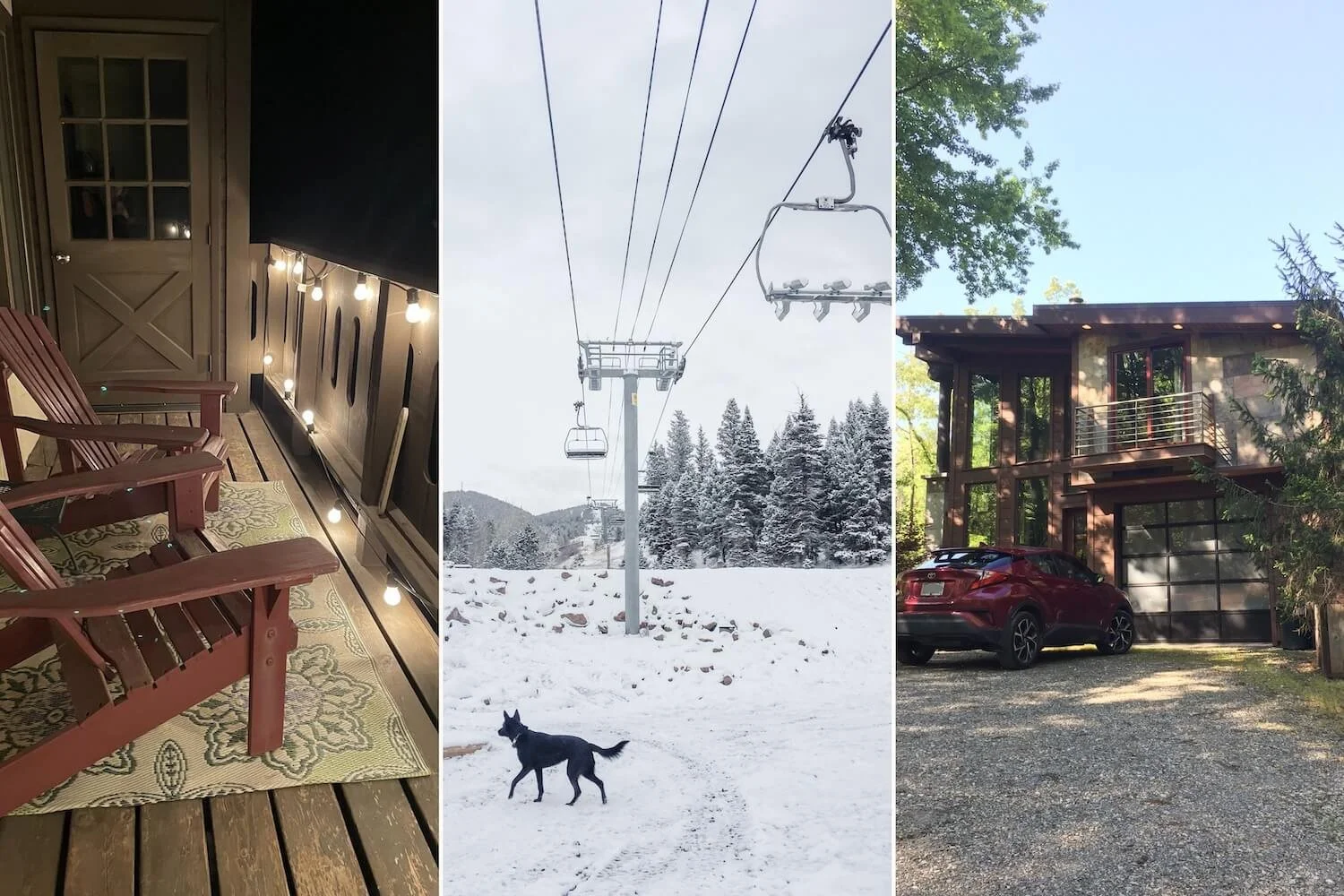
Table of Contents
👋 Meet Us: We’re Jonathan and Kelly, and for five years, we lived on the road for weeks and months at a time—working full-time, building routines in new places, and turning everyday life into a series of road trips. We’ve spent our “Travel Seasons” exploring everywhere from the Canadian Rockies and Alaska’s highways to New England in the fall, and along the way, we’ve learned how to make life on the road feel normal, sustainable, and really, really fun.
Wi-Fi
This is always the first thing we check. Since we both work full-time while traveling, unreliable internet doesn’t just affect whether we can stream Netflix at night. It affects meetings, deadlines, calls, uploads, focus, and overall stress levels throughout the day.
We’ve stayed in places where the Wi-Fi technically worked… until both of us needed to be online at the same time. We’ve dealt with frozen video calls, random outages in the middle of meetings, and listings that advertised “fast Wi-Fi” that clearly hadn’t been tested in years.
At this point, we trust reviews mentioning strong, reliable internet more than listing descriptions themselves. We specifically look for:
reviews that mention working remotely
speed tests or screenshots
recent comments mentioning reliability
any recurring complaints about connectivity
If we’re unsure, we’ll sometimes message the host directly before booking. Either way, we’ll always have a backup plan in place, just in case.
Read Next: How to Work Remotely While Traveling: A Real-Life Guide From the Road
Cleanliness
I’m a bit of a germaphobe, so cleanliness has always mattered a lot to me. (It’s the reason I travel with a “bed-in-a-bag” and bring my own pillow pretty much everywhere we go.)
But after years of long-term travel, cleanliness has become less about preferences and more about whether a place actually feels comfortable to live in for days or weeks at a time. A dusty corner isn’t a huge deal for one night, but if a place feels dirty, sticky, cluttered, poorly maintained, or neglected, you feel it constantly over the course of a longer stay. It changes how much you relax, how well you sleep, whether you want to cook there, and whether you even want to spend time in the space.
This is actually one of the things we prefer about hotels. Certain brands come with a baseline expectation of cleanliness and consistency. And if something isn’t right, there’s typically someone at a front desk who can help immediately or move you to another room.
Vacation rentals can sometimes be more unpredictable, so we’ll rely heavily on reviews. We look for multiple guests mentioning odors, bugs, stains, or maintenance issues (and vice versa, we’ll look for multiple guests mentioning cleanliness specifically).
Oddly enough, if nobody mentions cleanliness at all (not even in a positive way), we see that as a yellow flag too. One negative review doesn’t scare us away, but repeated patterns do.
Read Next: 10 Ways to Make Life on the Road Feel More Like Home
Location, Location, Location
Usually, the first place we look for lodging is directly around the main destination we’re there to see. If we’re going to Colorado for Rocky Mountain National Park, we’ll first look at lodging near Rocky Mountain National Park. If we’re going to Acadia, we’ll first look around Acadia. If we’re traveling for a national park or a major destination, our first instinct is always to see what’s closest.
However, lodging directly beside major attractions or inside national parks is usually not realistic for us budget-wise for longer stays. So from there, we start working outward.
Next, we’ll look at the gateway towns. For Rocky Mountain National Park, that means Estes Park and Grand Lake. From there, we’ll slowly expand our search radius until we find something that fits the balance we’re looking for between price, comfort, functionality, and proximity.
That’s how we ended up spending a month in Winter Park, Colorado. It was about an hour from Rocky Mountain National Park, which was farther than we originally thought we wanted, but it ended up being one of our favorite long-term stays because everyday life there felt so good.
That’s become a realization for us over time: the closest location is not always the best location for actually living somewhere temporarily. Yes, we want the destination to feel accessible. Ideally, we can get there on weekends, and even better if we can occasionally go before or after work.
But we’re also willing to drive for experiences we care about, so proximity alone isn’t enough. Now, we also think a lot more about what everyday life will be like there:
Where can we walk our dog?
What’s nearby?
Are there sidewalks?
Parks?
Coffee shops?
Is it beside a highway or in a huge parking lot district?
How close is the nearest grocery store?
There’s a difference between a place that’s good for sightseeing and a place that feels good to temporarily live in.
We’re generally happiest in places that have some sense of neighborhood life around them: nearby parks, coffee shops, walking paths, local restaurants, grocery stores, or just an area that feels pleasant to exist in day-to-day.
One practical thing we almost always do is zoom out on the Airbnb map enough to identify a nearby landmark or get a general sense of where the property is located. Then we’ll pull up Google Maps and look around the area ourselves. That extra five minutes of research has probably saved us from more bad bookings than almost anything else.
Layout and Space
Since we both work full-time while traveling, we need a place that can realistically function as two offices during the workday.
Jon works a traditional nine-to-five schedule in corporate and spends a huge portion of his day on calls and video meetings. That means he needs:
a reliable workspace
decent lighting
a neutral-looking background for calls
enough room for a second monitor
and a setup that can comfortably support a full workday
Because his setup is less flexible, he’ll usually get the most desk-like workspace available, whether that’s an actual desk, a kitchen table, or a countertop.
As a writer, I’m usually more adaptable. Most days, I can throw on headphones and work alongside him at the same table while he takes calls. Over the years, we’ve worked from kitchen tables, countertops, hotel desks, breakfast bars, outdoor patios, extended-stay hotel suites, and basically any surface that can function as a workspace.
I also travel with a sit-stand laptop riser, which gives me a lot more flexibility in where I can comfortably work throughout the day. Most of the day, we work in the same room. But if we both end up on calls at the same time, one of us needs to go somewhere else. That secondary space doesn’t need to be another office. Sometimes it’s a second bedroom, a patio table outside, a hotel business center, or even just another room with a door.
We also really appreciate places with a separate living area, even if it’s small. We spent a month in a studio-style hotel suite in Calgary that worked much better than some larger rentals we’ve stayed in because it had a desk area, a kitchen countertop workspace, a small couch/living area, and access to a business center. Even though it was technically one room, it still functioned well for everyday life. The bed being the only place to relax gets old during longer stays.
Extra bedrooms are also a nice bonus because they give us space to unpack. One unexpected luxury of a two-bedroom stay is being able to stash luggage, gear, and extra stuff out of sight so it doesn’t constantly feel like you’re living out of suitcases for months at a time.
We also think about layout and space through the lens of traveling with a dog. Lincoln comes with us on our Travel Seasons, so we’re not just looking for a place that works for two adults working remotely. We also need a space that works for her. We travel with her foldable dog crate, so we consider where it will realistically fit. Ideally, we like to keep it in the bedroom near our bed, so when we look at listing photos, we’re mentally trying to figure out: Is there enough floor space? Will the bedroom feel cramped once the crate is set up?
Basically, does the layout still work once you add real-life stuff into it?
Parking
When you’re traveling for an extended period of time, you’re not just carrying one backpack into a hotel room for a weekend. At least we’re not. We’re bringing everything we need to comfortably live and work on the road:
luggage
groceries
hiking gear
camera equipment
work bags
dog supplies
toiletries
all the random little things that slowly become part of everyday life during a Travel Season
So over time, we’ve realized that parking directly affects how easy daily life feels. Whenever possible, we prefer free parking, dedicated parking, on-site parking, and parking close to the entrance. Those are always huge wins for us. We want parking to feel easy.
We don’t want to circle the block every evening, hoping a spot opens up. We don’t want to feel pressured to get back early just to secure a parking spot. And we definitely don’t want that feeling where you almost stop wanting to leave because you finally found a good parking space and don’t want to lose it. At this point, one of our top perks is having a reliable parking spot that we know will still be there when we come back at the end of each day.
Since we travel with our dog, Lincoln, we also pay attention to entrances and exits. This becomes especially important in places like hotels, apartment buildings, condos, and larger complexes. We really appreciate setups where it’s easy to take her outside quickly in the morning or late at night without navigating crowded lobbies, long hallways, elevators, or busy common areas every single time.
So when we’re evaluating a stay, we’re thinking about the entire arrival-and-departure experience that’s happening multiple times a day:
How far is the walk from the car?
How easy is unloading?
How difficult will this feel after a grocery run?
What does taking Lincoln outside look like?
Laundry
There are a few comfort features that become even more valuable the longer you stay. Laundry is one of them.
We’ve had plenty of laundromat experiences over the years, and they’re completely manageable once you know where they are and plan around them. But if a place has in-unit laundry, that’s a huge bonus.
We’re typically doing laundry about once a week while we’re traveling. Sometimes we can stretch it to every other week if we pack really intentionally, but eventually, no matter how good you are at packing, you’re going to need to do laundry.
The other thing we’ve learned is that our tolerance for inconvenience changes over the course of a Travel Season. At the beginning of a trip, we’re energized. We’re excited to be there. We’re more willing to deal with shared laundry or a laundromat or a weird setup because the trip has just started.
By the end of a two- or three-month stretch on the road, we just want to throw a load in without putting on shoes, walking outside, driving somewhere, setting timers, or planning part of our evening around whether the dryer is finished yet. That’s why in-unit laundry has become something we’re increasingly willing to pay more for.
Either way, figuring out the laundry situation before booking is important if it’s not included in the stay itself. If there’s no in-unit laundry, is there shared laundry somewhere on-site? If not, where’s the nearest laundromat? Do you need quarters? Dollar bills? An app? Is it walkable or are you driving there every week?
Air conditioning is another amenity we look for. We spent an entire New England season staying in places without AC because many homes there don’t have it. It was okay, but also made us realize how much those kinds of comfort features matter once you’re not just vacationing somewhere for a couple of days.
When you’re living and working somewhere temporarily, all of these things start affecting your sleep, mood, productivity, and overall experience more than you might expect.
Read Next: How We Handle Groceries, Laundry, and Everyday Life on the Road
Kitchen Setup
Truthfully, we don’t care too much about having a fancy kitchen because we don’t cook a lot on the road. Part of the reason we travel is to experience different places, including the restaurants, local food, breweries, coffee shops, and markets we don’t have at home. We eat out often while traveling.
At the same time, eating every single meal out for weeks or months gets expensive fast, and eventually you start craving more routine, too. Our goal for a kitchen on the road is: Can this kitchen support breakfast, lunch, and occasional easy dinners?
We keep meals very easy while traveling, focusing on peanut butter and jelly, grilled cheese sandwiches, deli meat sandwiches, breakfast bars, pasta, frozen pizza, and frozen vegetables. When we grocery shop on the road, we’re usually stocking up on breakfast food, snacks, drinks, easy lunches, and simple dinners for a few nights each week. We prioritize simple meals that don’t require a lot of prep and won’t go bad immediately if our plans change.
That said, there are a few kitchen features that make a big difference for us. A full-size fridge is probably one of the biggest ones. We really like being able to do a proper grocery run and not feel like the fridge is immediately overflowing.
An oven is another big plus because we do easy meals like frozen pizza and veggie trays often on the road.
I also like having a dishwasher. Part of that is for convenience, but part of it is also for comfort. One of the first things I do when we arrive somewhere new is run the dishwasher so all the dishes feel clean and reset for us.
Read Next: Road Life: What We Do the First 24 Hours in a New Place
The Negative Reviews
We read the negative reviews, not to scare ourselves by single reviews but to look for patterns. This is something we do for vacation rentals and hotels. If we’re booking a hotel, we’re not just looking at the overall Marriott or Hilton brand reputation. We’re searching the specific property itself and reading reviews for that exact location.
We specifically filter for the low-star reviews and start looking for repeated issues. One person complaining about something minor isn’t a huge deal to us. Things happen. But patterns matter.
If multiple people mention:
uncomfortable beds
loud neighbors
unreliable Wi-Fi
cleanliness problems
confusing parking
poor communication
thin walls
safety concerns
…we pay attention.
The specifics matter more to us than the actual star rating itself. We care more about what people are saying.
Noise is a big one for us, for example. I’m a sensitive sleeper, so I travel with a sound machine, which has helped tremendously, but if multiple reviews mention street noise, thin walls, loud neighbors, trains, or loud traffic, that’s going to stand out.
Same thing with Wi-Fi. If someone says, “The Wi-Fi dropped once,” that’s one thing. If five people mention internet issues over several months, that’s something we’re going to take seriously because we know how much it affects our daily life.
Cleanliness is another one we pay close attention to. A one-off review mentioning dust or a missed cleaning issue doesn’t scare us away, especially if the host responded thoughtfully and addressed it. But if multiple reviews repeatedly mention odors, stained furniture, or maintenance issues without resolution from the host, that’s a concern.
The goal isn’t to find a perfect place with zero complaints. The goal is to figure out: “What problems would actually affect our daily life if we stayed here for a month?” Basically, what can we live with and what can’t we?
Airbnb vs Hotels: How We Think About It
We use both, and our preferences have changed over time.
When we first started traveling and working remotely, we leaned heavily toward Airbnbs and vacation rentals. At the time, they simply worked better for the way we traveled. They were usually more pet-friendly, gave us more space, had kitchens, and felt more comfortable for longer stays. They also helped us feel more connected to a place in a way hotels usually can’t.
Our early Travel Seasons were shaped by vacation rentals, and years of staying in Airbnbs and VRBOs as guests eventually played a role in us becoming hosts ourselves. Spending years living on the road taught us exactly what makes a stay feel stressful, easy, comfortable, functional, memorable, frustrating, cozy, or welcoming. That influenced our decision to buy and renovate cabins near Yellowstone’s North Entrance.
At the same time, after a few years on the road, we started appreciating consistency more. There’s something nice about knowing generally what you’re going to get from a hotel. Reliable Wi-Fi. Predictable cleanliness. Straightforward parking. Easy check-in. A front desk if something goes wrong. Gym. Breakfast. Flexible cancellations.
We especially like extended-stay hotels because they often have kitchenettes or full kitchens, more living space, work-friendly layouts, on-site laundry, and reliable Wi-Fi.
Today, we don’t think one is universally better than the other. They just create different types of travel. Airbnbs and vacation rentals tend to immerse you in a destination differently. You’re in neighborhoods. You’re grocery shopping where locals shop. You’re walking the same streets people who live there walk every day. The stay itself becomes part of the memory, and these places are usually more unique, more memorable, and a bigger part of the actual experience of living somewhere temporarily.
Hotels are different. Hotels feel more familiar and reliable. You usually know what you’re getting, and there’s comfort in the predictability of brands, but they’re usually not as immersed in an area. One thing hotels do really well compared to vacation rentals is loyalty programs. When you’re on the road for weeks and months at a time, the points add up.
Marriott Bonvoy (affiliate link) is the loyalty program we chose years ago, when we realized how quickly hotel rewards could add up. (If you book through this link, we may earn a commission at no additional cost to you. We became Marriott Bonvoy members long before we started Road Trip Locals or had an affiliate relationship with Marriott, and it’s still the program we personally use today.)
Lodging for our 10-day Dakotas road trip is being paid for entirely with points, and we’ll still have hundreds of thousands of points leftover. We get at least one night free as a bonus each year. This is something we didn’t think about early on, but after years of long-term travel, loyalty programs start compounding in a very helpful way.
More on Road Trip Locals
🚗 Want to read more from our Living on the Road series? Read Next: What Daily Life on the Road Actually Looks Like
🌎 Curious where we’ve been around the U.S. and Canada? Browse our Travel Seasons for real-life itineraries and practical tips from months spent living and working on the road.
🧳 Want to know exactly what we pack? Check out our complete Road Trip Packing List for the exact things we use and love on every trip!
🐻 In the mood for adventure? Read Alaska Diaries, a seven-part travelogue from the time we roadtripped Alaska to explore eight national parks in 21 days.
🦬 And if Yellowstone’s on your list, don’t miss our Yellowstone Travel Guide: your step-by-step companion to planning an unforgettable trip to Yellowstone National Park!