
What Daily Life on the Road Actually Looks Like
Daily life on the road looks both like normal life and like vacation kind of at once. We still work full-time. We still have routines, errands, grocery runs, laundry days, and regular responsibilities. We still answer emails, walk Lincoln every morning, and spend Mondays and Wednesdays catching up on life or work instead of doing something exciting.
At the same time, our “normal life” happens in a completely different place every few weeks. One month, our evening workout is hiking a mountain outside Lake Placid with views over the Adirondacks. Next, we’re trail running in Vermont or navigating a slot canyon near Kanab, Utah. Some weekends are mini road trips through Colorado. Others are spent wildlife watching in Yellowstone or trying a new restaurant in a town we’ve never been to before.
That’s probably the best way we know how to explain life on the road after five years of doing it. It’s not vacation every day, but it’s not just normal life either. It’s a version of everyday life where travel and adventure are woven into the middle of it. Here’s what our daily life on the road actually looks like.
This post is part of our “Living on the Road” series. You can read the rest here:

Table of Contents
👋 Meet Us: We’re Jonathan and Kelly, and for five years, we lived on the road for weeks and months at a time—working full-time, building routines in new places, and turning everyday life into a series of road trips. We’ve spent our “Travel Seasons” exploring everywhere from the Canadian Rockies and Alaska’s highways to New England in the fall, and along the way, we’ve learned how to make life on the road feel normal, sustainable, and really, really fun.
It’s Not a Vacation Every Day
This is probably the biggest misconception. We’re not out doing bucket-list activities from sunrise to sunset every day. If we tried to do that, we’d burn out fast.
Instead, most days fall somewhere in the middle: a little bit of work, a little bit of exploring, a lot of normal life in between. Workweeks still look mostly like workweeks. Weekends look a lot more like traditional vacation days.
Then there are move days, where we pack everything back into the car, drive to the next place, and start the process all over again.
What Workweeks Look Like
Workweeks generally look like workweeks. We work standard nine-to-five hours, plus or minus. Sometimes we’ll get up early for a hike or a trail run before work, or shift things slightly so we can get out earlier in the evening.
Morning
Jon usually jumps straight into work because if he starts earlier, he might be able to finish the workday earlier, which gives us a better chance of doing something after work.
I usually start with coffee and a walk with Lincoln. We try to adapt our everyday routine to wherever we are. At home, I walk Lincoln first thing in the morning, so on the road, I’m still walking Lincoln first thing. In Hamilton, Ontario, we walked around a nearby waterfront park, usually with Tim Hortons coffee in hand. In Vermont, we ran a nearby mountain trail that doubled as our workout for the day. In other places, we’re just walking around the block or the neighborhood, just as we would at home.
Midday
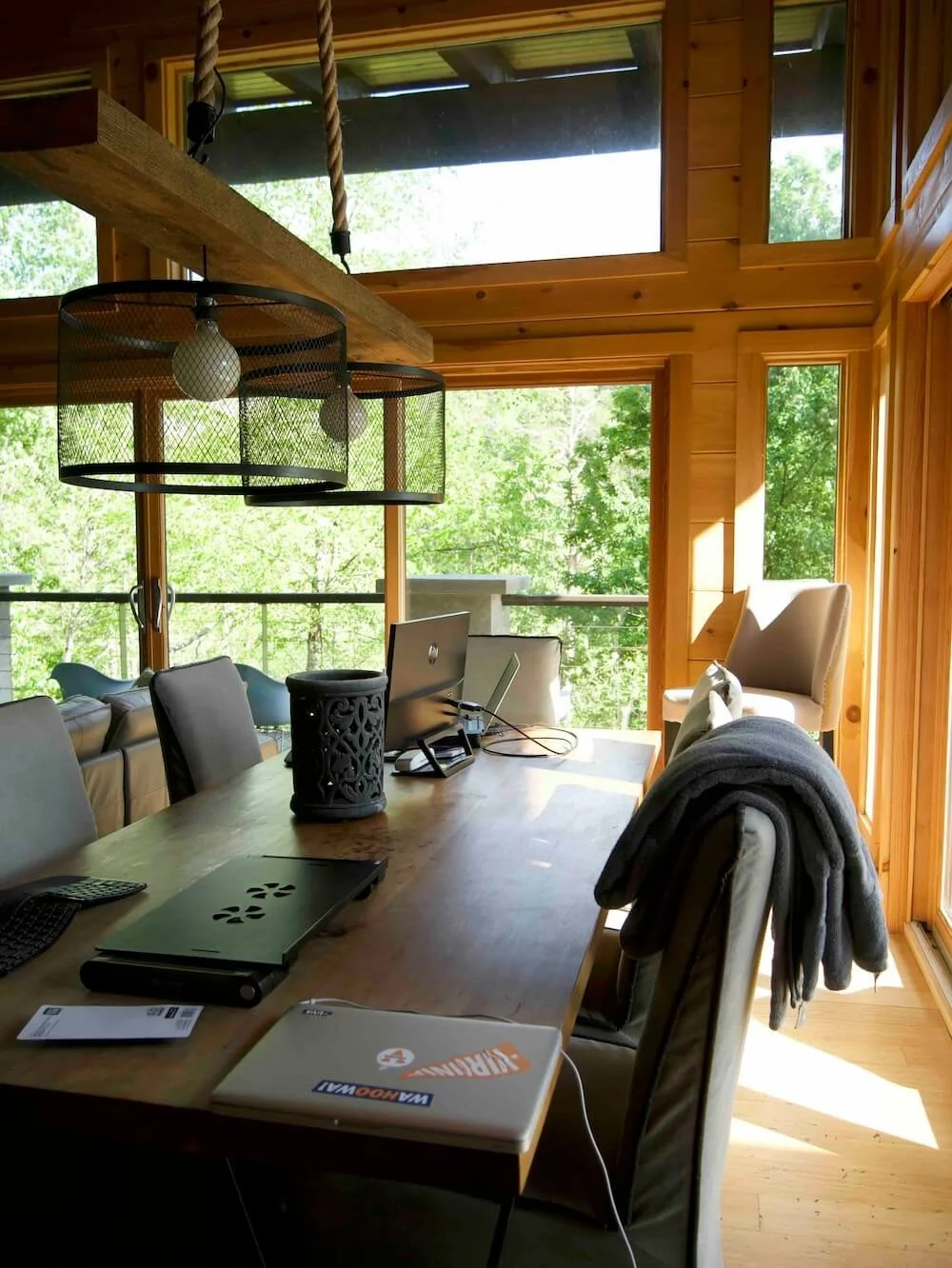
Then, the workday starts. Jon is usually in back-to-back meetings, needing a quiet space, a clean background, and reliable Wi-Fi. I’m usually in writing mode, working through blog posts, content, or client projects.
This is where our setup matters most. We’ll each set up our workstation, use headphones, and coordinate if we both have calls at the same time. From the outside, it looks like a normal workday, with the only difference being where we are.
If we’re both on calls at the same time, we need a backup plan. Ideally, the place has strong enough Wi-Fi and enough space that we can both work from the house, but we still have to be flexible depending on the layout.
Evening
We’ve learned over time that not every evening can be busy, so we actually plan our week around that.
Mondays and Wednesdays are usually our admin, catch-up, and rest nights. If we need to work longer, we can. If we need to do laundry, we can. If we just want to make a simple dinner, take Lincoln for a walk, watch a movie, and go to bed, that’s what these nights are for.
Tuesdays, Thursdays, and Fridays are usually when we’ll plan an activity after work. A nearby hike, winery, restaurant, brewery, viewpoint, or some smaller activity that fits into a couple of hours.
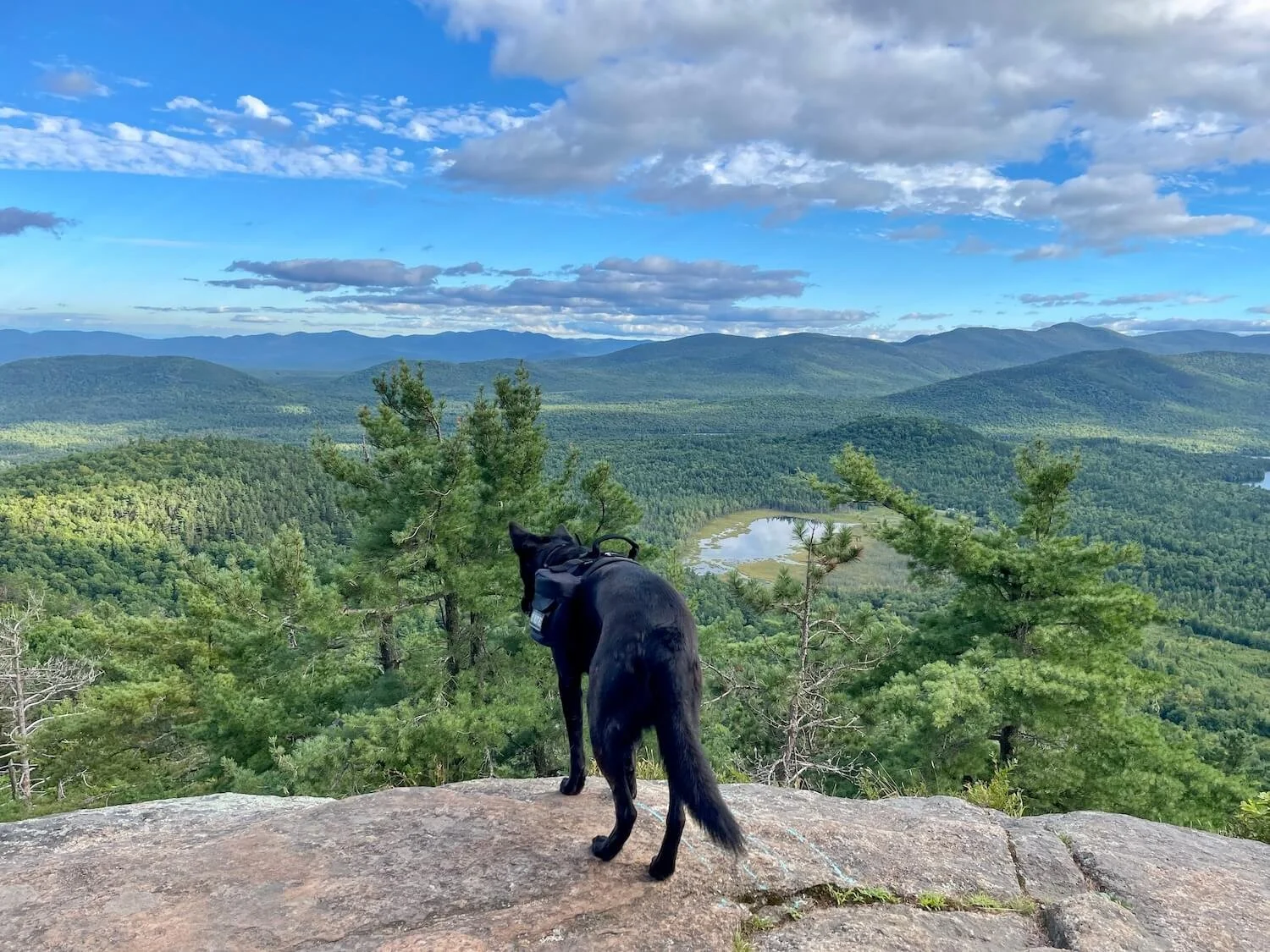
Similar to walks with Lincoln, we try to adapt exercise to wherever we are in the world. At home, we like to work out, so on the road, we still want some version of that. Sometimes that’s our portable travel gym, sometimes it’s a run at a park, sometimes Lincoln’s walk turns into a trail run, and sometimes a hike becomes the workout.
Outside Lake Placid, there was a trail that was about a mile straight up. It was short enough to do after work, but steep enough that it absolutely counted as a workout. Then you got to the top and had this huge lake-and-mountain view, which is one of those perfect examples of how travel and everyday life blend together on the road.
Weeknights are usually not when we’re doing the biggest version of a destination unless the destination is right there. For example, when we’re staying at our cabins in Gardiner, Montana, we can hop into Yellowstone before work for wildlife watching or after work to walk Mammoth Hot Springs at sunset. But if we’re farther from the national park or highlight attraction, we’re saving those activities for the weekend.
Dinner usually happens somewhere while we’re out, or we keep it simple when we get back.
What Weekends Look Like
Weekends are our heavy travel days. These are the days that feel most like a traditional vacation because we can plan longer hikes, bigger day trips, scenic drives, national park days, brewery hopping, restaurant hopping, or whatever makes sense for the area.
When we stayed in Winter Park, Colorado, for a month, we used it as a home base and took weekend day trips to Rocky Mountain National Park, Vail, Steamboat Springs, and even Grand Junction. Cost-wise and logistics-wise, it made sense to stay in one place, but we still wanted to see as much of Colorado as we could, so our weekends became mini road trips.
In New Hampshire, Franconia Ridge was the kind of hike that needed a weekend day. We arrived early, spent all day on the trail, and came home ready to crash, eat, and have a movie marathon.
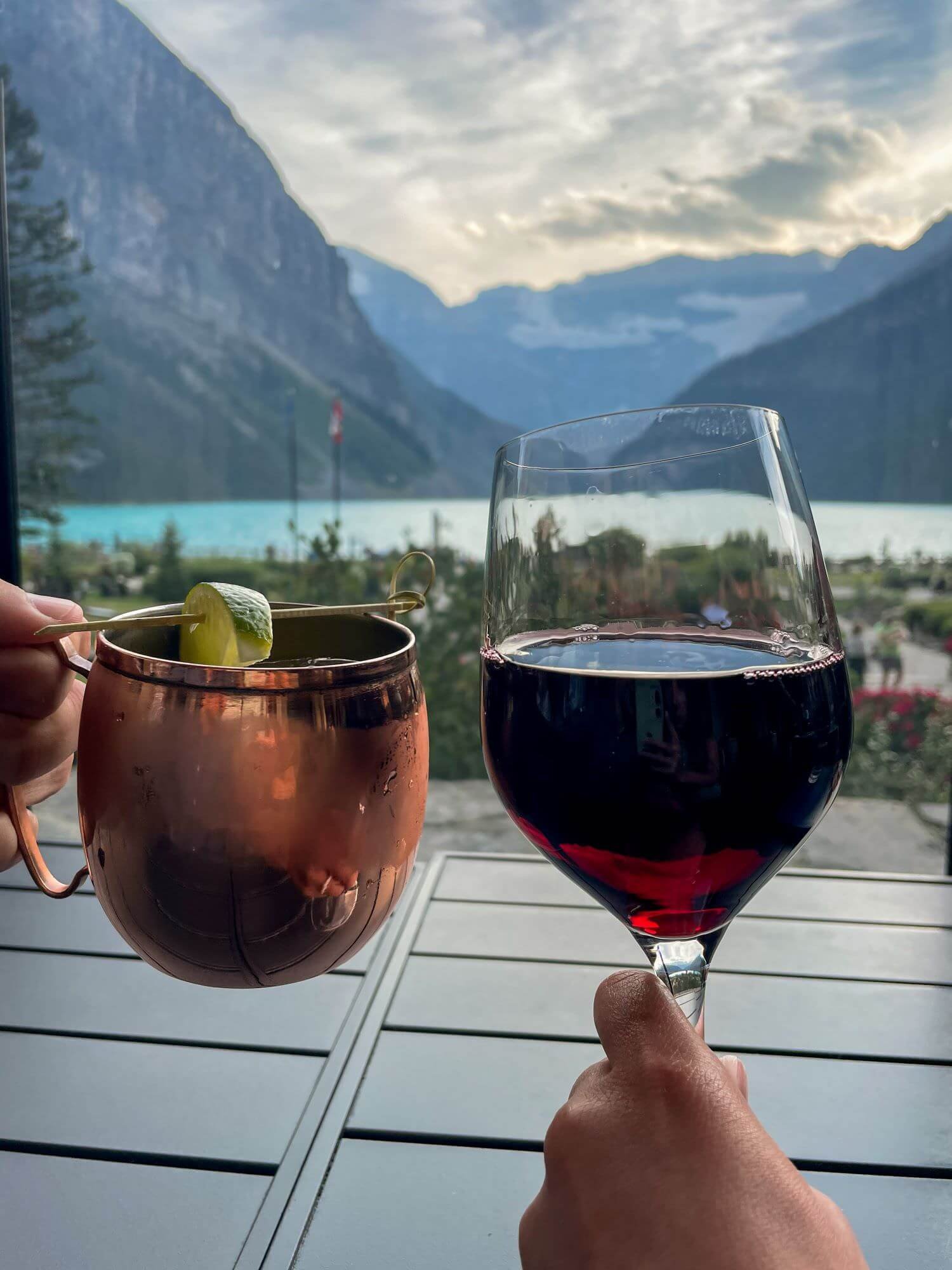
In other places, we’ve spent our weekend days having a three-course meal overlooking Lake Louise, celebrating Halloween in Salem, wandering New England’s largest corn maze, and flightseeing over the Gulf on our way to Fort Jefferson.
Move Days Are Their Own Kind of Day
The other kind of day we have is a move day.
One of the biggest things we’ve learned is that we personally enjoy long-term travel more when we stay somewhere long enough to settle in.
In the beginning, we moved more often because it felt exciting. Eventually, we were spending so much energy constantly relearning a new space and a new area that it started to wear us out. Now, most of our stays are at least a week, but one full month in a place is our sweet spot.
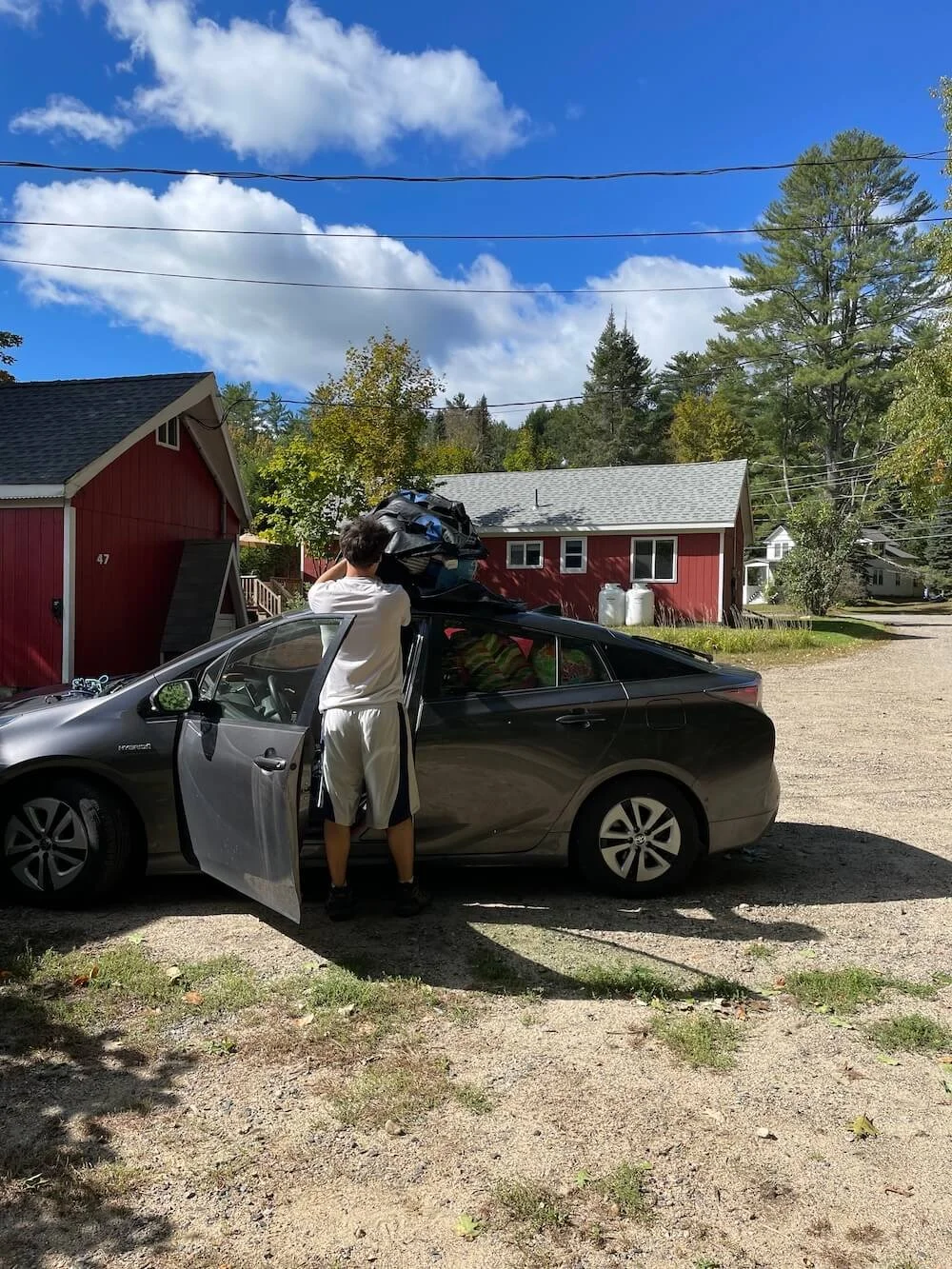
When it’s time to move from one area to the next, we consider that a move day. These days look like packing everything up, doing our checkout routine, cleaning the place, loading the car, driving to the next destination, unloading again, and then doing our first-24-hours setup once more.
These days are different because the whole goal is just getting from one place to the next and getting ourselves reset once we arrive.
Errands Don’t Stop (They Just Move With You)
Life admin also doesn’t go away just because we’re in a new location.
We still grocery shop, do laundry, refill prescriptions, and deal with whatever random life stuff pops up that week. The difference is we’re figuring it out somewhere new every couple of weeks. A new grocery store, a slightly different routine. Now it feels normal, but in the beginning, even simple things took more effort than we expected.
Over time, we learned to simplify this part of life on the road as much as possible. We try to find our basics quickly when we arrive, batch errands when we can, keep running lists on our phones so we’re not constantly making extra trips, and if something is challenging to find locally, we’ll bring it with us or see if we can have it shipped to wherever we’re staying. Here’s how we handle deliveries on the road.
The bigger shift isn’t just how we handle errands, but how we prioritize our days to minimize them. While on Travel Season, we work full-time and do whatever life admin is required, but we’re more intentional about what has to get done.
We don’t schedule maintenance appointments, worry about home projects, or fill our time with things that can wait. If it doesn’t need to happen right now, it doesn’t come on the road with us. Things like regular doctor and dentist appointments, car maintenance, and bigger life admin tasks are all handled before we leave or when we get back.
This creates a different kind of freedom on the road, because our to-do lists are smaller. It’s work and travel. That’s generally it, and the best example of what daily life on the road looks like for us—not a break from real life, but a simpler version of it, adapted to where in the world we are.
Read Next: How We Handle Groceries, Laundry, and Everyday Life on the Road
Some Days Are Just Normal
Not every day is interesting. Some days are just work all day, make dinner, watch a show, and go to bed. Then there are plenty of Sundays where we’re just packing everything up, cleaning the place, loading the car, driving a few hours, and then unpacking again.
We’ve gotten faster, but those moving days are still a full day of transition. We’ve built a system for it over time. We know where everything goes, what gets packed first, what gets wiped down last, and how to move through our checkout routine without thinking too hard about it. At the beginning of a season, it takes longer. By the end, we can pack, clean, and be out the door in about two hours.
There are other unglamorous moments, too, like spending an evening at a laundromat because the rental doesn’t have a washer and dryer. These days don’t feel like vacation, and they feel more annoying than normal days at home, but they make the entire trip sustainable.
Some Days Are the Ones You Remember Forever
Then there are the days that feel like they don’t belong in your regular life at all. The days when you’re checking off bucket list experiences in between normal work weeks.
Staying at the Fairmont Chateau Lake Louise.
Hiking The Wave on the Arizona-Utah border.
Watching peak fall foliage in New England.
Standing in a field in Albuquerque as hundreds of hot air balloons lift off the ground.
Those are the kinds of experiences this lifestyle makes room for. They stop feeling like once-a-year events and start feeling like part of your actual life. You go from an evening spent at the laundromat… to doing something you’ll talk about for the rest of your life. That contrast is what makes it all feel so incredible.
It’s Simpler Than It Sounds
Daily life on the road isn’t a perfectly curated version of travel. We’re not working from a laptop on the beach or doing something exciting every day. Some days are more interesting. Some are completely routine. Some are a little frustrating.
The best way I know to explain daily life on the road is that it’s both normal life and vacation all at once. Workweeks still look like workweeks. Weekends feel more like travel. Move days are their own thing entirely.
The magic is when it all starts blending together: Lincoln’s morning walk turning into a trail run with a mountain view, a full workday while watching the leaves change out the window, finding a new restaurant you love and returning every chance you get, and then waking up the next morning to take a day trip to a national park or enjoy an activity you’ve dreamt about for years.
More on Road Trip Locals
🌎 Curious where we’ve been around the U.S. and Canada? Browse our Travel Seasons for real-life itineraries and practical tips from months spent living and working on the road.
🧳 Want to know exactly what we pack on the road? Check out our complete Road Trip Packing List for the exact things we use and love on every trip!
💻 Working while you travel? Start with 12 Things to Know for Working From the Road and 11 Truths About Traveling While Working.
🐻 In the mood for adventure? Read Alaska Diaries, a seven-part travelogue from the time we roadtripped Alaska to explore eight national parks in 21 days.
🏡 Wonder what it’s like to buy a fixer-upper near Yellowstone National Park? Follow our renovation rollercoaster in The Cabin Chronicles.
🦬 Is Yellowstone on your bucket list? Don’t miss our Yellowstone Travel Guide: your step-by-step companion to planning an unforgettable trip to Yellowstone National Park!