
How We Handle Health, Prescriptions, and Appointments While Traveling
This is one of those parts of living on the road that isn’t glamorous, but has to be figured out if you’re going to travel for weeks or months at a time. Because even while you’re traveling, life still lifes. You still have prescriptions and appointments to handle, and when you’re in a completely different state, those things can feel complicated at first.
After years of Travel Seasons, shipping prescriptions to Airbnbs, packing refrigerated medication for 12-hour road trips, and finding urgent care in unfamiliar towns, we’ve learned that this part of life on the road is completely manageable once you find a system that works for you. Here’s ours!
This post is part of our Living on the Road series, where we share what it actually looks like to work remotely while traveling for weeks and months at a time. Start here:

Table of Contents
👋 Meet Us: We’re Jonathan and Kelly, and for five years, we lived on the road for weeks and months at a time—working full-time, building routines in new places, and turning everyday life into a series of road trips. We’ve spent our “Travel Seasons” exploring everywhere from the Canadian Rockies and Alaska’s highways to New England in the fall, and along the way, we’ve learned how to make life on the road feel normal, sustainable, and really, really fun.
1. We Don’t Plan Appointments While Traveling
This is probably the biggest shift in how we approach things. We don’t try to schedule routine appointments on the road.
Instead, we treat our time at home as our reset window. That’s when we schedule doctor and dentist appointments, handle anything routine or preventative, or take care of anything we’ve been putting off. We either do this right before we leave for a Travel Season, or as soon as we get back. The latter is better, so there’s plenty of time for any follow-up tests or appointments.
Trying to coordinate routine care in unfamiliar places just adds unnecessary stress, so it’s a lot easier to batch everything when we’re home. It also makes being on the road more fun, because this is one way it feels like a vacation. (Fewer to-dos!)
2. We Use Virtual Care and Urgent Care on the Road
Things still happen on the road. You get sick. Something starts bothering you. You wake up and realize, “Okay, I probably shouldn’t ignore this.”
When that happens, our two main options are usually virtual care or urgent care.
For many years, our go-to was Doctor on Demand because insurance companies weren’t offering as much virtual care yet, and it made things incredibly easy while traveling.
I used Doctor on Demand in Alaska after an ingrown toenail got infected in the middle of the trip. After spending an entire day smashing my foot against a wall of ice (ice climbing), I woke up the next morning barely able to walk. At a pitstop in Anchorage, I took a Doctor on Demand appointment from a Walmart parking lot. Antibiotics were sent to the Walmart pharmacy we already needed to stop at for groceries. In less than 30 minutes, the situation was taken care of, and we continued our trip.
We’ve used virtual care several other times while traveling, especially for things that needed to be handled quickly but didn’t necessarily require in-person care. Now, a lot of insurance companies offer their own virtual care systems directly through their apps, which makes this even easier.
One thing I would absolutely recommend before leaving for a long trip is setting all of that up before you actually need it.
Download the apps.
Create your account.
Upload your insurance.
Save your payment method.
Figure out how the system works.
Because when something is wrong, you don’t want to be learning new technology while simultaneously trying to get healthcare. You just want to open the app, connect with somebody quickly, and move on.
Urgent care is the other piece of this for us.Sometimes you do need to be seen in person.
When we were in Yellowstone one spring, Jonathan ended up with a tooth infection that needed immediate attention before we flew to our next destination. That obviously wasn’t something virtual care could handle appropriately.
So we found an urgent care in Bozeman, got him seen quickly, got the medication he needed, and handled everything before our next travel day. That experience taught us another important lesson: before a long trip, understand how your insurance works nationally. Know how to find in-network urgent care, whether your insurance has an app, where to search for providers, what urgent care systems are covered, and how prescriptions work across state lines.
Again, you don’t want to figure all of that out while stressed, sick, or standing in a parking lot trying to decide where to go. You want the systems already in place so you can focus on getting care and getting back to your trip.
3. We Bring as Much as We Can With Us
Whenever possible, we try to bring as much as we can with us before a Travel Season even starts. That is always going to be the easiest option. If there’s any way to avoid dealing with prescriptions, deliveries, transfers, or refill coordination while moving around the country, we’re going to try that first.
Before extended travel, we’ll ask:
Can this prescription be filled early?
Can we get a three-month supply instead of one month?
Can we get extra refills approved before we leave?
It’s worth asking and explaining the situation to your doctor. “Hey, we’re going to be traveling for the next three months. Is there any way to get a larger refill before I leave?” Sometimes the answer is no. But sometimes the answer is yes, and it makes life dramatically easier.
The overall goal is pretty simple: bring what we can so we don’t have to constantly think about it on the road.
4. If We Can’t Bring It, We Plan Deliveries Ahead
Some medications simply can’t be stocked up ahead of time. For me, that includes a specialty medication that gets delivered monthly. This is where things require a little more coordination and planning.
Before each season, we think through:
Where will we be staying and for how long?
Will we still be there if shipping gets delayed?
Does the host allow packages?
Is this a reliable place to receive something important?
If we’re staying somewhere for a full month, that’s usually ideal because it gives us enough buffer time for delays. We’ll also usually schedule important deliveries for the middle of the stay instead of the beginning or end because it gives us flexibility on both sides if anything goes wrong.
And yes, always confirm package deliveries with hosts or hotels beforehand.
Read Next: How We Handle Deliveries On the Road
5. Refrigerated Medications Get Unpacked First
One of the trickier parts of long-term travel is managing a refrigerated medication that has to stay temperature-controlled while we’re moving from place to place.
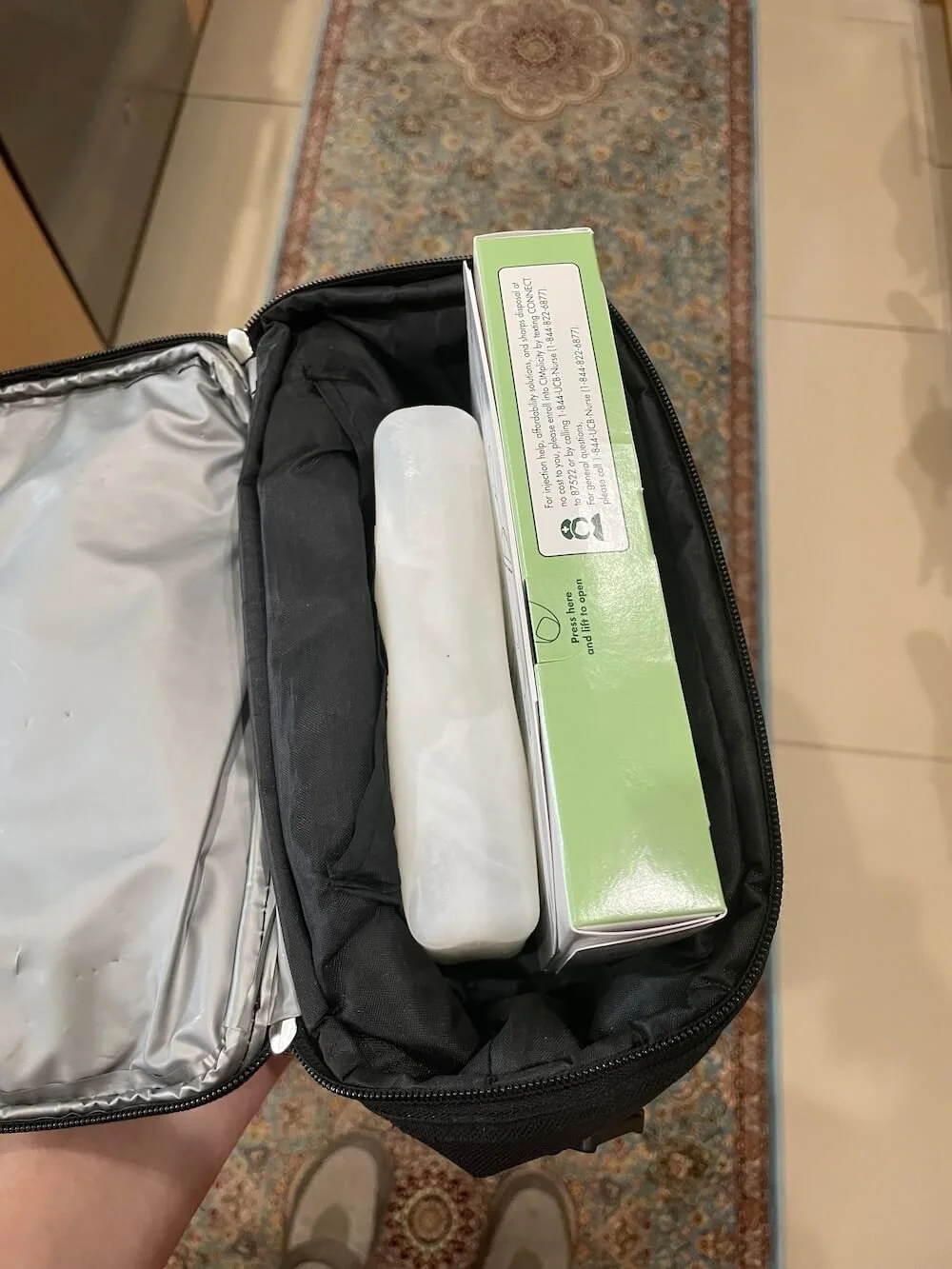
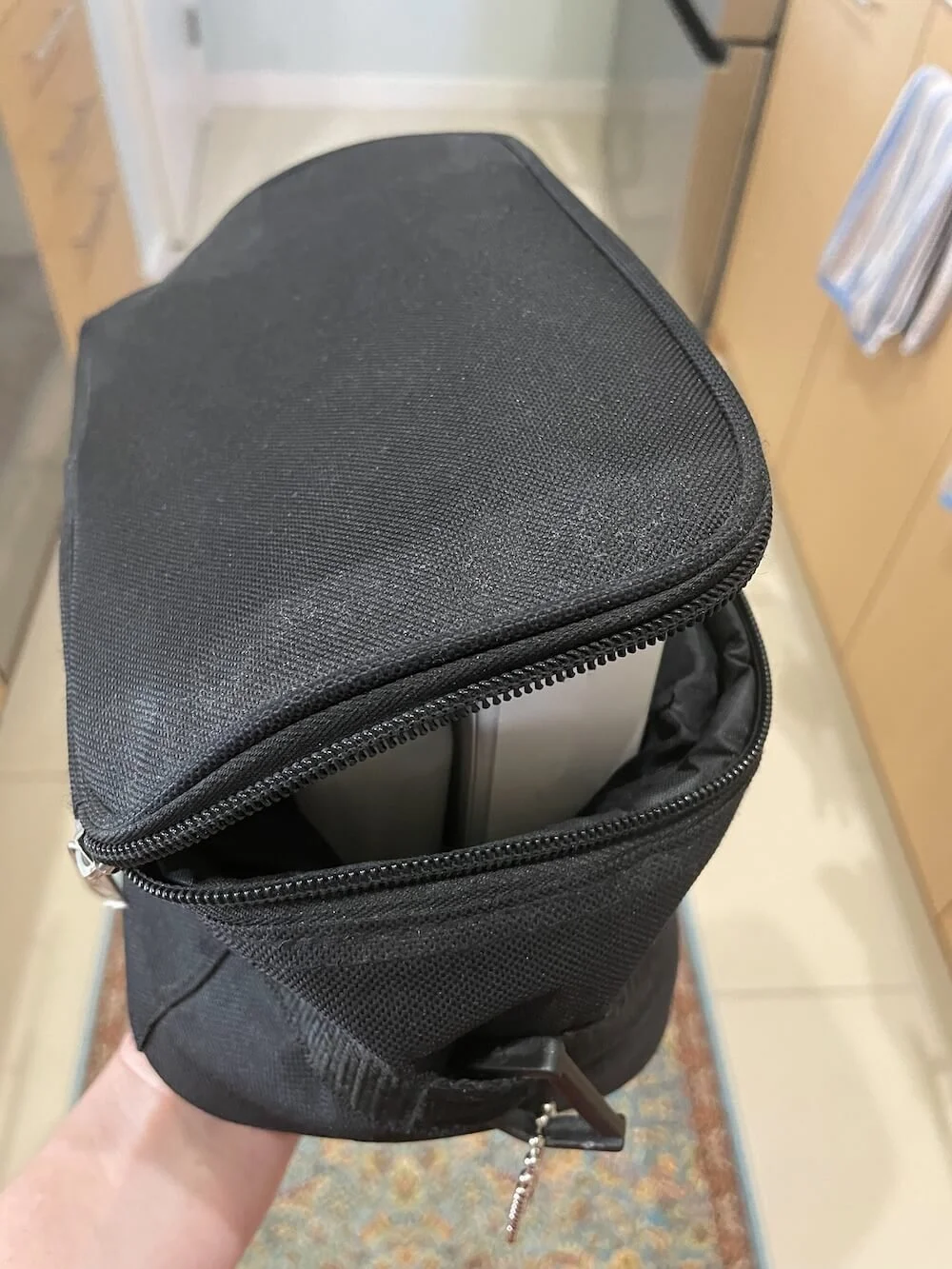
To do this, I travel with a dedicated medication bag and an ice pack, and one of the first things I do whenever we arrive somewhere new is take that bag out of the car, put the medication into the fridge, and put the ice packs into the freezer so they’re ready for the next travel day.
That part matters because travel days are really the biggest thing I’m planning around. The medication itself needs to stay temperature-controlled while we’re driving, so I need the ice packs frozen and ready to go every time we move locations. Then, I’ll place the medication at my feet in the front seat so it has air conditioning and isn’t easily forgotten about. (I don’t want it to overheat in a bag stuffed in the back of the car.)
I’ve also learned the hard way that anything stored in a fridge or freezer is incredibly easy to forget when you’re packing up an Airbnb. Especially because this isn’t a medication I take every day. I take it every two weeks, so there are plenty of times we move to another location before I actually need to use it again. Which means it’s very possible for it to sit in the fridge quietly while I’m focused on packing literally everything else.
After placing the medication in the fridge and the ice packs in the freezer, I’ll put the medication bag somewhere extremely obvious: beside the front door, beside my suitcase, somewhere I physically cannot miss it while loading the car. I’ll even set alarms on travel days just to double-check that the medication came out of the fridge and made it into the car before we left (or vice versa, out of the car and into the fridge).
Any little bit of an automatic reminder is helpful when you’re juggling so many things at once on move day or a trip!
6. We Use Nationwide Pharmacies When Possible
For prescriptions that can be picked up locally, one thing that has helped us a lot is using a nationwide pharmacy chain. For us, that’s usually CVS.
The biggest reason is flexibility. If we’re traveling for months at a time, there’s a good chance I’m eventually going to need something transferred from wherever we started the trip to wherever we currently are. We learned that during a stay in Virginia Beach, when I needed a prescription transferred from Dallas so I could pick it up locally in Virginia Beach.
That was one of the first times we really had to figure out how prescription transfers worked while traveling, and it was a little clunkier than I expected. Usually, you have to contact the pharmacy where you want the prescription transferred to, and then they coordinate with the original pharmacy to move everything over. Sometimes it’s quick. Sometimes it takes until the next day. Sometimes you end up on hold longer than you’d like while sitting in a parking lot trying to explain why you need a one-time transfer.
It’s not difficult once you understand the process, but it’s definitely the kind of thing you’d rather not be figuring out after you’ve already run out of medication. So now, whenever possible, we try to keep prescriptions with pharmacies that exist both at home and in the places we travel most often. It gives us a lot more flexibility if something comes up during a longer trip because we already know the system and how to make it work.
You might be able to transfer prescriptions through the app, but this has never worked for me. I’ve always had to call and usually leave a voice message requesting the transfer. Wait for a call back, confirm, then I can pick up the medication in 24 to 48 hours.
More on Road Trip Locals
🚗 Want to read more from our Living on the Road series? What Daily Life on the Road Actually Looks Like, How We Handle Mail, Deliveries, and Life Logistics on the Road, The Hard Part of Living on the Road (That No One Talks About)
🌎 Curious where we’ve been around the U.S. and Canada? Browse our Travel Seasons for real-life itineraries and practical tips from months spent living and working on the road.
🧳 Want to know exactly what we pack on the road? Check out our complete Road Trip Packing List for the exact things we use and love on every trip!
🐻 In the mood for adventure? Read Alaska Diaries, a seven-part travelogue from the time we roadtripped Alaska to explore eight national parks in 21 days.
🦬 And if Yellowstone’s on your list, don’t miss our Yellowstone Travel Guide: your step-by-step companion to planning an unforgettable trip to Yellowstone National Park!