(#3) Cabin Chronicles: The Good, The Bad, The Inspection Report
After touring the cabins in Gardiner, we left town for the final stretch of our 2023 Travel Season. But as we settled back into our regular routine, we couldn’t stop thinking about Montana.
Yes, there was work to be done, but there was also potential. We’d spent years searching, putting in offers, touring properties, and looking at dozens and dozens of listings. Nothing had checked all the boxes, but standing there on this property next to Yellowstone National Park, we wondered if we finally found what we were searching for.
What We Thought We Wanted and Why That Changed
After a year of looking, we began wondering if it was even possible to find what we wanted, already built and in our price point, so we tossed around the idea of buying land. We’d manage some of the groundwork, such as excavation and connecting to utilities, but figured the cabins themselves would be built off-site, by a prefab builder, and delivered as a turnkey unit.
After another year and a half, we still hadn’t been able to find:
Land zoned for multiple residences in a location we wanted to be in
Properties that allowed short-term rentals
Parcels that didn’t require complex permitting
Something in our price point
We had only just begun adjusting our expectations again when we stumbled upon the listing in Gardiner. In other words, the idea of taking on a fixer-upper that needed immediate attention, visible repairs, and a long list of to-dos was still pretty new. The property had real potential and fit what we were looking for better than anything we’d seen thus far, but we hadn’t pictured it arriving in such a rough package. (To say the least.)
Back in Texas, Still Thinking About Montana
Settling back into our regular seats at Mavericks basketball games, we were casually chatting numbers during time-outs. On one hand, this place needed a ton of work.
On the other? It was located:
Less than a mile from Yellowstone’s North Entrance
In town with walkability to restaurants and shops
In a year-round destination with multiple tourism seasons
On a property with four structures and no HOA or permitting limitations
Plus, it came with a surprise. The sellers were offering owner financing at 4.5% interest, when mortgage rates were 6.5-6.75%. We could borrow money at almost the same rate we were earning in our high-yield savings account, and that alone was a game-changer.
Of course, we still had questions. What was the actual market value of this place? Were we missing something? Would the renovations cost more than we were budgeting?
We knew this wouldn’t be like past home purchases. This wasn’t a simple down payment followed by a move-in date. This was a down payment, plus a renovation budget, plus utilities and upgrades, plus a whole lot of patience before it would become a profitable rental property. We had to be sure we weren’t just financially prepared to buy it but also prepared for the immediate projects that would follow.
We reached out to a local realtor for help, and after touring the place himself, he gave us the advice we needed to hear: “You’re going to want to start with a conservative offer.” He had seen what we had seen: a lot of potential, but also a lot of upfront work. When he gave us his recommended offer range, it was much lower than expected.
Talk Numbers to Me
The asking price already felt more approachable than anything else we had seen. The property was listed just under $500k, and we’d been expecting to spend around $700k on a multi-unit property.
If we couldn’t find one already built, we were looking at land in the $350k to $400k range, plus the cost of building tiny homes or drop-in structures. That’s a lot of upfront cash, so, in my mind at least, something under $500k for buildings already on site felt like a steal.
Then our realtor came in and said, “I’d offer around $370k.” It was a surprising number, but Gardiner is a tricky real estate market. It’s a remote small town, making it hard to get an accurate feel for pricing. You’ll find homes passed down through generations sitting right next to brand-new builds. There are RV parks, single-family homes, motels, and condos all mixed together. Plus, because it’s unincorporated, there aren’t many regulations or zoning restrictions. Everything exists side by side, and it can make the market feel unpredictable. What felt like a steal to us could easily feel overpriced to someone local.
As we considered his feedback, we also weighed the pros and cons of owner financing. We could avoid the traditional mortgage process (and all the bank-related fees that come with it). We still wanted to go through the appropriate legal and title channels, of course, but even then, we could work with a local lawyer to draft the documents for a fraction of what a traditional lender would charge.
Next, the question became: What’s the most we’d be willing to offer? What’s our ceiling, beyond which the deal doesn’t make sense?
We felt pressure not to make an offer but to make the right offer. We didn’t want to lose the property, but also didn’t want to get in over our heads. So we did the math, looked at our cash flow, renovation budget, and risk tolerance, and submitted an offer we felt comfortable with.
On the one hand, we were excited about the opportunity. On the other hand, we were wondering if we just signed ourselves up to be an HGTV horror story. That tug-of-war is usually a good sign for us. When equally nervous about getting something as we are about not getting it, we’re probably standing right at the edge of our comfort zone, excited but aware that this will push us—and be something we grow from. (Understatement of the century.)
Within 24 hours, the sellers responded with a counteroffer, and, after a counteroffer of our own, we landed on a deal, furniture included. (That’s a story in and of itself. We thought a fully-furnished place would help us get going faster, and they seemed thrilled to leave it all behind. More on that surprise next time.)
Next, it was time for our due diligence.
We had about 10 days to schedule an inspection, double-check permits, and confirm the feasibility of our vision.
The Good, The Bad, & The Inspection Report
Let’s just say the inspection report didn’t surprise us, but it didn’t go easy on us either.
We expected some quirks. Some fixes. A handful of items to knock out before hosting guests. What we got was a full-on renovation starter pack. A house-shaped checklist of issues ranging from "eh, cosmetic" to "you should have called an electrician yesterday."
Here are just a few of the highlights:
Foundation cracks and undersized floor joists
Missing soffits, gutters, and downspouts (not a huge deal if it’s not raining?)
No GFCI outlets or grounded wiring anywhere (definitely a big deal)
Exposed wires, broken switches, upside-down light switches
An unfinished bathroom, with mystery plumbing decisions (read: fun surprises to come)
Old cast-iron drain lines still in use
Missing venting or venting into nowhere
Doors rubbing, windows stuck shut, cracked sinks, sagging ceilings (character in every corner)
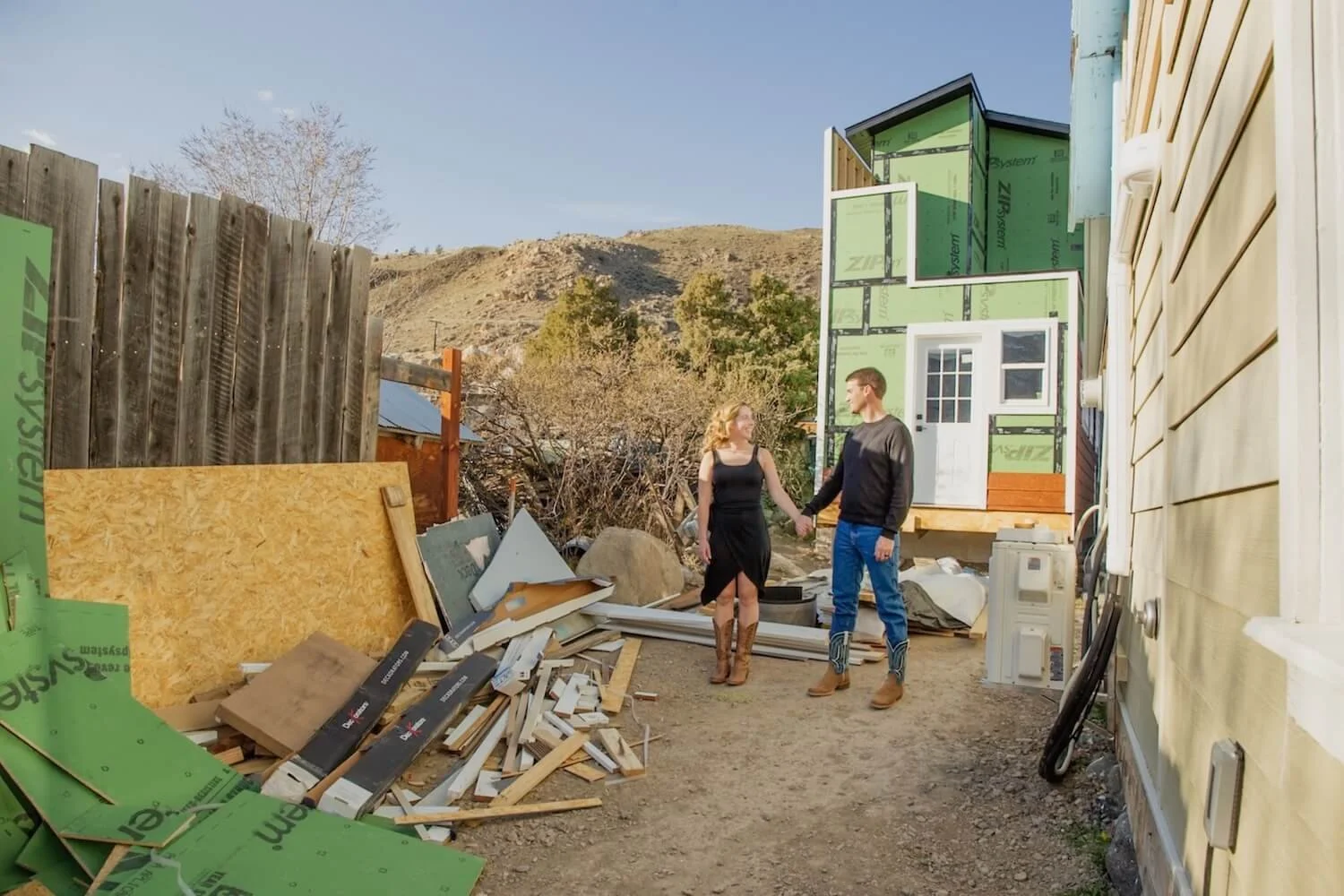
Plus, that unfinished structure in the back, the one that sounded promising with water and sewer lines already stubbed in to become a two-story apartment? The inspector confirmed a concern echoed from our realtor and one of our friends, who conveniently works in sewer infrastructure. “These lines don’t look buried deep enough to survive a Montana winter.”
Yet somehow, we weren’t scared off by all of this. As they say, ignorance is bliss. So is naivety.
We made our lists and checked them twice. Then we laughed nervously and triaged the issues. We’d need cash for:
Electrical (about $10k, immediately)
Foundation repairs (also upfront)
Finishing the addition (it was functional, so we had time)
Exterior siding (not required upfront)
Flooring and fixtures (we could do some of this on our own, time to become DIY-ers!)
Whatever we decide to do with the unfinished “apartment”
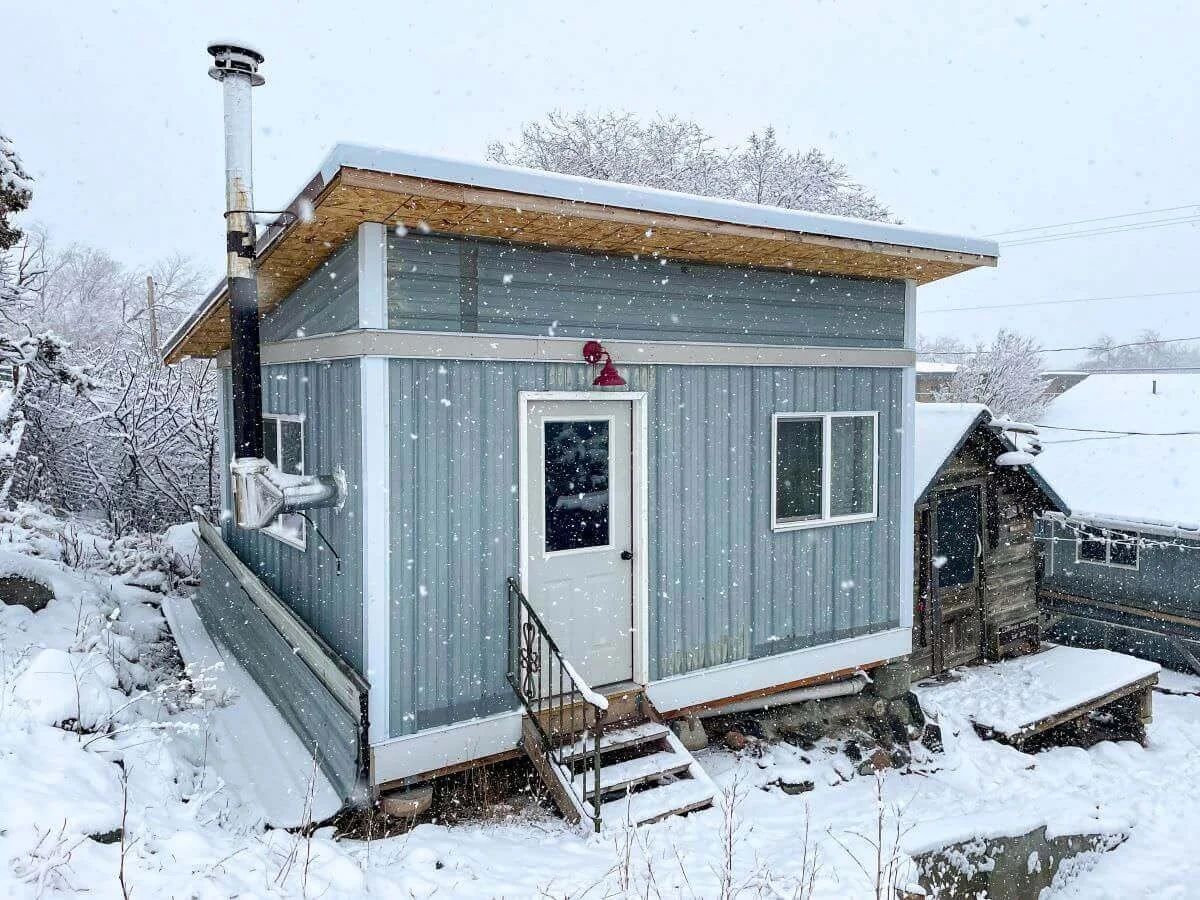
Adding plumbing to the dry cabin (requiring excavation, laying new pipes, and building a bathroom addition with foundation, etc.)
The full report estimated the main house needed $20k to $25k in upfront work if we did everything, both cosmetic and structural. If we just wanted to make the house functional and safe, we’d need $10k-$12k upfront.
Although the sale was “as is,” safety hazards like the electrical on the property arguably should have been disclosed, so we worked with our realtor to negotiate a price reduction accordingly. Then we did our research, found at least one option for every contractor or service provider we needed, confirmed the final zoning restrictions for what we wanted to do with the property, and evaluated the financials (a couple dozen times over).
A few weeks later, after crossing the Ts and dotting the Is, we signed the papers, ecstatic to call Yellowstone National Park home! The adventure was only just beginning…
Read Next: (#4) Cabin Chronicles: Welcome to The Great Cabin Purge
Related Posts