
Yellowstone in January: What’s Open + What to Expect
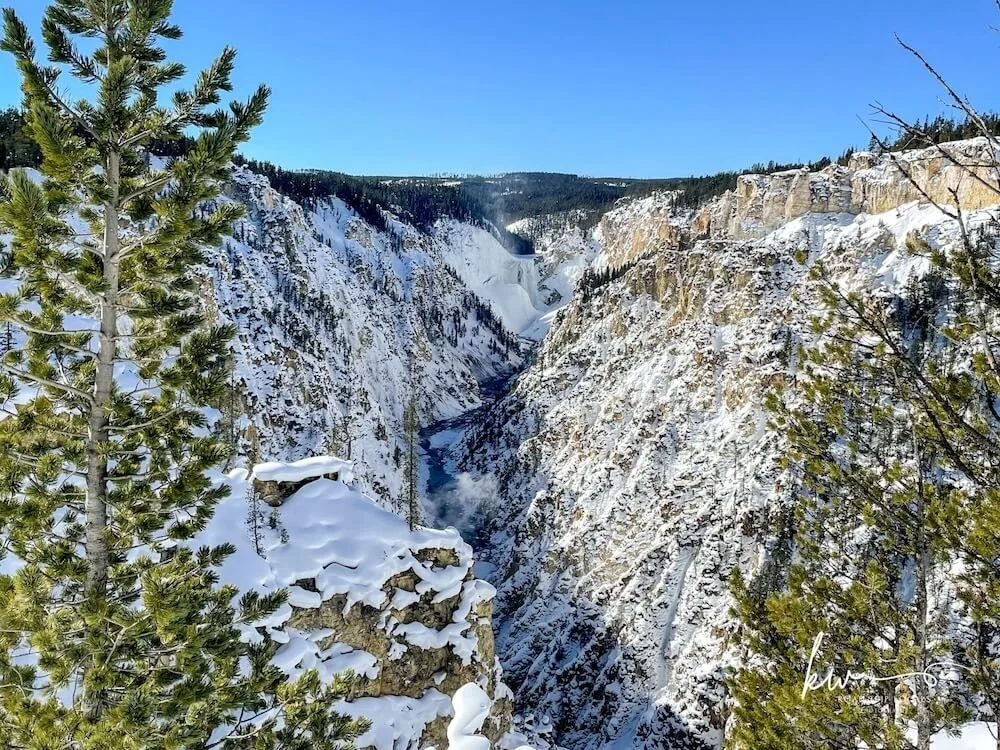
By January, Yellowstone has fully transformed into winter. The snow that starts to build in December has settled in, winter systems are running, and the park has entered its quietest, most immersive season.
January isn’t about seeing everything Yellowstone has to offer, but it is about seeing Yellowstone the way few people ever do. With limited road access, cold temperatures, and snowcoach or snowmobile travel required for the interior, this month rewards travelers who slow down and lean into the season.
This guide walks you through what to expect when visiting Yellowstone in January, including what’s open, the best things to do, and whether January is the right time for your trip. We’re sharing this based on multiple winter trips to Yellowstone, including three weeks last January, and many, many months spent just outside the park in Gardiner.
This page focuses specifically on January travel. For a big-picture look at winter road access, seasonal differences, and planning strategy, see our full guide on Yellowstone in Winter: What to Know Before You Go.
Table of Contents
What to Expect in Yellowstone in January
Yellowstone in January is breathtaking—and harsh.
This is the coldest month of the year, with deep snowpack and limited road access. If you’re expecting summer-style sightseeing, January will feel restrictive. If you’re looking for quiet landscapes, winter wildlife, and one of the most atmospheric versions of the park, it’s hard to beat.
Weather in January
January is Yellowstone’s coldest and snowiest month.
Expect snow across most of the park, daytime highs around 10-30°F, and frequent subzero nights. Boardwalks will be icy, roads will be compact snow, and wind chills can make it feel even colder, especially during early mornings.
No matter where you are in the park, warm layers and insulated boots matter. Don’t miss our complete Yellowstone Packing List for the exact winter system we use.
Road Access in Yellowstone in January
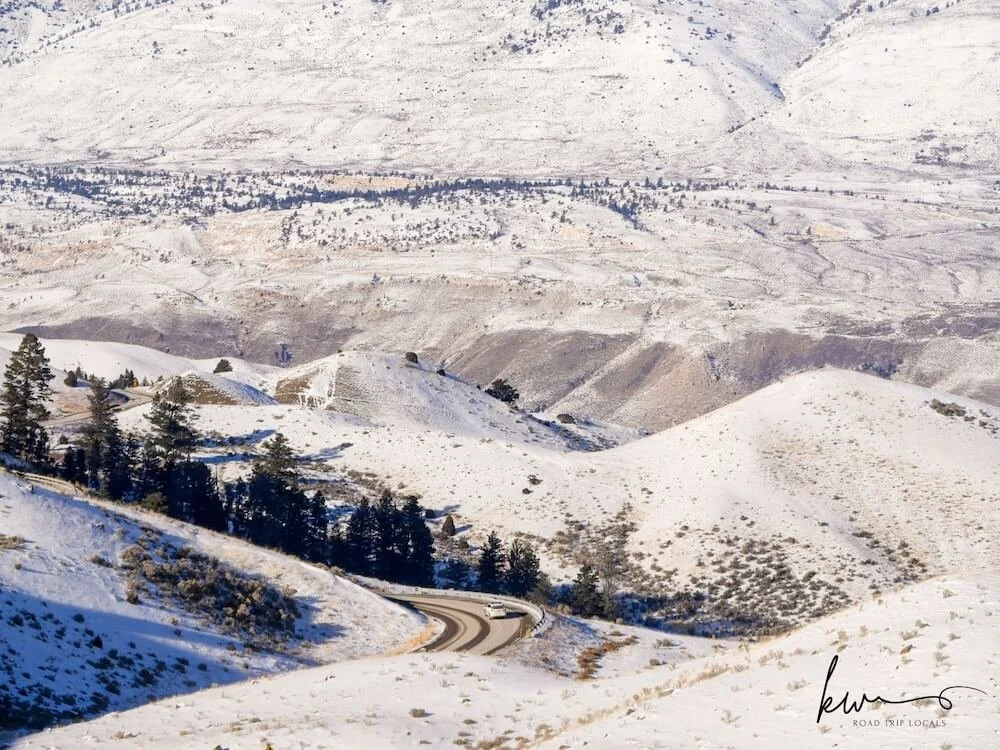
Only one road is open to self-driving in January: the route from Yellowstone’s North Entrance in Gardiner through Mammoth Hot Springs, Tower Junction, and Lamar Valley to the Northeast Entrance near Cooke City. This is the Northern Range, and it’s the heart of winter Yellowstone.
On this drive, you can access:
Mammoth Hot Springs
Blacktail Plateau area
Lamar Valley
Soda Butte
Icebox Canyon
Cooke City
Everything else, including Old Faithful, Canyon Village, Norris, and the interior geyser basins, is closed to private vehicles and requires guided snowcoach or snowmobile travel.
Winter driving notes: roads are usually compact snow or ice, storms can cause temporary closures, and bison regularly walk in the road. Drive slowly, give yourself extra daylight, and expect limited cell service once you’re past Mammoth.
For the complete winter road breakdown (including what changes month to month), see Can You Drive Yellowstone in Winter? What’s Open + How to Get Around.
Services & Facilities in January
January has limited services inside Yellowstone, but winter operations are fully in place.
Only two lodges typically operate in the park during winter: Mammoth Hot Springs Hotel (drive-in access) and Old Faithful Snow Lodge (over-snow access).
Most dining, shopping, and amenities you’ll use will be in the gateway towns, especially Gardiner, West Yellowstone, and Cooke City.
Here’s what’s typically available in January:
Mammoth Hot Springs Hotel & Dining Room
Old Faithful Snow Lodge (snowcoach access) & Dining
Albright Visitor Center (Mammoth)
Over-snow tour operators based in Mammoth and gateway towns
Cooke City Visitor Center

Why Visit Yellowstone in January
January is one of the best months to experience Yellowstone if you want true winter conditions and a quieter park.
Come in January for:
Lots of snow and dramatic winter scenery
Excellent Northern Range wildlife viewing
Peaceful boardwalks and far fewer people than summer
Reliable over-snow access to the interior compared to early winter
Beautiful winter photography conditions
Winter sports, such as snowshoeing and cross-country skiing
Downsides of Visiting Yellowstone in January
January is not the time to “see it all.” The main tradeoffs are:
Limited road access (most of the park requires tours)
Extremely cold temperatures and wind chill
Higher costs if you add snowcoach/snowmobile tours
Fewer services inside the park compared to summer
If you’re hoping to drive the Grand Loop and hit every major sight on your own, January will be frustrating. If you want winter wildlife, quiet roads, and the most immersive season, it’s a win.
Wildlife in Yellowstone in January
January is a great wildlife month in Yellowstone, mostly because snow concentrates animals into the Northern Range and the white landscape makes them easier to spot.
Bison are everywhere, often walking directly on the road or plowing with their heads for grass in snowy meadows.
Wolves are the headline sighting in January, especially in Lamar Valley and the Slough Creek area.
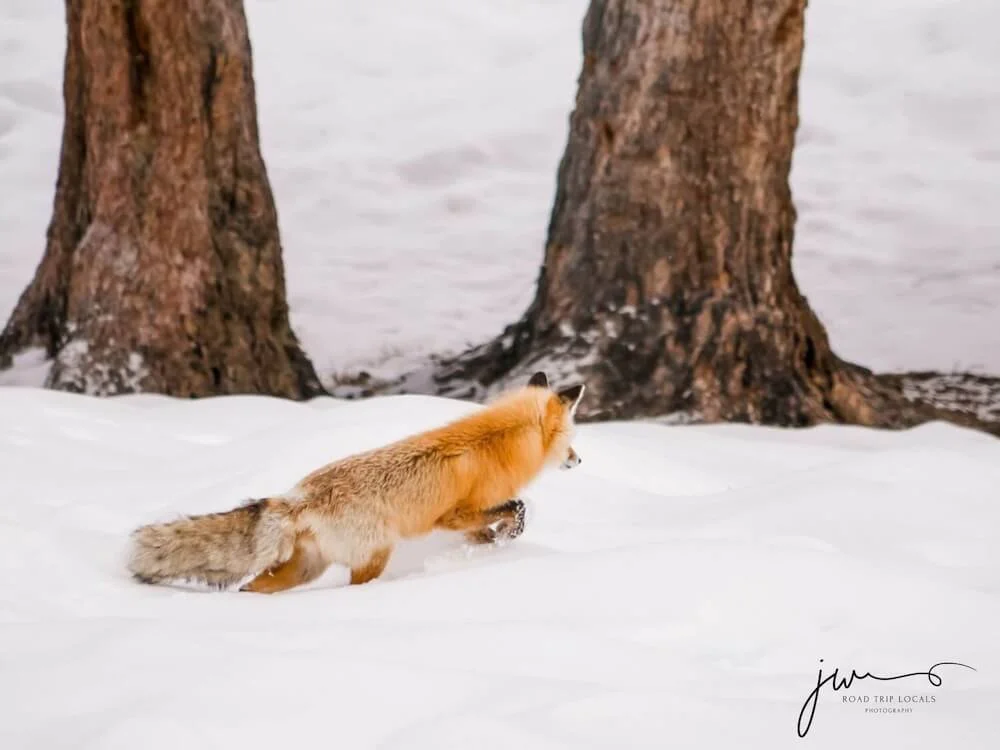
Red foxes are one of the most magical winter sightings (and my personal favorite), often hunting along the edges of Lamar and near Pebble Creek.
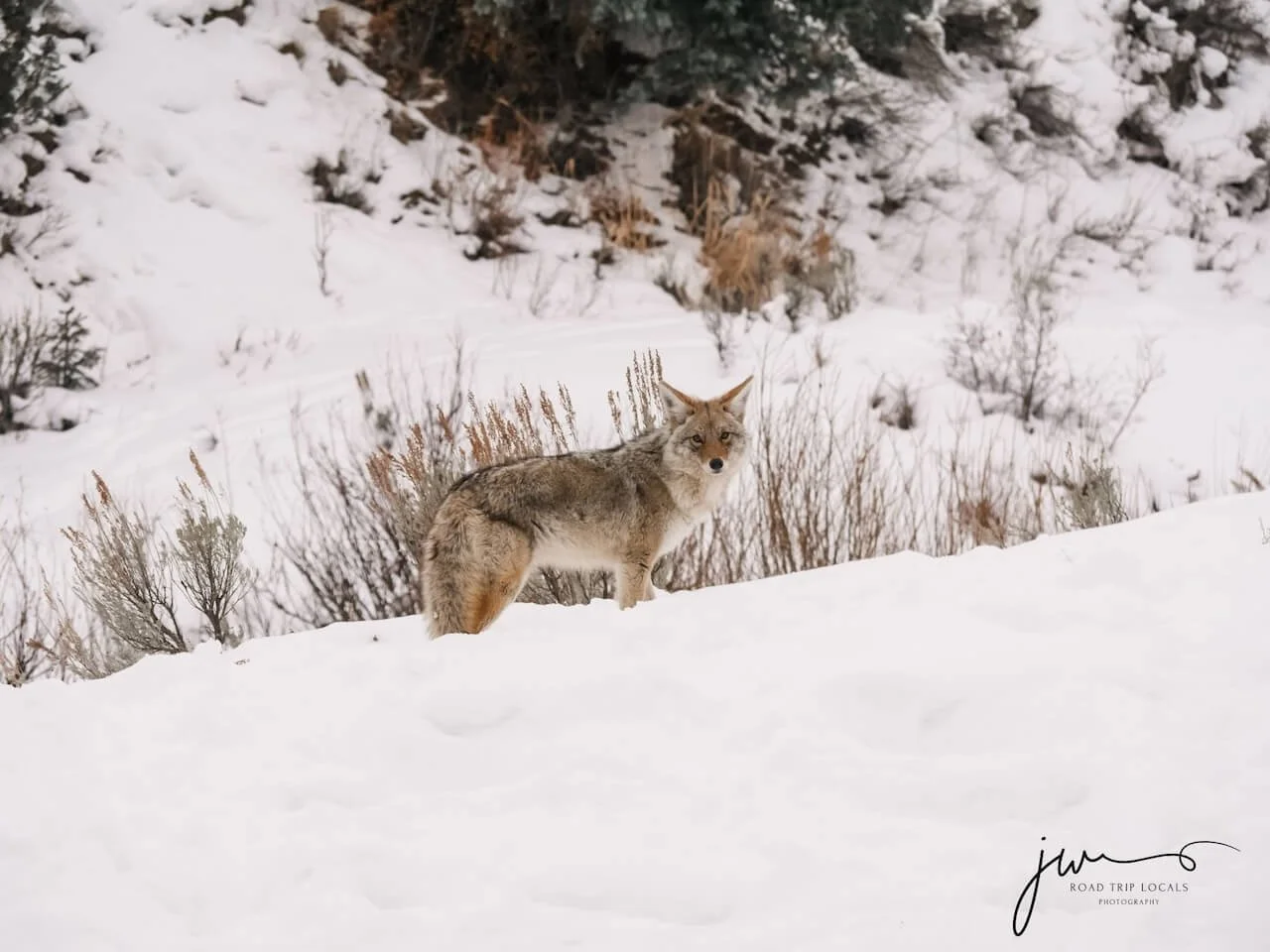
You’ll also commonly see elk near Mammoth and throughout the Northern Range, plus coyotes mousing in open fields.
Bighorn sheep can be spotted along Icebox Canyon, near the Rescue Creek Trailhead, and even between Mammoth and Tower Junction.
Trumpeter swans stand out beautifully against the dark rivers and are often spotted in the Gardner River, Yellowstone River, and Madison River.
Bald eagles perch in cottonwoods and hunt along the rivers of Lamar Valley, where water remains partially open.
What you won’t see: bears. Both grizzlies and black bears are hibernating in January.
6 Best Things To Do in Yellowstone in January
1. Drive the Northern Range
This is your best option for an independent winter day in the park. This route from Gardiner, MT, to Cooke City, MT, offers the best wildlife watching and winter scenery in Yellowstone in January.
Here are our favorite views and stops along the way:
Gardner River Bridge: One of the best views, especially when driving back toward Gardiner.
Mammoth Hot Springs: The terraces are gorgeous from the road in the winter, especially around sunrise and sunset.
Blacktail Plateau & Blacktail Ponds: Wide, rolling, snow-covered landscapes that feel like classic Yellowstone winter and a great spot for spotting coyotes, bison, elk, and wolves.
Lamar Valley: The most dramatic winter wildlife viewing area. Watch for bison plowing snow with their heads and wolf watchers lining the road with scopes.
Icebox Canyon (between Lamar Valley and the Northeast Entrance): This stretch often looks like a postcard and is one of the most underrated spots in Yellowstone.
Cooke City: A tiny winter town surrounded by mountains. Grab a hot chocolate at Cooke City Coffee before turning around.
This is the best (and only) winter drive you can do independently, and it's spectacular.
2. Wildlife Watching
Wolves, bison, elk, coyotes, and foxes are easier to spot against the snow. Head to Blacktail Plateau, Blacktail Ponds, Petrified Tree, Slough Creek, and Lamar Valley, keeping your eyes peeled for movement as you go.
If you see a cluster of cars pulled off with scopes pointed toward a hillside… stop. Chances are, something incredible is happening.
3. Snowcoach Tour to Old Faithful
A snowcoach tour is the most comfortable way to reach Yellowstone’s interior in January. These oversized, heated vehicles travel on packed snow and open up access to Old Faithful, Artist Point and the Grand Canyon of the Yellowstone, Norris Geyser Basin, and more.
If winter photography is a priority, snowcoach tours give you more time to explore boardwalks and take photos. Tours depart from multiple locations, including Gardiner, Mammoth, and West Yellowstone.
Read Next: How to See Old Faithful in the Winter
4. Snowmobile to Canyon Village
If you want adventure, this is it! Instead of (or in addition to) traveling by snowcoach, you can enter to win a personal snowmobile permit or join a guided snowmobile tour to explore Yellowstone’s interior.
Pro tip: Rent the snowmobile suit, boots, and gloves at the time of booking. Even on a mild day, traveling at 40 mph makes the cold feel much more intense.
Read Next: Snowmobiling in Yellowstone: Is It Worth It? (Our Honest Take + What to Expect)
5. Explore Mammoth Hot Springs
Mammoth Hot Springs is the most iconic Yellowstone attraction you can still reach by car in winter, rivaled only by Lamar Valley.
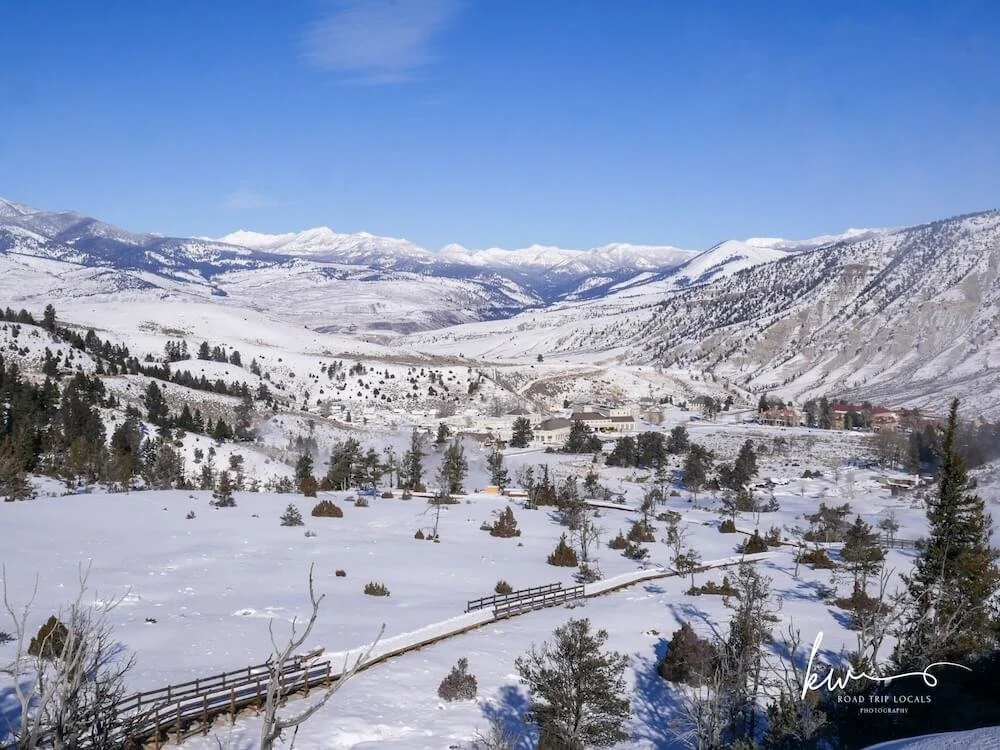
The terraces look otherworldly in January, and we highly recommend exploring all open boardwalks during your visit. Start at the lower terraces, then walk (or drive) to the upper terraces.
6. Cross-Country Skiing or Snowshoeing
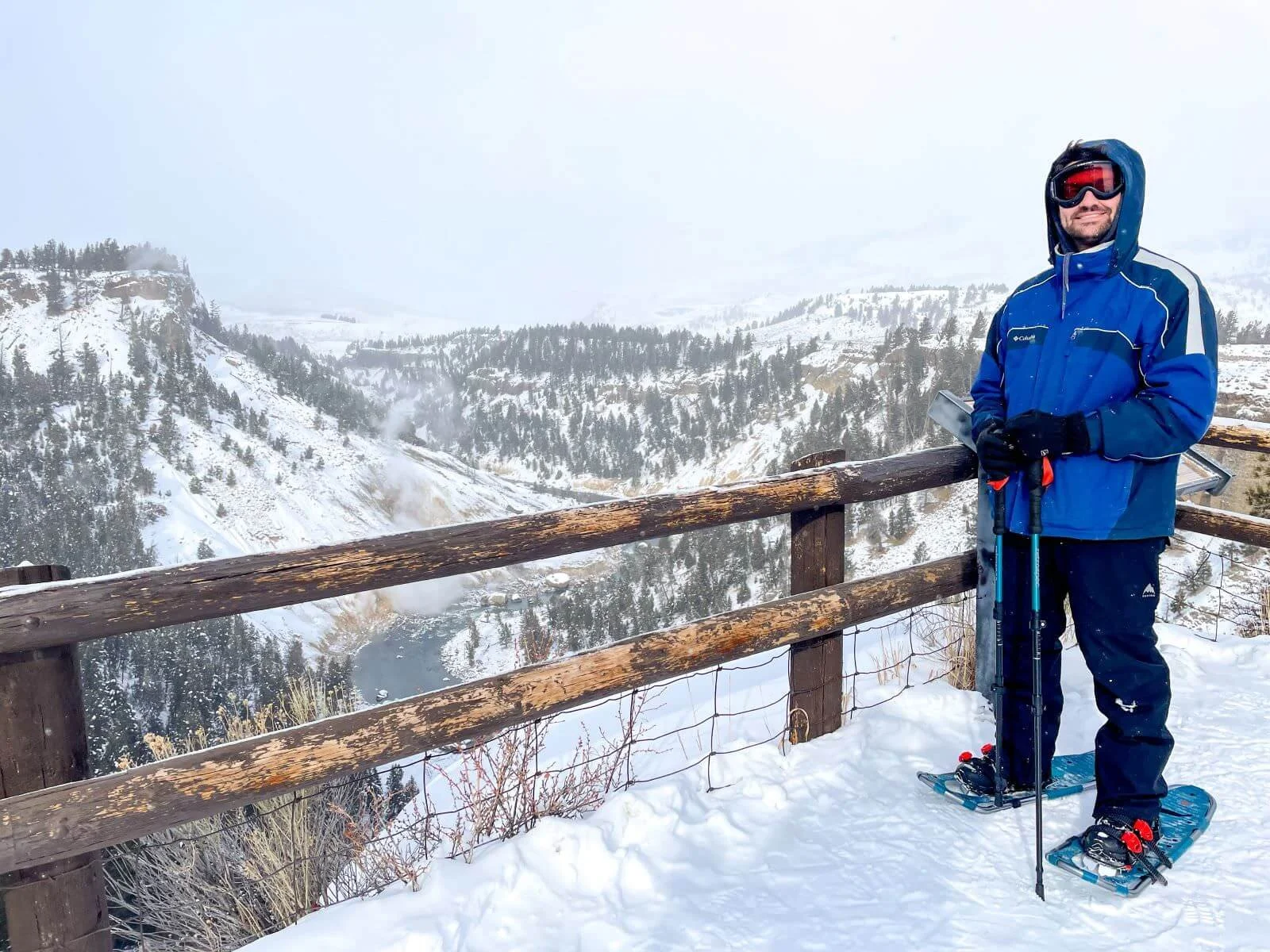
Yellowstone has miles of trails for winter recreation, especially around Mammoth Hot Springs and near the Northeast Entrance toward Cooke City.
Popular winter routes include the Upper Terrace Loop Ski Trail near Mammoth, the Tower Fall Trail (best for snowshoeing), and the Barronette Ski Trail in the Cooke City area.
You can bring your own gear or rent locally from Parks’ Fly Shop in Gardiner or the Bear Den Ski Shop near Mammoth. If you prefer not to go out on your own, guided winter trips are also available through companies like Yellowstone Safari Company.
For more winter ideas outside the park (hot springs, food, and cozy town days), see 10 Best Things to Do in Gardiner, MT, in Winter.
Where to Stay in Yellowstone in January
There are four main places to stay when visiting Yellowstone in January, including two in-park lodges and two popular gateway towns.
Gardiner sits at Yellowstone’s North Entrance, the only entrance open to regular vehicles all winter. It’s the most flexible and reliable base in January, especially for wildlife watching along the Northern Range.
If you want a cozy winter home base right by the entrance, our Cozy Yellowstone Compound in Gardiner is perfect for a winter trip (and yes… the Yellowstone Christmas Cabin is just as magical in January as it is in December).
About 15 minutes from Gardiner, you’ll find Mammoth Hot Springs Hotel, one of two open lodges inside the park in winter. It offers road access to Mammoth and the Northern Range, and serves as a hub for snowcoach travel.
The other in-park lodge is the Old Faithful Snow Lodge, which you can only reach by snowcoach or snowmobile in January. This lodge offers the most immersive winter experience in Yellowstone, with snowy geyser basins and quiet boardwalks around Old Faithful.
West Yellowstone is the main hub for snowmobile and snowcoach tours into Yellowstone’s interior. It’s a good base if interior sights like Old Faithful or Canyon Village are your top priority, and over-snow travel is central to your trip.
For a deeper breakdown of winter lodging options and strategies, see: Where to Stay in Yellowstone in Winter.

Getting to Yellowstone in January
The easiest way to reach Yellowstone in January is by flying into Bozeman Yellowstone International Airport (BZN) and renting a car to drive to Gardiner or West Yellowstone. For full airport and transportation details, see our How to Get to Yellowstone in Winter guide.
FAQs: Yellowstone in January
Is Yellowstone open in January? Yes! Yellowstone is open year-round, but in January, only one road is open to self-driving: the North Entrance (Gardiner, MT) to the Northeast Entrance (Cooke City, MT). All other areas require snowcoach or snowmobile access.
Can you drive in Yellowstone in January? You can drive through Gardiner, Mammoth Hot Springs, Tower Junction, Lamar Valley, and Cooke City. You cannot drive to Old Faithful, Canyon Village, Hayden Valley, Norris, or West Thumb on your own.
How cold does Yellowstone get in January? January is the coldest month of the year. Daytime highs typically range from 10-30°F, with frequent subzero temperatures at night and strong wind chills.
Is Yellowstone crowded in January? Not at all. January is one of the least visited months of the year and offers some of the quietest wildlife viewing and sightseeing conditions.
Best things to do in January: Wildlife watching along the Northern Range, snowcoach tours to Old Faithful or Canyon Village, snowmobiling from West Yellowstone, snowshoeing or cross-country skiing, and winter photography.
Should you visit in January? Yes, if you want deep snow, reliable winter access, excellent wildlife viewing, and solitude. January is not ideal if you want to drive the Grand Loop or see every major sight in the park.
Do you need a tour to visit Old Faithful in January? Yes. Old Faithful is only accessible by snowcoach or guided snowmobile tour during winter. For more, read our guide on How to See Old Faithful in Winter.
What should I pack for Yellowstone in January? January requires serious winter gear, especially for long wildlife drives and over-snow tours. We share our complete seasonal packing system in our Yellowstone Packing List, including what we use in January.
To finish planning, you might also want:
Want a step-by-step plan for winter in Yellowstone? Our All-Seasons Yellowstone Travel Guide shows you what’s open, where to stay, and how to make the most of winter conditions.