
Yellowstone in February: What to Expect and Best Things to Do
If you asked me to pick one winter month in Yellowstone and call it the best… it’s February.
This was the month everyone recommended to us, especially for wolf watching, and it’s the reason we started dreaming up our first winter trip in the first place. Yellowstone in February looks like the version people picture when they imagine winter here: deep snow, wildlife moving through open valleys, and that wild, quiet feeling you just don’t get in summer.
December has holiday magic. January is deep winter, but it can be brutally cold. February hits the sweet spot. Winter is still at full strength, days are noticeably longer, wildlife is more active, and snowcoach and snowmobile tours tend to run more consistently.
And if seeing wolves is high on your list, February is arguably the best month of the entire year to try.
This guide walks you through exactly what Yellowstone is like in February, from weather and road access to wildlife and what you can actually do, so you can decide if this is the right time for your trip.
This page focuses specifically on February travel. For a big-picture look at winter road access, seasonal differences, and planning strategy, see our full guide on Yellowstone in Winter: What to Know Before You Go.
Table of Contents
Is February a good time to visit Yellowstone?
February is the perfect month to visit Yellowstone if you want to experience Yellowstone’s winter wonderland.
February is when snow is everywhere, wildlife is concentrated along the Northern Range, and snowcoach and snowmobile routes to the interior tend to run most consistently. It’s one of the best times of the year to see wolves, bison, foxes, coyotes, elk, and bighorn sheep against a snowy landscape.
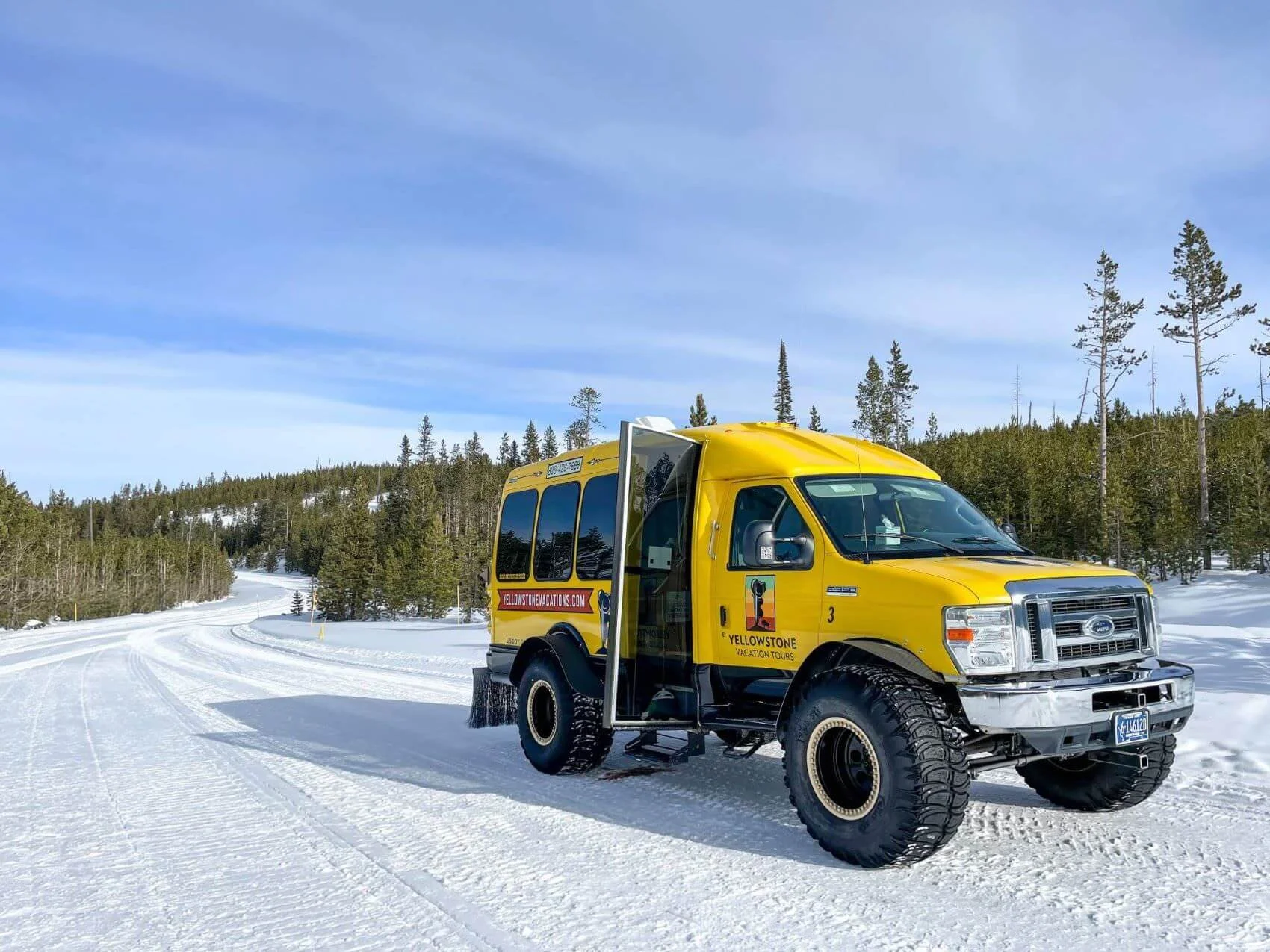
The tradeoff is access. You can’t drive the Grand Loop in February (or any winter month). Self-driving is limited to the Northern Range between Gardiner and Cooke City, and everything else (Old Faithful, Canyon/Artist Point, Norris) requires a snowcoach or guided snowmobile tour.
If you’re okay with building your days around winter transportation and leaning into the magic of the season, February delivers in a fun way!
Yellowstone Weather in February
February is still deep winter in Yellowstone, but on average, it’s slightly warmer and drier than December and January, and that’s one of the reasons people love it.
While temperatures can still dip below zero at night, February often has more stable daytime highs and less frequent heavy snowfall compared to earlier winter months. The snowpack is already well established by this point, which means winter roads and over-snow routes are fully groomed and running consistently, but you’re less likely to deal with constant fresh storms disrupting plans.
For visitors, this balance matters. You get the classic Yellowstone winter look (deep snow, steaming thermal areas, and wildlife concentrated in open valleys) without the same level of weather unpredictability that can affect December and early January trips. Snowcoach and snowmobile tours tend to operate more reliably, and travel days are easier to plan.
That said, February is still cold. Wind can make temperatures feel much colder, especially when you’re standing still watching wildlife or riding on open snowmobiles. The key difference is that conditions are more predictable, which makes it easier to prepare properly.
If most of your sightseeing is by snowcoach or car, staying warm is very manageable. If you plan to spend more time outside (snowshoeing, cross-country skiing, or lingering for wildlife viewing), you’ll want to layer more intentionally.
Either way, with the right system (a warm base layer, proper insulation, and wind protection), it’s completely comfortable to be outdoors in February. If you’re layered well, February feels adventurous, not miserable. (For our exact winter recommendations, see our All-Seasons Yellowstone Packing List.)

How busy is Yellowstone in February?
February is quiet, but not empty.
You won’t deal with summer crowds, tour buses, or packed parking lots. Instead, you’ll share the park with people who came for winter on purpose: wildlife watchers in Lamar Valley, photographers, and small groups on snowcoach and snowmobile tours.
Most of the activity in February happens along the road from Gardiner to Cooke City and on snowcoach and snowmobile routes to places like Old Faithful and the Grand Canyon of the Yellowstone.
That means you will see other cars while driving through Lamar Valley, and you will be with a group on a guided tour. But you will not be dealing with traffic jams, crowded boardwalks, or fighting for a parking spot at every overlook.
The biggest difference from summer is that everything feels slower and more focused. People pull over for wildlife and actually stay. Viewpoints are quiet enough that you can take photos without someone stepping into your frame. And when you stop for lunch or coffee, you are not waiting behind a line of tour buses.
If you like the idea of seeing Yellowstone without feeling rushed or crowded, February hits a really comfortable middle ground.
What wildlife can you see in Yellowstone in February?
If February is on your radar, there’s a good chance wolves are the reason.
February is arguably the best month of the entire year for wolf watching in Yellowstone National Park. Snow improves visibility, packs are active, and Lamar Valley becomes a magnet for serious wolf watchers with spotting scopes (which is exactly the clue you want to look for).
Most winter wildlife viewing happens along the Northern Range between Gardiner and Cooke City (Mammoth, Blacktail, Slough Creek, Lamar). That’s the only road you can drive in winter, and it’s where animals concentrate when snow gets deep elsewhere in the park.
Here’s what other wildlife to look for in February.
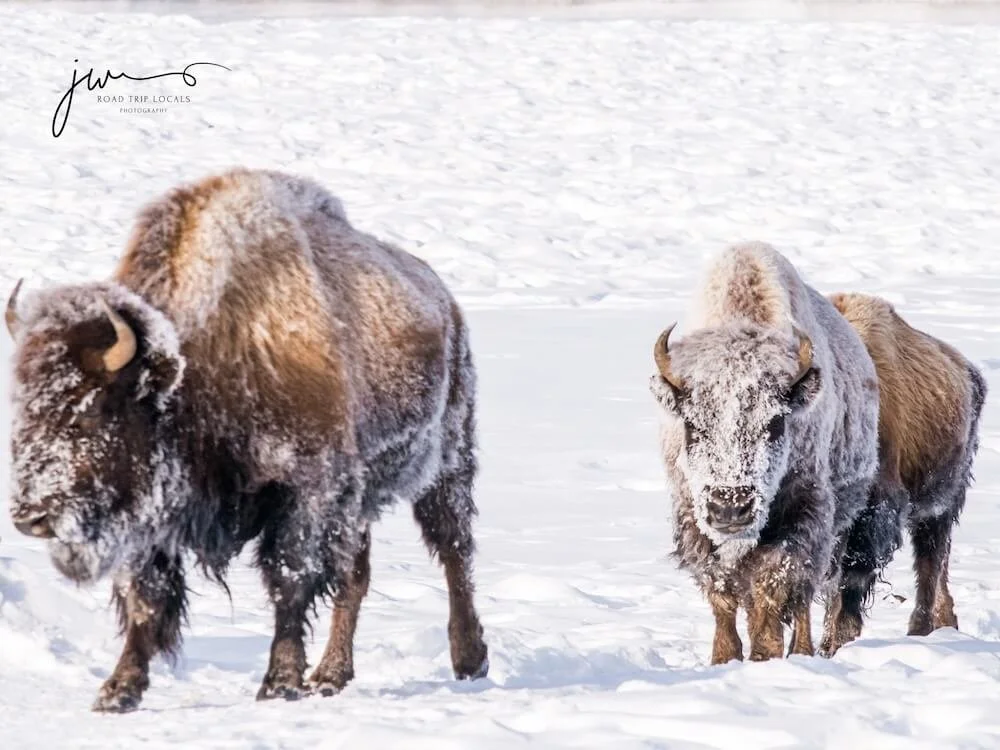
Bison are everywhere year-round, but February is a great month to see classic winter scenes. Thick coats, snow caked on their faces, and long lines of bison walking straight down the road because it’s the easiest path. Bison are incredibly photogenic, and February is our favorite time of year to see them.
You also might spot coyotes or red foxes on a hunt in February. Look for them trotting across open fields or stopping to listen before diving headfirst into the snow.
Elk concentrate around Mammoth Hot Springs in February, where snow is shallower and thermal areas keep grass exposed. Bighorn sheep are often seen on the rocky hillsides near the Northeast Entrance and around Cooke City.
Bears are hibernating, so February is not the month for bear watching. But if wolves, foxes, coyotes, and classic winter bison scenes are what you are hoping for, February in Yellowstone delivers.
Best Things to Do in Yellowstone in February
February is arguably the easiest month of winter to build a complete Yellowstone trip, as long as you plan around how winter travel works. You’ll spend part of your time on the Northern Range (self-driving for wildlife), and part of your time using over-snow transportation to reach the interior.
Here are the best February activities, in the order we’d prioritize them:
1. Wildlife Watching Along the Northern Range
If February had a headline activity, this would be it.
The Northern Range, from Gardiner through Mammoth Hot Springs, Tower Junction, and Lamar Valley, is the center of winter wildlife activity in Yellowstone. This is where animals move when snow accumulates elsewhere, and February is widely considered the best month of the year for wolf watching.
Snow makes animals easier to spot, and February often brings longer daylight hours and more consistent wildlife movement compared to early winter. It’s common to see bison, elk, coyotes, red foxes, and bald eagles throughout the day, with wolves most frequently spotted in places like Lamar Valley, Slough Creek, and Blacktail Plateau.
If you see a cluster of vehicles pulled over with spotting scopes set up, stop. Chances are, something special is happening!
Really hoping to see wolves during your trip? Wolf watching in Yellowstone is always a bit of a numbers game. Yes, there are areas where sightings are more likely (especially Lamar Valley, Slough Creek, and the Blacktail Plateau), but there’s no guaranteed spot or schedule.
Your best strategy is time and repetition. Drive the Northern Range back and forth, pull over when you see other wildlife watchers with scopes set up, and don’t be afraid to ask what they’ve seen recently. Park rangers at Mammoth and along the road are also a great resource for general activity patterns.
The more days you can spend doing this, the better your chances. Some days you’ll see wolves within minutes; other days it takes hours. That unpredictability is part of what makes seeing them so exciting!
2. Drive the Northern Range (The Only Self-Drive Winter Route)
This is the only road you can drive yourself in Yellowstone in February, and it’s worth building at least one full day around.
The route from Gardiner to Cooke City passes Mammoth Hot Springs, Blacktail Plateau, Lamar Valley, and Icebox Canyon. Every stretch offers winter scenery and wildlife viewing, and conditions change constantly depending on light, weather, and animal movement.
Highlights along the drive:
Mammoth Hot Springs area (elk, terraces, thermal steam)
Blacktail Plateau & Blacktail Ponds (wide winter landscapes, coyotes, wolves)
Lamar Valley (prime wolf and bison territory)
Icebox Canyon near Cooke City (one of the most dramatic winter stretches)
Plan to drive slowly, stop often, and expect wildlife delays. That’s part of the experience.
Keep Reading: Can You Drive Yellowstone in Winter? What’s Open + How to Get Around
3. Snowcoach Tour to Old Faithful or the Grand Canyon of the Yellowstone
February is one of the most reliable months for snowcoach travel into Yellowstone’s interior.
Snowcoach tours follow groomed winter roads to places like Old Faithful, Norris Geyser Basin, and the Grand Canyon of the Yellowstone. Tours are heated, comfortable, and designed to allow time on boardwalks and at major stops without rushing.
This is a great option if:
You want to see geysers and waterfalls in winter
You prefer warmth and stability over speed
Photography or Yellowstone education is a priority
Tours depart from locations both inside and outside of the park, including Gardiner, Mammoth, and West Yellowstone.
Keep Reading: How to See Old Faithful in the Winter
4. Snowmobile Tours from West Yellowstone
If you want a more hands-on winter experience, snowmobiling is the most adventurous way to explore Yellowstone in February! If you enjoy activities like ATV riding or jet skiing, this is the closest winter equivalent.
Most snowmobile tours depart from West Yellowstone and travel to Old Faithful or Canyon Village. February conditions are typically ideal: solid snowpack, groomed routes, and consistent tour schedules.
Heads up: This option is colder than it looks. Wind at speed makes temperatures feel much harsher, so renting snowmobile suits, boots, and gloves through your tour company is strongly recommended.
Keep Reading: Snowmobiling in Yellowstone: Is It Worth It? (Our Honest Take)
5. Explore Mammoth Hot Springs
Mammoth Hot Springs is open year-round and is one of the easiest places to explore in February. You can park right by the boardwalks and walk as much or as little as you want.
The terraces look completely different in February than they do in summer. Some mornings, it’s so cold that the steam freezes onto nearby trees and railings, making the whole area look dusted in frost.
As you walk, keep an eye on the snow along the boardwalks. We have seen fresh elk and deer tracks here many times, and on our last winter trip, we even followed a set of wolf tracks for a short stretch before they disappeared into the trees!
6. Snowshoeing or Cross-Country Skiing
For travelers who want time away from the road, February is a great month for snowshoeing and cross-country skiing, especially near Mammoth Hot Springs and the Northeast Entrance.
Popular winter routes include:
Upper Terrace Loop (near Mammoth)
Tower Fall Trail (snowshoeing)
Barronette Ski Trail (Cooke City area)
You can bring your own gear or rent locally in Gardiner or Mammoth. Guided options are also available for those who prefer not to navigate on their own.
Read Next: Best Things To Do in Gardiner, MT, in Winter

Driving through Yellowstone in February
In February, the only road open to regular vehicles runs from the North Entrance in Gardiner to the Northeast Entrance near Cooke City. This is the road you will get to know very well on a February trip, and it is one of the best winter drives in the park.
Park rangers keep this route plowed and open as much as possible, but it is still a true winter drive. Some days it is dry and easy. Other days, it is packed with snow, ice, and blowing wind. That is just part of visiting Yellowstone in February. You will be driving slowly, pulling over for wildlife, and sometimes waiting while a bison herd decides to use the road instead of the snowbank.
For more on winter driving in Yellowstone, see: Can You Drive Yellowstone in Winter? What’s Open + How to Get Around

Where to stay when visiting Yellowstone in February
In February, where you stay matters less for comfort and more for what kind of winter experience you want. With only one road open to regular vehicles and the rest of the park accessible by snowcoach or snowmobile, your base determines how flexible your days will be.
Choose Gardiner or Mammoth if wildlife watching is your top priority. February is peak season for wolves and winter wildlife along the Northern Range, and this is the only part of Yellowstone you can explore on your own schedule. Staying here lets you enter the park early, linger in Lamar Valley, and adjust plans easily based on weather and wildlife movement.
Choose West Yellowstone or Old Faithful Snow Lodge if interior sights are your priority. February is one of the most reliable months for snowcoach and snowmobile tours, making it an excellent time to reach Old Faithful, the Grand Canyon of the Yellowstone, and Norris. The tradeoff is flexibility, as you’ll be building your days around tour schedules rather than spontaneous wildlife stops.
Many February visitors split their stay: a few nights focused on interior tours, then a few nights along the Northern Range for wildlife watching. This approach works especially well if you want both classic winter geysers and the best chance of seeing wolves.
For a full breakdown of winter lodging options, including pros and cons of each base, see: Where to Stay in Yellowstone in Winter.
If you want a cozy winter home base right at the North Entrance, our Cozy Yellowstone Compound in Gardiner is a great fit for a February trip. It’s close to Lamar Valley, flexible for winter driving days, and easy to pair with wildlife watching and snowcoach tours.

Getting to Yellowstone in February
Most travelers fly into Bozeman Yellowstone International Airport (BZN), then drive to Gardiner (best for wildlife/self-driving) or West Yellowstone (best for snowmobile/snowcoach tour logistics).
For a full breakdown of airports, routes, and transportation options, see: How to Get to Yellowstone in Winter.
What to pack for Yellowstone in February
February is all about staying warm during long wildlife watches and over-snow travel. Prioritize a real layering system (base + insulation + windproof shell), insulated boots, warm gloves, and face protection for wind. Don’t forget sunglasses or snow goggles, which are especially helpful for winter sports.
If you’re snowmobiling, use the tour company’s rental suit/boots/gloves. Even on a “mild” day, wind at speed makes the cold feel much more intense.
For our full winter packing system, see our Yellowstone Packing List.

Yellowstone in February: FAQs
Is Yellowstone open in February? Yes, Yellowstone is open year-round, but winter access is limited. In February, the only road open to self-driving is the Northern Range between Gardiner, Mammoth Hot Springs, Tower-Roosevelt, Lamar Valley, and Cooke City. All other areas of the park require snowcoach or snowmobile travel.
Can you see Old Faithful in February? Yes, but you cannot drive there. Old Faithful is only accessible by snowcoach or guided snowmobile tour in February. Tours typically depart from Gardiner, Mammoth, or West Yellowstone.
What is February best for in Yellowstone? February is best for wolf watching, winter photography, reliable snowcoach and snowmobile access, and winter recreation.
Who should not visit Yellowstone in February? February is not ideal for travelers who want to drive the Grand Loop, see every major attraction, or plan spontaneous, casual sightseeing days. Winter travel requires advance planning and flexibility.

To finish planning, you might also want:
Want a step-by-step plan for visiting Yellowstone? If February is your month, you’re probably trying to do two big things: see wolves and see the interior (Old Faithful, Canyon/Artist Point) without guessing what’s possible.
Our All-Seasons Yellowstone Travel Guide includes winter itineraries, maps, and step-by-step planning help, including how to structure wildlife days out of Gardiner, how to add an interior snowcoach or snowmobile day, and how to make the most of the last full month of winter in Yellowstone.
