
5 Things You Can Only Do in Yellowstone in March

Visiting Yellowstone in March is unlike any other time of year. Early in the month, the park still feels like winter. Snow covers the landscape, and snowcoach tours still access parts of Yellowstone’s interior.
By mid-March, everything changes. Winter operations shut down, interior roads close for spring plowing, and Yellowstone enters one of the quietest periods of the entire year. For a few weeks, only the Northern Range from Gardiner to Cooke City remains open to visitors, creating a rare window when Yellowstone feels quieter, smaller, and almost empty.
We’ve spent significant time exploring Yellowstone in every season while living and working just outside the park’s North Entrance in Gardiner, Montana. March is one of the most unique months to experience Yellowstone, but it’s not right for everyone.
In this guide, we’ll walk through what to expect when visiting Yellowstone in March, including road access and seasonal closures, wildlife you can see this time of year, where to stay, and five things you can only experience in Yellowstone in March!
If you’re planning a Yellowstone trip and want to better understand how the park changes throughout the year, our All Seasons Yellowstone Travel Guide breaks down exactly what to expect and how to plan month-by-month.
Table of Contents
👋 Meet Your Guides: We're Jonathan and Kelly, and we love Yellowstone National Park! So much so that we've been a dozen+ times, bought fixer-upper cabins outside Yellowstone’s North Entrance, and are turning an old park ranger hut into year-round Christmas magic. Now, we’re on a mission to make Yellowstone simpler and more magical for everyone who visits.
What to Expect in Yellowstone in March
March is a transition month in Yellowstone. The first half of the month still operates under Yellowstone’s winter system. Interior park roads are snow-covered and accessible only by snowcoach or guided snowmobile tours.
By the middle of the month, those winter tours end, and the park enters a short off-season period while crews begin plowing roads in preparation for the spring reopening. Because of this shift, the Yellowstone experience changes dramatically depending on when in March you visit.
Early March
Early March still feels like winter in Yellowstone. You can still access interior areas like Old Faithful by snowcoach, winter wildlife viewing is excellent, and snow remains deep across most of the park.
Popular activities include:
snowcoach tours to Old Faithful
snowmobiling into the park
cross-country skiing
snowshoeing
wildlife watching along the Northern Range
Mid to Late March
Around March 15, Yellowstone’s winter season officially ends and the off-season begins. This is a transitional period in the park when winter activities have ended, but the spring and summer activities have not yet begun. Snowmobile and snowcoach tours stop running, and the interior park roads close to all traffic.
During this time, only the scenic drive between Gardiner (North Entrance), Mammoth Hot Springs, Tower Junction, Lamar Valley, and Cooke City (Northeast Entrance) remains open to visitors.
While this limits access to famous attractions like Old Faithful and Artist Point, it creates a rare opportunity to explore Yellowstone’s Northern Range with almost no crowds. For wildlife watchers, this can be one of the best times of the year to be in the park.
If you’re new to Yellowstone, our guide to Driving Yellowstone’s Grand Loop Road explains how the park’s road system normally works during the main visitor season.

Yellowstone’s March “Off-Season”
Yellowstone enters a short off-season twice each year. The first occurs from mid-March to mid-April, when winter operations end and spring preparations begin.
During this time:
snowcoach and snowmobile tours are not running
interior roads are closed to all vehicles
in-park lodging is closed
park visitation drops dramatically
The only road open is the Northern Range corridor from Gardiner to Cooke City.
It’s one of the best wildlife corridors in North America and one of the reasons March can still be a great time to visit Yellowstone. However, these road limitations mean you will be unable to visit interior attractions when visiting Yellowstone from mid to late-March.
Why Visit Yellowstone in March
March isn’t the best month to see everything in Yellowstone, but it can be one of the most interesting times to experience the park if you’re comfortable with winter conditions and limited road access.
It’s one of the least visited months of the year, and once winter tours wrap up in mid-March, visitation drops even further. Wildlife pullouts are quiet, snowshoe and cross-country ski trails are empty, and you can explore parts of Yellowstone with a level of solitude that’s almost impossible to find in summer.
Late winter is also an excellent time for wildlife viewing, especially in the open valleys between Mammoth Hot Springs and Cooke City, where animals like wolves, bison, elk, coyotes, foxes, and bald eagles are often active. The snow on the ground actually makes wildlife easier to spot against the landscape.
March also brings the first subtle signs of spring. Toward the end of the month, male grizzly bears sometimes begin emerging from their dens, and migrating birds start to return.
Downsides of Visiting Yellowstone in March
March can be a great time to visit Yellowstone, but it’s important to understand the limitations before planning a trip.
After mid-March, most of the park becomes inaccessible as interior roads close for spring plowing. You won’t be able to reach famous attractions like Old Faithful, Grand Prismatic Spring, Hayden Valley, the Grand Canyon of the Yellowstone, or Yellowstone Lake.
Services are also limited in March. Mammoth Hot Springs Hotel and Old Faithful Snow Lodge typically close in early March (around the 2nd or 3rd), so lodging is primarily available in nearby gateway towns like Gardiner or West Yellowstone.
Weather can also be unpredictable this time of year. Snowstorms are still common, temperatures often drop below freezing overnight, and roads can be icy, so it’s important to pack proper winter layers and stay flexible with your plans. It's not uncommon for temperatures to fluctuate significantly from day to day.
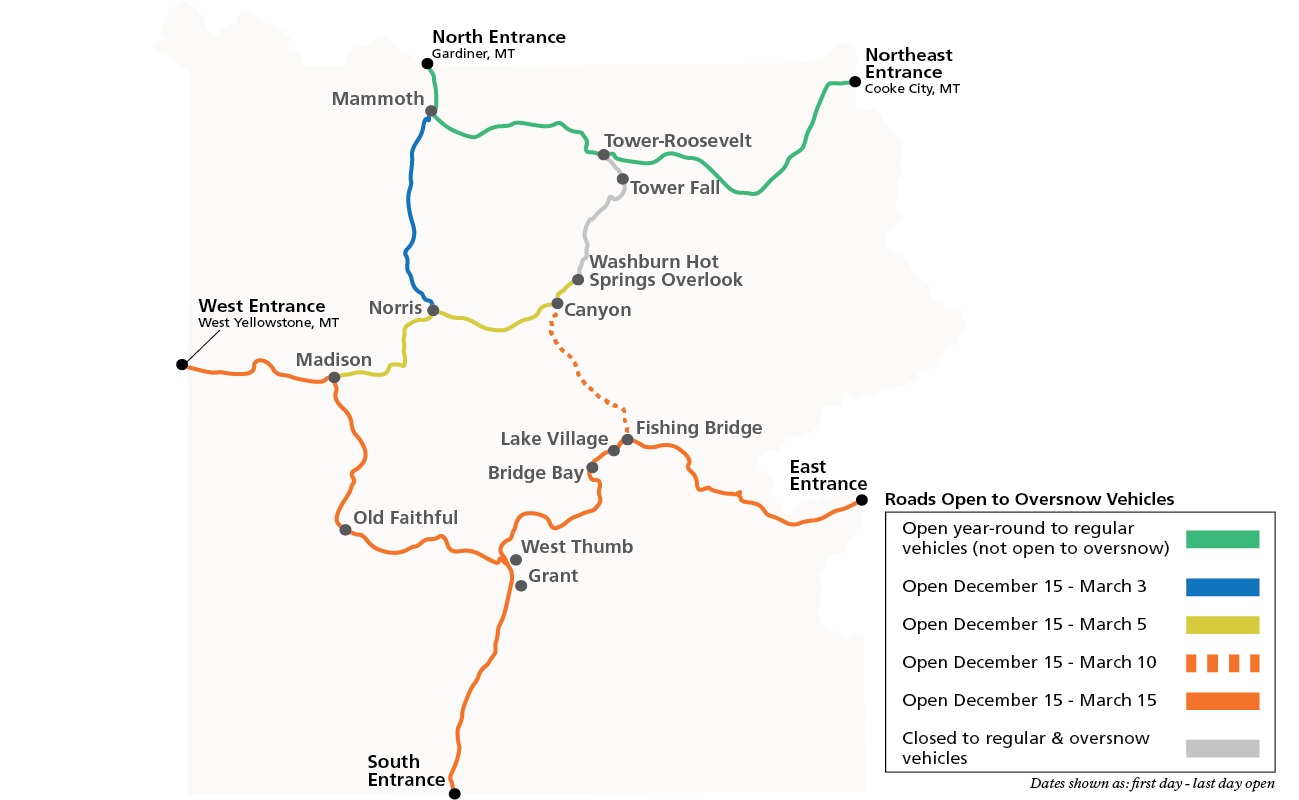
Note: Early March is the last chance of the season to reach Yellowstone’s interior by snowcoach or guided snowmobile tour. As you can see in the graphic above, access routes gradually close as the winter season winds down. The road between Mammoth Hot Springs and Norris typically closes first in March.
Because of this, late-season snowcoach trips to places like Old Faithful typically depart from West Yellowstone rather than Gardiner. If visiting the park's interior is high on your list, it’s worth checking current tour availability and road closing dates before planning your trip.
5 Things You Can Only Do in Yellowstone in March
March offers a Yellowstone experience that’s very different from the busy summer months. Because winter operations are winding down and spring hasn’t fully started yet, the park feels much quieter. Snow still covers a lot of the landscape, wildlife remains active along the Northern Range, and you’ll find far fewer people than during peak season.
Here are five unique experiences that make Yellowstone in March special.
1. Spot the First Bears Emerging From Hibernation
March is one of the first opportunities each year to see grizzly bears emerging from their dens.
Adult male grizzlies are usually the first bears to appear, sometimes beginning in early to mid-March, depending on snow conditions. They often emerge along the Northern Range between Mammoth Hot Springs and Lamar Valley, where they search for food.
Wildlife watchers in Yellowstone often track the “first bear sighting of the year”, and it frequently happens sometime in March.
If seeing a bear is one of your Yellowstone goals, you may also enjoy our guide to bear-watching in Yellowstone, which explains the best areas and times to look for bears.
2. Yellowstone as a Smaller Park
March creates one of the strangest travel windows of the entire year in Yellowstone. After winter tours end around mid-March, the park’s interior roads close for spring snow clearing, leaving only the Northern Range open to visitors.
The result is a very unusual Yellowstone. You can still drive into the park and spend a full day exploring, but instead of looping through famous sights like Old Faithful or Yellowstone Lake, the experience focuses almost entirely on the Northern Range.
In many ways, Yellowstone becomes a single scenic wildlife corridor road trip. You drive slowly through Lamar Valley, pull over for wildlife sightings, stretch your legs on snowshoe or ski trails, and spend time watching animals move through the valleys instead of rushing from one landmark to the next.
It’s a completely different way to experience the park, and one that only really exists during the short window between the end of winter tours and the spring road openings.
3. See Winter and Spring Collide in the Same Landscape
March is the only time of year when Yellowstone feels fully wintery and just beginning to wake up at the same time.
You’ll still see snow-covered valleys, frozen rivers, and steaming geothermal features surrounded by snow, but you’ll also begin noticing early signs of spring:
migrating birds returning
bison moving back toward valley bottoms
the first bear sightings
slightly longer daylight hours
It’s a subtle shift, but one that makes March a fascinating time to watch Yellowstone transition from winter toward spring.
4. Watch the First Bird Migration Return to Yellowstone
March marks the beginning of Yellowstone’s spring bird migration. As temperatures slowly rise, several species begin returning to the park after winter. Sandhill cranes are often among the earliest arrivals, followed by red-tailed hawks, mountain bluebirds, and meadowlarks.
These birds are often spotted along the Northern Range near Mammoth Hot Springs and Lamar Valley, where snow begins melting earlier and open ground becomes available. Hearing cranes calling overhead or seeing bluebirds return to the valleys is one of the first signs that spring is on the way!
5. Watch Wolves During Late-Winter Hunting Season
Late winter is a critical time for wolf packs. Elk and other prey animals have spent months moving through deep snow and limited food, which makes them more vulnerable. Wolves take advantage of these conditions and often hunt across the open valleys of the Northern Range.
Because snow still covers much of the landscape, wolves are also easier to spot as they travel across the hillsides and valley floors. Lamar Valley and Slough Creek are two of the best places in Yellowstone to look for wolves this time of year.
March is especially interesting because it comes just before denning season begins in spring. Packs are still traveling and hunting frequently, which means they’re often on the move and more visible from the road. Later in spring, wolves spend much more time near their dens and sightings become less predictable.
For visitors hoping to see wolves, the best approach is usually to drive slowly through Lamar Valley early in the morning or near sunset and watch for groups of wildlife watchers with spotting scopes along the roadside.
Where to Stay to Visit Yellowstone in March
Here’s a quick overview of the main places to stay when visiting Yellowstone in March.
Gardiner, Montana: Gardiner sits at Yellowstone’s North Entrance, the only entrance open to visitors throughout March. This makes it the most flexible home base when visiting Yellowstone in March, especially for self-driving and wildlife watching along the Northern Range. We’re a little biased (after all, it’s home to our Cozy Yellowstone Compound), but Gardiner is our favorite base for exploring Yellowstone in the shoulder seasons.
West Yellowstone, Montana: West Yellowstone is another popular gateway town and a hub for winter snowmobile and snowcoach tours earlier in the month. It has more hotels, restaurants, and tour operators than Gardiner, but keep in mind that self-driving into the park is not allowed from this entrance in winter. The best winter strategy is generally a split stay. Book snowcoach and snowmobile tours from West Yellowstone, then drive into the park from Gardiner!
Mammoth Hot Springs Hotel: Mammoth Hot Springs Hotel is one of the few lodges open inside Yellowstone during winter, but it typically closes very early in March (around the 3rd). When open, it provides easy access to Mammoth Hot Springs and the Northern Range.
Old Faithful Snow Lodge: Old Faithful Snow Lodge is accessible only by snowcoach or snowmobile during winter and also typically closes in early March (around the 2nd). Staying here offers one of the most unique winter experiences in Yellowstone.
For a deeper breakdown of winter lodging, see our Where to Stay in Yellowstone in Winter guide.

FAQ: Visiting Yellowstone in March
What is the weather like in Yellowstone in March?
March still feels like winter in Yellowstone. Average daytime temperatures near Mammoth Hot Springs are usually between about 30-40°F, while nighttime temperatures often drop to around 18°F or colder. Snow is still common early in the month, and higher elevations remain snow-covered well into spring.
Is Yellowstone busy in March?
No, March is one of the least crowded months of the year in Yellowstone! For example, the park might receive around 30,000 visitors in March, compared to more than 900,000 visitors in July. After winter tours stop running around mid-March, visitation drops even further.
This makes it possible to explore areas like Mammoth Hot Springs and Lamar Valley with very little traffic and far fewer visitors than during summer.

What wildlife can I see in Yellowstone in March?
March is a great time for wildlife watching in Yellowstone, especially along the park’s Northern Range. Bison, elk, and wolves are commonly seen in Lamar Valley, and coyotes and foxes can be spotted hunting in the snow. Bald eagles and other birds of prey are also active as spring approaches. Pronghorn remain active through the off-season as well, with males beginning to regrow their horns in February and March after shedding them earlier in the winter.
March can also bring the first signs of spring wildlife activity. Male grizzly bears are sometimes among the first bears to emerge from their dens. Migrating birds also begin returning to the park later in the month, including sandhill cranes, red-tailed hawks, mountain bluebirds, and meadowlarks. One of the best ways to see wildlife during this time of year is to drive the Northern Range from Gardiner through Mammoth Hot Springs and Lamar Valley toward Cooke City.
What’s it like to drive through Yellowstone in March?
Driving in Yellowstone in March is simple but limited. The only road open to self-driving is the Northern Range route between Gardiner and Cooke City. This road passes through Mammoth Hot Springs, the Blacktail Plateau, Tower Junction, and Lamar Valley, which are some of the park's best wildlife areas.
Expect winter conditions, including snow-packed roads, changing visibility, and wildlife frequently crossing the road. Before heading out each day, check current road conditions and closures.
If you want the full winter breakdown, head to our Can You Drive Yellowstone in Winter? guide.
How should I pack for Yellowstone in March?
March in Yellowstone can still feel very much like winter. Cold temperatures, snow, and long wildlife drives mean you’ll want warm layers, waterproof boots, and good gloves. We recommend following our Yellowstone Packing List, which breaks down exactly what to bring depending on the season and activities you’re planning.
It covers winter layers, footwear, wildlife viewing gear, and practical items that make long days in the park more comfortable. If you’re planning a March trip, it’s the same packing system we use ourselves when visiting Yellowstone in winter.
What’s the best way to get to Yellowstone in March?
The easiest airport for visiting Yellowstone in March is Bozeman Yellowstone International Airport (BZN). From Bozeman, it’s about a 1.5-hour drive to Gardiner, which sits at the park’s North Entrance. Renting a vehicle before you get to the airport gives you the most flexibility.
For a full logistics walkthrough, including airport options, winter driving routes, and detailed planning tips, see our How to Get to Yellowstone in Winter guide.
Save this for later
Hover over the image below and click on the red “Save” button that pops up in the upper left-hand corner of the image to save this on Pinterest for later. (If you’re on mobile, you might have to tap the image first to see the red ‘Save’ button.)
Happy Travels!

More on Yellowstone
🏡 Staying Near the North Entrance? Explore the Cozy Yellowstone Compound in Gardiner, our small collection of cabins just minutes from the park gate.
🧳 Not Sure What to Pack? Check out our detailed Yellowstone Packing List, so you’re prepared for summer heat, shoulder-season cold snaps, or full winter conditions.
🦬 Still in Planning Mode? Browse all of our Yellowstone blog posts for wildlife guides, seasonal breakdowns, scenic drives, and practical tips from years of visiting Yellowstone.
📚 Want a Step-by-Step Plan? Our All-Seasons Yellowstone Travel Guide walks you through where to stay, how to structure your days, and what to expect in every month of the year.