
8 Permissions That Make Long-Term Travel Easier
When we first started taking longer road trips, we were on a mission to see as much as possible, try all the new places, and make the most of every single day. We had put off traveling for a few years and looked at these extended trips as an opportunity to catch up.
However, when you’re living and working on the road for months at a time, eventually it stops feeling like a trip and starts feeling like everyday life. (In the best possible way.) You still want to explore and experience new places, but you also need to feel good and like you’re moving at a sustainable pace while you do.
The biggest shift for us came a couple of years into our Travel Seasons when we realized we didn’t need to follow anyone else’s version of “perfect” travel. We just needed to figure out what made life on the road easier and more enjoyable for us. These are the permissions we gave ourselves that made the biggest difference in finding a balance on the road.
This post is part of our “Living on the Road” series. You can read the rest here:
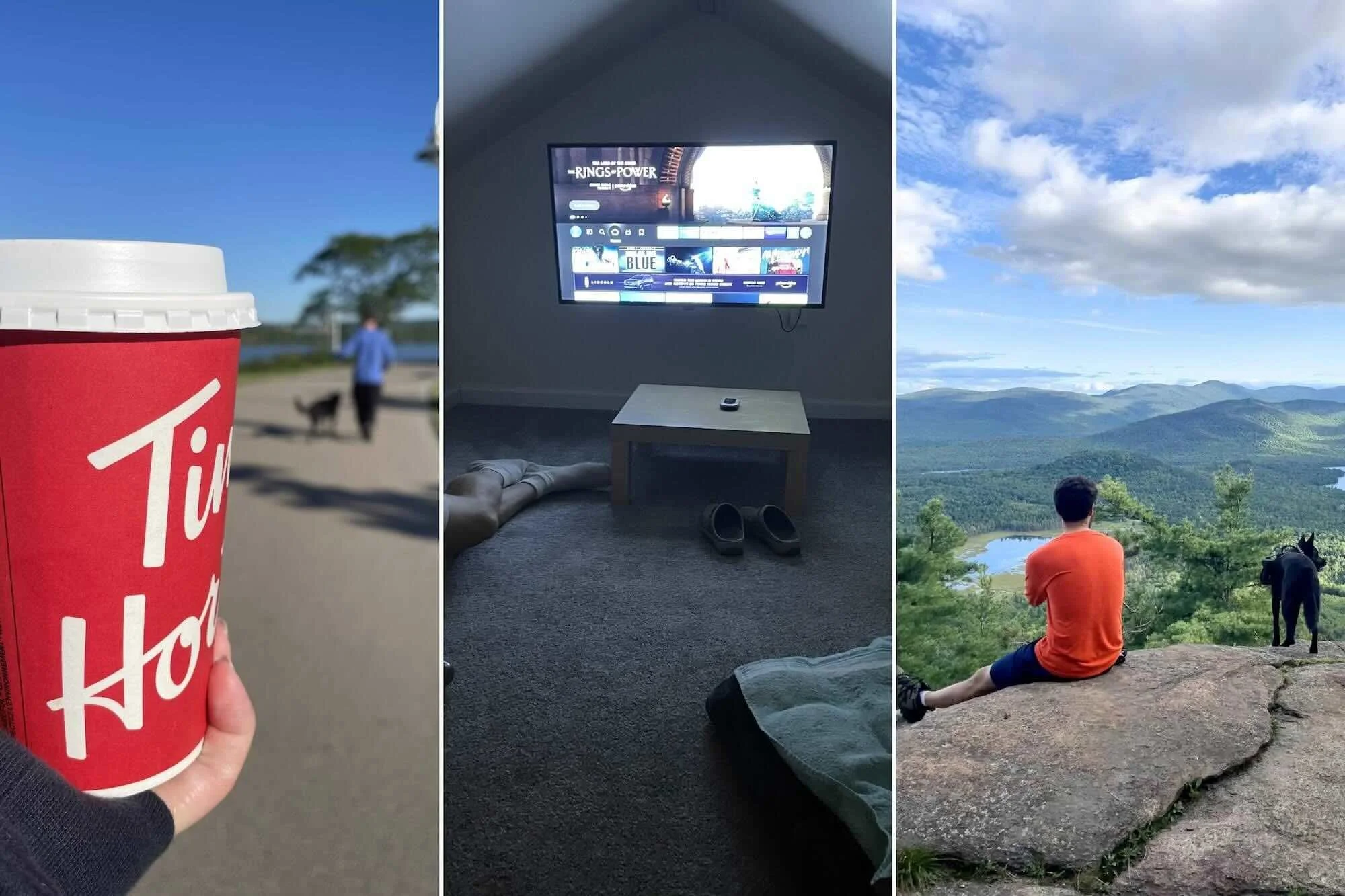
Table of Contents
👋 Meet Us: We’re Jonathan and Kelly, and for five years, we lived on the road for weeks and months at a time—working full-time, building routines in new places, and turning everyday life into a series of road trips. We’ve spent our “Travel Seasons” exploring everywhere from the Canadian Rockies and Alaska’s highways to New England in the fall, and along the way, we’ve learned how to make life on the road feel normal, sustainable, and really, really fun.
1. Permission to Repeat Places
At the beginning of a trip, everything feels like a one-time experience because there are so many places on your list to see. But when you’re somewhere for a few weeks, that changes. You have more time, more flexibility, and a little more space to slow down.
Some of our favorite parts of long-term travel have come from going back to the same places: the same coffee shop, the same hiking trail, the same restaurant we know we like.
There’s something comforting about walking into a place and not having to think about it. Maybe you know what you’re going to order, or maybe you simply recognize the layout. Either way, it starts to feel familiar, and that’s the shift we love: a place stops feeling like one you’re just visiting and starts feeling like somewhere you live.
One of the best parts of life on the road is living in many different places. Not permanently, but long enough to build routines, find your favorite spots, and settle in for a moment. You get a glimpse into what life is like in all of these different towns and cities you pass through, and you create a version of your real life in each place you go.
Travel is no longer unique because you’re doing something new every day; it’s unique because you’re living normal life in a dozen different places each year.
2. Permission to Have Normal Days
You might feel pressure to go, go, go and see as much as possible, especially since you’re spending money on the hotel or Airbnb to be here. But when you’re on the road for a while, not every day needs to be a travel day.
Some days look like doing laundry, going to the grocery store, and resting by way of a movie marathon—and these kinds of activities are not a waste of time on the road. These “normal days” are real life and part of the experience.
Again, you’re getting to temporarily live in a different state or region. So while you might be taking your dog on a walk around the block, just like you do every morning, you get to watch the leaves change because you’re in New Hampshire during the fall.
When we stopped trying to make every day feel like a highlight reel, no matter what, our travel overall got easier. We had more energy on the days we wanted to go out and explore, and we didn’t feel behind or like we were missing anything when we stayed in.
Our advice? Decide in advance which days will be at-home or rest days. For us, it’s Mondays and Wednesdays. These are the nights we’ll stay in, catch up on anything that needs our attention, or simply rest for the remainder of the week.
3. Permission to Skip Things
Just because something is popular doesn’t mean you need to do it.
There have been plenty of “must-see” spots, hikes, restaurants, and activities we’ve skipped because we didn’t feel like dealing with the crowds, the timing, or the effort required to get there.
The most important thing is that you’re honest with yourself about what is (and is not) most important for you to see and do while you’re in town. What are you excited about? What are you here for? Why did you pick this destination?
If something is on your list because it’s supposed to be, but it doesn’t actually align with what you personally enjoy doing most, skip it. Sometimes the better choice is to skip the “big thing” in favor of the thing that sounds more fun to you.
4. Permission to Change Plans
Plans look great when you’re mapping them out ahead of time. Trust me, I L-O-V-E planning. I have pages and pages of a Google Doc for every new place we’re visiting.
But once you’re actually on the road, things change. Weather shifts. You stumble upon something unexpected. You’re more tired than you thought you’d be. Or you just don’t feel like sticking to the plan anymore.
We learned to become much more flexible as we went. If something wasn’t working, we changed it. If something felt rushed, we adjusted. If we found something we wanted to spend more time on, we made room for it.
If our plans had us hiking 18 miles to Lake O’Hara, but we wanted to casually wander Emerald Lake instead, we pivoted. Being flexible and adjusting as you go is one of the biggest advantages of this kind of travel.
5. Permission to Go to Chains
This one sounds silly until you’ve been on the road for a really long time.
At first, when you travel somewhere new, every meal feels exciting. You want the local coffee shop. The famous restaurant. The quirky breakfast place with the homemade jam and the line out the door.
Trying new places is one of the best parts of traveling, but when every meal is new… every town is new… every stay is new… and you’re making dozens upon dozens of decisions each and every day… it adds up. All that novelty requires energy.
We really noticed this during our five months in New England. One morning, we walked into a Dunkin’ somewhere in the Northeast, and I remember feeling immediate relief. Not because it was some meaningful travel experience, but because I already knew what I wanted before we even walked inside. It required no researching, no reading reviews, and no decision-making.
In other words, it was easy.
That was one of the first moments we realized that familiarity is sometimes what keeps the rest of the trip feeling fun. So over time, we started giving ourselves permission to lean into familiar places when we needed that mental break. We also leaned into regional chains when we could. Dunkin’ became part of New England for us. In Canada, it was stopping at Tim Hortons or grabbing burgers from A&W after long hiking days. Back home in Texas, it’s Whataburger.
It still feels like part of the experience, just with less effort.
6. Permission to Stay Longer or Leave Early
You don’t always know how you’re going to feel about a place until you’re actually there. Sometimes a destination completely surprises you, and you’re not ready to leave yet. Other times, you realize you’ve seen what you wanted to see, your energy is fading, or you’re simply ready to move on.
When you’re traveling for weeks or months instead of taking a short vacation, there’s a little more room to listen to that feeling. We booked an extra week in Albuquerque at the last minute because we weren’t ready to leave New Mexico. On the flip side, we ended our Great Alaskan Road Trip a day early because we met our goal of visiting all 8 national parks and felt ready to go home.
I think that’s an important thing to say too: You can absolutely love a trip and still be tired. By the end of Alaska, we had done so much: bush planes, national parks, glaciers, wildlife tours, dog sledding, ice climbing, and so on. It was incredible. It was also a lot.
So when we realized we were more excited about getting home than squeezing one more thing into the itinerary, we gave ourselves permission to listen to that instead of forcing the trip to continue just because that’s what was originally planned.
For us, long-term travel got a lot easier once we stopped treating the itinerary like a rigid contract and started treating it more like a framework.
7. Permission to Spend on Convenience
This one has probably changed the most for us over the years.
When we first started doing Travel Seasons, we tried to optimize for price constantly. We were willing to deal with more inconveniences because the tradeoff felt worth it. Smaller spaces, weird layouts, shared laundry, longer drives, street parking, inconsistent Wi-Fi… we could make almost anything work for a few weeks.
And sometimes that is worth it, especially early in a season when your energy is high, and everything still feels exciting. But after years of living and working on the road, we’ve realized that convenience affects way more than just convenience. It affects your energy, stress levels, workday, sleep, patience, relationship, and even how much capacity you have left to actually enjoy where you are.
At some point, we stopped asking: “What’s the cheapest option?” And started asking: “What’s going to make everyday life feel easiest for us right now?”
Sometimes that means paying more for:
in-unit laundry
easier parking
a second room
a better workspace
a shorter drive
a hotel with reliable Wi-Fi
a walkable area
a place close to trails or the national park
By our fourth and fifth years on the road, we started leaning more heavily into hotels for exactly that reason. Not because they were more exciting. (Usually the opposite, actually.) But because predictability and extra amenities remove an enormous amount of mental overhead when you’re moving around constantly.
One of the biggest mindset shifts for us was realizing that convenience isn’t “cheating” the travel experience. Sometimes, convenience is the thing that makes the travel experience sustainable long-term.
8. Permission to Not Optimize Everything
At the beginning of our Travel Seasons, we approached every decision like there was a “best” answer. The best route. The best hike timing. The best restaurant. The most scenic drive.
Sometimes that mindset is helpful. It’s part of why we’ve had some incredible experiences. We do research a lot. We care about timing and routes and knowing how to experience places well. But after months on the road, trying to optimize every single decision becomes exhausting.
At some point, we realized that constantly trying to maximize every moment was actually making parts of travel less enjoyable. When you’ve been making travel decisions for three straight months, eventually your brain gets tired of reading reviews, comparing routes, finding “the best” restaurant, figuring out whether one hike is slightly more worth it than another, or trying to perfectly time every sunset.
Sometimes you take the easier route instead of the most scenic one. Sometimes you go to the place that’s closer instead of the one with the best reviews. Sometimes you pick what sounds good instead of what’s ranked highest.
If every single day has to be maximized, eventually you burn yourself out on the very thing you were excited about in the first place. Life on the road got a lot easier once we realized the goal wasn’t to create the most efficient or impressive itinerary possible.
The goal was creating a version of life that still felt enjoyable while we were living it.
More on Road Trip Locals
🌎 Curious where we’ve been around the U.S. and Canada? Browse our Travel Seasons for real-life itineraries and practical tips from months spent living and working on the road.
🧳 Want to know exactly what we pack on the road? Check out our complete Road Trip Packing List for the exact things we use and love on every trip!
💻 Working while you travel? Start with 12 Things to Know for Working From the Road and 11 Truths About Traveling While Working.
🐻 In the mood for adventure? Read Alaska Diaries, a seven-part travelogue from the time we roadtripped Alaska to explore eight national parks in 21 days.
🏡 Wonder what it’s like to buy a fixer-upper near Yellowstone National Park? Follow our renovation rollercoaster in The Cabin Chronicles.
🦬 Is Yellowstone on your bucket list? Don’t miss our Yellowstone Travel Guide: your step-by-step companion to planning an unforgettable trip to Yellowstone National Park!