
Road Life: What We Do the First 24 Hours in a New Place
Arriving somewhere new is exciting, but after years of doing this, we’ve realized the first 24 hours are usually less about adventure and more about rebuilding normal life as quickly as possible.
We’re figuring out a new space, layout, routine, grocery store, place to walk the dog, place to work, and even a new place to sleep. All while trying to make it feel familiar enough to settle in quickly.
After years of doing this again and again while spending months on the road, we’ve developed a system that makes those first 24 hours in a new place much smoother. Here’s what it looks like.
This post is part of our “Living on the Road” series. You can read the rest here:
👋 Meet Us: We’re Jonathan and Kelly, and for five years, we lived on the road for weeks and months at a time—working full-time, building routines in new places, and turning everyday life into a series of road trips. We’ve spent our “Travel Seasons” exploring everywhere from the Canadian Rockies and Alaska’s highways to New England in the fall, and along the way, we’ve learned how to make life on the road feel normal, sustainable, and really, really fun.
Step 1: Bring Everything Inside and Reset the Car
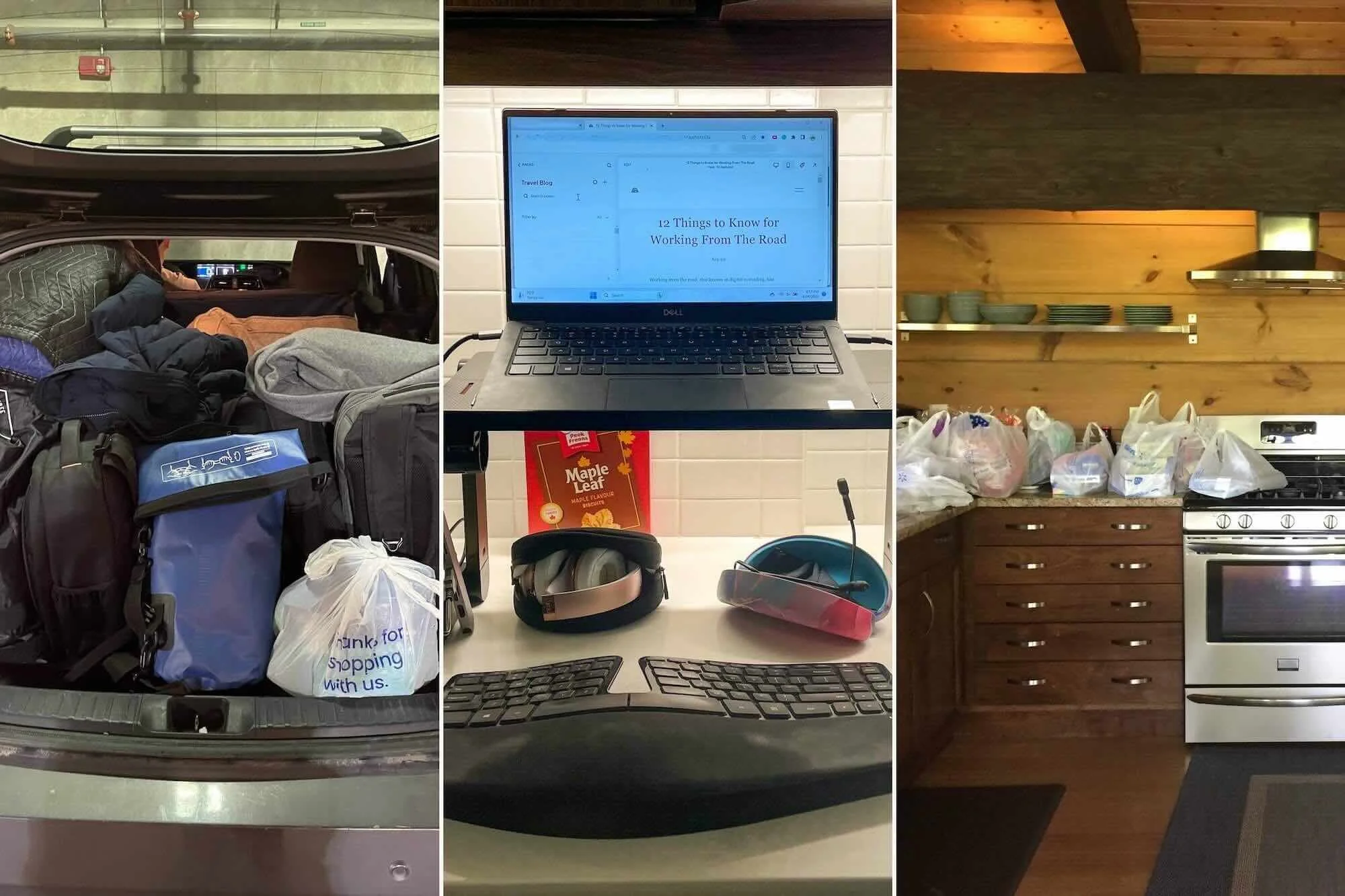
The very first thing we do is get everything inside the new Airbnb or hotel room. If we’re staying for more than a few days, that means everything comes out of the car. Bags, groceries, random gear, all of it. We’ve learned it’s just easier to fully reset instead of digging through the car repeatedly.
Then we reset the car for normal life again. Back seats go back up. Lincoln’s dog cover goes back on. We reorganize everything so the car can function for everyday errands instead of long-haul driving. That part matters more than we realized in the beginning because during a Travel Season, the car shifts back and forth constantly between “road trip mode” and “daily life mode.”
If we’re only staying a night or two and don’t need everything, we’ll leave some things in the car and stack them neatly in the back, covering them with a moving blanket. This is actually one of our favorite road trip packing tips. Here’s everything we pack and why!
Step 2: Check the Basics
Before we get too settled, we do a quick check of the important stuff. Wi-Fi is always first. Then heating or AC, water pressure, hot water, outlets, and locks. It only takes a few minutes, but it saves us from surprises later.
Step 3: Unpack Enough to Function
We don’t fully unpack immediately, but we do try to get things generally where they belong because living out of piles of bags gets old very quickly. Toiletries go in the bathroom. Chargers get plugged in. A few days of clothes get set out. We just want the place to feel functional sooner.
Step 4: Set Up Our Workstation Right Away
The only thing we unpack fully right away is our work gear. Since we both work full-time on the road, this is probably the most important practical setup we do in the first 24 hours.
We already know our work dynamic really well. Jonathan usually takes the most desk-like setup because he’s on calls constantly and travels with a second monitor. I’m more flexible and can work from a countertop or kitchen table if needed.
Even if we’re not working the same day we arrive, it removes that “where do I start?” feeling the next morning.
Step 5: Grocery Run
There is almost always a grocery run in the first 24 hours. Sometimes we’ll stop on the way into town, but if the car is too full or we just want to get settled first, we’ll go after we arrive.
We keep groceries on the road simple but intentional. We don’t grocery shop the same way we do for a normal vacation, where almost every meal is out, and groceries are mostly snacks. At the same time, we’re not grocery shopping exactly the way we do at home either. Breakfast, lunch basics, snacks, a few easy dinners, water, and coffee are the priorities.
Read Next: How We Handle Groceries, Laundry, and Everyday Life on the Road
Step 6: Run the Dishwasher
I usually run the dishwasher before or after grocery shopping. I know the dishes are likely already clean, but as a bit of a germaphobe, running all the utensils, bowls, mugs, plates, and glasses myself helps me settle into a space faster mentally.
I will also wash any pots or pans we know we’ll use, and then we’ll pick up aluminum foil and other cooking basics we’ll need. None of this is really about the dishes themselves, but about making the space feel like ours sooner.
Step 7: Get a Lay of the Land
One of our favorite things to do during the first 24 hours in a new place is to drive around. We’ll loop through nearby neighborhoods, look for parks or walking trails, find spots to walk Lincoln, and see what didn’t come up during our research but happens to be nearby.
On the drive in, on the way to the grocery store, or as we run quick errands, we pay attention to the places we might need over the coming weeks. Nearby markets, coffee shops, gas stations, parks, restaurants, and walking paths are things we’re looking for. This helps us eliminate future decisions or uncertainties because once we know where to grab groceries, walk to Lincoln, get coffee, or get on and off the highway, daily life in a new place takes less energy.
Read Next: What Daily Life on the Road Actually Looks Like
Step 8: Panic
One thing we’ve learned about me specifically is that the first 24 hours in a new place can be a little intense. I’m sensitive to new environments, and showing up somewhere new is extremely stimulating because everything suddenly feels different all at once.
There’s a new couch, bed, comforter, sheets, kitchen, dishes, table, smells, sounds, lighting, etc. The overstimulation has led to an almost ritual “freak out” for me during the first 24 hours in a new location. I usually look at Jonathan after we’ve unpacked and say something like, “I don’t want to do this anymore, and I want to go home.”
This happens so frequently (and during stays I end up loving and don’t want to leave) that by this point, we recognize it sooner. I’m overstimulated because everything feels unfamiliar. I need to create one comfortable spot, then try to get some sleep and give my nervous system time to settle.
Usually by the next morning, everything is fine.
Step 9: Make One Spot Feel Comfortable
To help when I’m feeling overstimulated, one of the first things I’ll do is make one spot feel comfortable. Sometimes that’s outside on a patio, sometimes it’s a kitchen chair, and sometimes it’s the couch after I’ve put a sheet down that I brought with me.
I’ll often swap out the bed sheets with the ones we pack too. I don’t need the whole place to feel perfect, I just need one spot that feels like it’s mine. It’s a small thing, but it’s one of the ways we make a new place feel like home on the road.
Step 10: One Enjoyable Thing
The other thing that helps is planning one enjoyable thing on arrival day. Maybe that’s a brewery, a restaurant patio, or somewhere we can walk outside after being in the car all day.
The key is keeping it light. Usually by this point, we’re tired, especially if it was a long drive. So we don’t try to force a big adventure the day we get somewhere new, but rather want to do or sightsee just one thing that reminds us why we’re happy to be there.
Step 11: Wake Up and Start Fresh
The first 24 hours are rarely the most glamorous part of life on the road. But over time, we’ve learned that if we get through the initial adjustment period, a place that feels unfamiliar on night one can feel like home just a couple of days later.
More on Road Trip Locals
🌎 Curious where we’ve been around the U.S. and Canada? Browse our Travel Seasons for real-life itineraries and practical tips from months spent living and working on the road.
🧳 Want to know exactly what we pack on the road? Check out our complete Road Trip Packing List for the exact things we use and love on every trip!
💻 Working while you travel? Start with 12 Things to Know for Working From the Road and 11 Truths About Traveling While Working.
🐻 In the mood for adventure? Read Alaska Diaries, a seven-part travelogue from the time we roadtripped Alaska to explore eight national parks in 21 days.
🏡 Wonder what it’s like to buy a fixer-upper near Yellowstone National Park? Follow our renovation rollercoaster in The Cabin Chronicles.
🦬 Is Yellowstone on your bucket list? Don’t miss our Yellowstone Travel Guide: your step-by-step companion to planning an unforgettable trip to Yellowstone National Park!