
Yellowstone’s Off-Season Explained
Yellowstone's off-season can feel confusing because the park doesn't operate the same way in November, March, and April as it does during the rest of the year.
Between the summer and winter seasons, interior roads close, snowcoach routes are cleared or prepared, and access changes throughout the park. Visitors planning trips in the off-season discover that some roads are open, some are closed, and some are in the middle of transitioning between seasons.
The good news is that Yellowstone becomes much easier to understand when you don’t think about it as one giant park operating the same way all year. During the off-season, the park largely revolves around the North and Northeast Entrances in Gardiner, Montana, and Cooke City, Montana, and the wildlife-rich Northern Range that connects them.
This guide explains what Yellowstone's off-season actually means, which parts of the park remain open, and what to realistically expect if you're visiting in November, March, or April.
👋 Meet Your Guides: We're Jonathan and Kelly, and we love Yellowstone National Park. So much so that we've been a dozen+ times, bought fixer-upper cabins outside Yellowstone’s North Entrance, and are turning an old park ranger hut into year-round Christmas magic. Now, we’re on a mission to make Yellowstone simpler and more magical for everyone who visits!
📚 Want our best Yellowstone tips in one place? Check out our Yellowstone Travel Guide, packed with maps, itineraries, and everything you need to explore year-round.
🏡 Visiting Yellowstone’s North Entrance? Explore the Cozy Yellowstone Compound in Gardiner, our small collection of cabins near Yellowstone’s only year-round entrance.
What Is Yellowstone’s Off-Season?
Most of the time when people talk about traveling somewhere in the off-season, they’re talking about the months just outside peak travel periods when prices are lower, crowds are smaller, and you can often have a great trip with fewer people around.
In Yellowstone, that kind of shoulder season would be more like May and October, but those months still fall within Yellowstone’s main operating season. Roads are open, the Grand Loop is accessible, and most of the park is functioning normally. You’re just visiting on the edges of the busiest main window.
Yellowstone’s off-season is actually the transition period between the park’s two operating seasons: regular road season (summer and fall) and over-snow season (winter). Yellowstone is in its off-season from mid-March through mid-April and again from November 1 through mid-December.
During these stretches, interior park roads close to cars, but snowcoach and snowmobile travel either hasn’t started or is shutting down for the season. This is a big reason why Yellowstone’s off-season can feel confusing. The park itself remains open year-round, but access changes dramatically.
The easiest way to think about it is this: Off-season in Yellowstone is a Northern Range trip.
Read next: Yellowstone’s Five Seasons: Which is Best?
What Parts of Yellowstone Stay Open?
During Yellowstone’s off-season, the only road open to cars is the road connecting:
Yellowstone’s North Entrance at Gardiner, Montana,
Mammoth Hot Springs,
Tower Junction,
Lamar Valley,
and Yellowstone’s Northeast Entrance at Cooke City
This is considered Yellowstone’s Northern Range, and it’s one of the most wildlife-rich parts of the park.
You Have to Enter through the North Entrance
During the off-season, visitors can only access Yellowstone through the North Entrance at Gardiner, MT.
The West, South, and East Entrances are closed, and most of Yellowstone's Grand Loop Road is inaccessible. Attractions like Old Faithful, Grand Prismatic Spring, Canyon Village, and Yellowstone Lake cannot be reached because the roads connecting them are closed.
Instead, off-season visits focus on the stretch of Yellowstone between Gardiner and Cooke City. For first-time visitors hoping to see Yellowstone's famous geysers, waterfalls, and major attractions, the off-season is not the best time to visit. You're only able to access a small portion of the park, and many of Yellowstone's most iconic sights are unavailable.
The upside is that Yellowstone's best wildlife viewing remains accessible. Lamar Valley, Mammoth Hot Springs, and the Northern Range continue to offer excellent opportunities for spotting wolves, bison, elk, foxes, coyotes, bald eagles, and other wildlife throughout the off-season.
What Off-Season is Actually Like
Off-season in Yellowstone does not feel like a less busy version of summer in Yellowstone. It feels like a completely different park.
The roads are quieter, wildlife becomes a much bigger part of the day, and weather shapes your plans more. You spend less time rushing between attractions and more time slowly driving through Lamar Valley scanning hillsides for wolves or watching steam rise off the Yellowstone River.
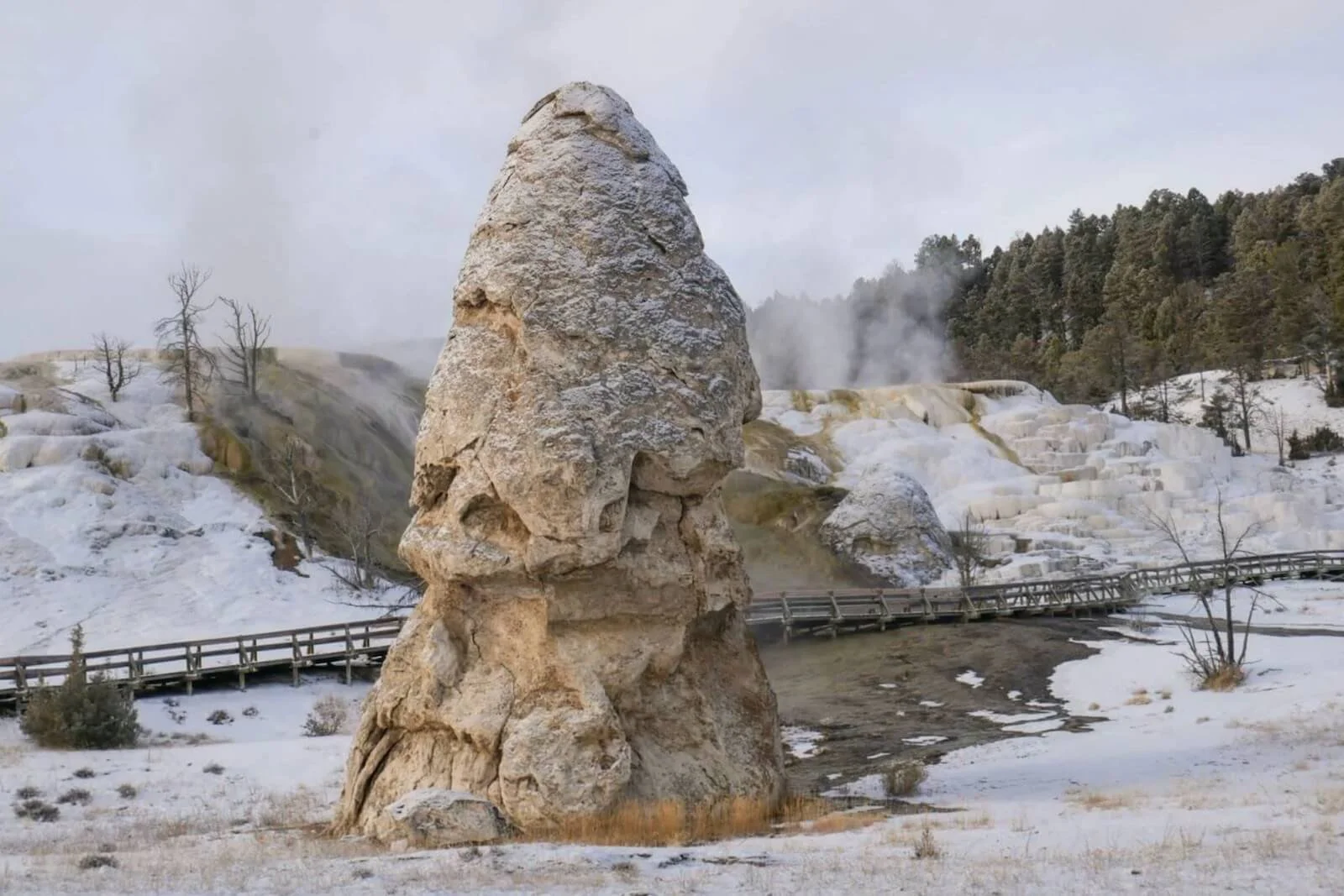
Some days feel like winter without being able to experience the full winter season. That’s especially true in November. March and April can feel similarly transitional, just in the opposite direction. Winter operations begin shutting down, roads gradually reopen, and the park starts shifting back toward spring and summer access.
Planning a visit during the off-season? Check out our guides to Yellowstone in November, Yellowstone in March, and Yellowstone in April
The Best Part of Visiting Yellowstone During the Off-Season
Wildlife watching is one of the biggest reasons people return during Yellowstone’s off-season. Lamar Valley remains one of the best places in the country to see wolves, bison, elk, coyotes, foxes, and bighorn sheep, and many animals stay active throughout the year.
There’s also something simpler about off-season trips. Instead of trying to conquer the entire park, you’ll settle into a smaller region and experience it more deeply.
The Tradeoffs
Off-season in Yellowstone comes with large tradeoffs. Road access is highly limited. Weather can change quickly. Most services are closed. You need to be flexible and willing to do less.
Depending on the timing of your trip, you may feel caught between seasons. November and March can bring full winter conditions without winter recreation or transportation.
If your dream Yellowstone trip revolves around seeing:
Old Faithful
Grand Prismatic Spring
Yellowstone Lake
the entire Grand Loop Road
then summer or early fall will fit your expectations much better.
But if you’re more interested in:
wildlife watching
photography
moody weather
slower-paced trips
off-season in Yellowstone can still be memorable.
Is Yellowstone Off-Season Worth It?
For the right kind of traveler, it can be worth it, but the key is understanding what kind of Yellowstone trip you’re planning.
If you want a classic Yellowstone experience with full access to the park’s biggest attractions, summer will make more sense. (The crowds don’t have to deter you! Here’s how to avoid crowds in Yellowstone without missing the best spots.)
But if you’re drawn to wildlife, winter landscapes, dramatic weather, and a more local version of Yellowstone, the off-season can be great for the right traveler. Just be sure to plan for a Northern Range-focused trip, not the Yellowstone you’ve seen from photos taken during summer months.
FAQ: Yellowstone Off-Season
Is Yellowstone closed during the off-season?
No, Yellowstone stays open year-round. However, interior roads close during the off-season.
What entrance stays open year-round?
Yellowstone’s North Entrance in Gardiner is the only entrance open year-round. Here’s everything you need to know about Yellowstone’s North Entrance.
Where should you stay during Yellowstone’s off-season?
For most visitors, staying near Gardiner makes the most sense. It’s the only entrance accessible year-round and you’re well-positioned for early morning wildlife watching and easy park access.
If you’re looking for a great basecamp near the park, our Cozy Yellowstone Compound is located less than a mile from Yellowstone’s North Entrance. Wildlife regularly moves through the area, and it’s an especially great location for off-season trips when the Yellowstone experience becomes more centered around the North Entrance.
Is Yellowstone hard to plan during the off-season?
Yellowstone’s off-season can feel confusing, especially once you start researching road closures, entrances, winter operations, snowcoach access, and what parts of the park are actually reachable during different months. That’s why we created our All-Seasons Yellowstone Travel Guide.
We break down how the park actually changes throughout the year, including what roads are open by season, what areas of the park are accessible, what kind of trip each season is best for, realistic wildlife expectations, where to stay, and what surprises first-time visitors most.
More on Yellowstone
🏡 Staying Near the North Entrance? Explore the Cozy Yellowstone Compound in Gardiner, our collection of cabins just minutes from the park gate.
🧳 Not Sure What to Pack? Check out our detailed Yellowstone Packing List, so you’re prepared for summer heat, winter cold, and everything in between.
🦬 Still in Planning Mode? Take our free Yellowstone Traveler Quiz to discover your travel style and get our free Yellowstone Planning Playbook.
📚 Want a Step-by-Step Plan with Customizable Itineraries? Our All-Seasons Yellowstone Travel Guide walks you through where to stay, how to structure your days, and what to expect in every month of the year.