
Yellowstone’s North Entrance: What To Know Before You Go
Yellowstone’s North Entrance is one of the wildest and most scenic parts of the park. Located in Gardiner, Montana, this is the only entrance open year-round and the gateway to Yellowstone’s Northern Range, one of the best wildlife watching areas in the world.
This side of Yellowstone is best known for wolves, bison, bears, elk, open valleys, mountain scenery, and long drives where wildlife sightings are part of the experience. It’s also one of the few areas around Yellowstone where the adventure continues outside the park itself, with whitewater rafting, fly fishing, horseback riding, hiking, hot springs, snowshoeing, and cross-country skiing all nearby.
Gardiner itself has an old-west feel that’s hard to explain until you’ve been here. Elk wander through town regularly, the Yellowstone River cuts through the valley, the mountains feel close on all sides, and public land stretches out in nearly every direction.
We’ve spent years exploring Yellowstone, and over time, the North Entrance and Yellowstone’s Northern Range became the part of Yellowstone we kept coming back to. Here’s what to expect from Yellowstone’s North Entrance, including wildlife, seasons, road access, recreation, lodging, and what makes this side of the park so different from the rest of Yellowstone.
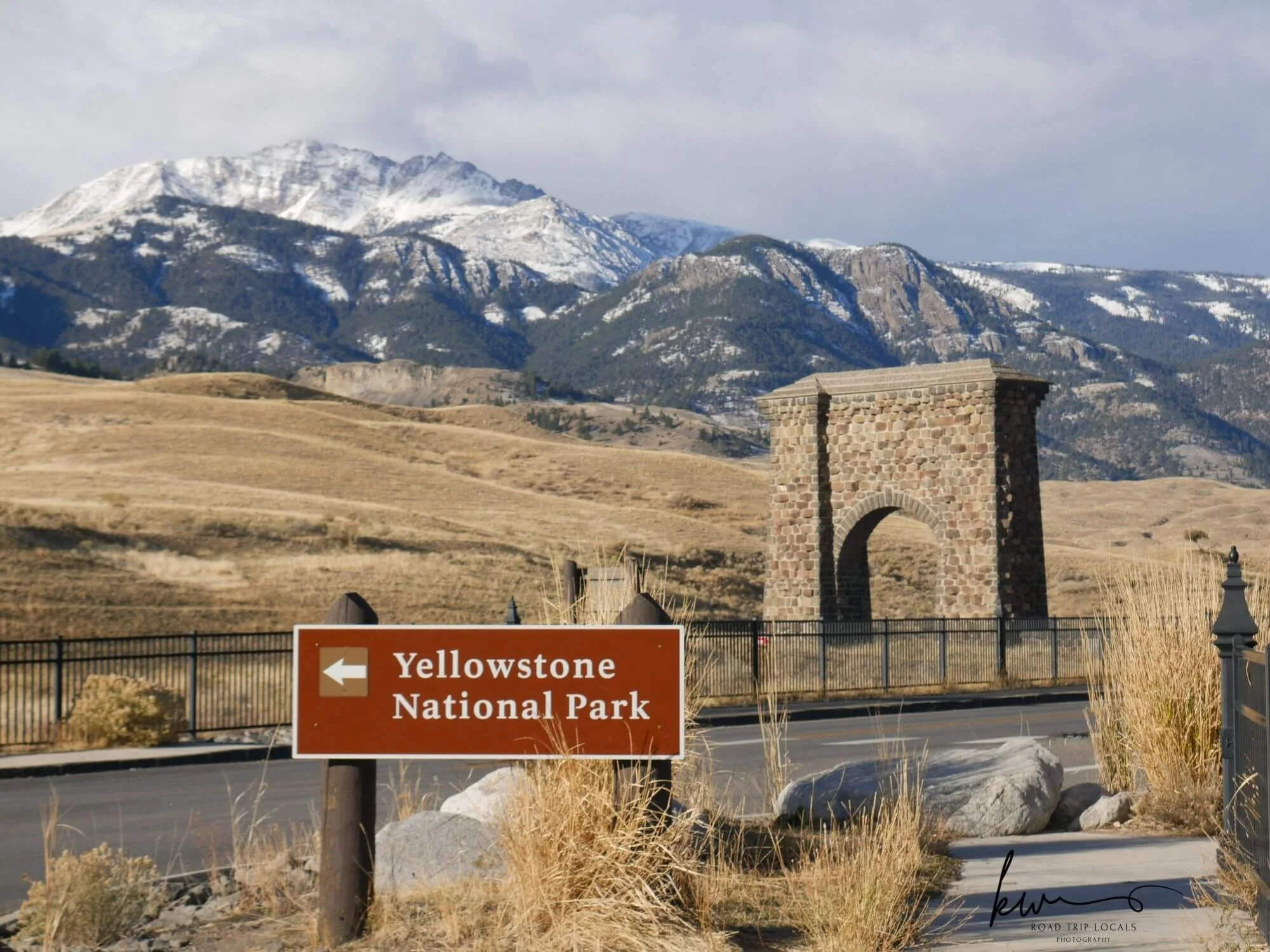
Table of Contents
👋 Meet Your Guides: We're Jonathan and Kelly, and we love Yellowstone National Park. So much so that we've been a dozen+ times, bought fixer-upper cabins outside Yellowstone’s North Entrance, and are turning an old park ranger hut into year-round Christmas magic. Now, we’re on a mission to make Yellowstone simpler and more magical for everyone who visits!
📚 Want our best Yellowstone tips in one place? Check out our Yellowstone Travel Guide, packed with maps, itineraries, and everything you need to explore year-round.
🏡 Visiting Yellowstone’s North Entrance? Explore the Cozy Yellowstone Compound in Gardiner, our small collection of cabins near Yellowstone’s only year-round entrance.
20 Fast Facts About Yellowstone’s North Entrance
Yellowstone’s North Entrance is located in Gardiner, Montana, a small gateway town with lodging, restaurants, grocery stores, and visitor amenities just outside the park entrance. Gardiner is bordered on all sides by public land and is often referred to as “The Wild West.” Once you arrive, you’ll understand why. Between the mountain backdrop, roaming elk, and immediate access to Yellowstone’s Northern Range, Gardiner feels more connected to the landscape than many typical national park gateway towns.
The entrance is marked by the historic Roosevelt Arch, which was built in 1903. According to Yellowstone Forever Institute, a time capsule inside the Arch reportedly contains a Bible, a picture of President Roosevelt, Masonic documents, local newspapers, and U.S. coins.
The North Entrance is the original entryway to Yellowstone, built to provide official access to the park. President Theodore Roosevelt laid the cornerstone for what is now the Roosevelt Arch.
The North Entrance offers the quickest access to Mammoth Hot Springs, which is only about 5 miles (or 15 minutes) from the entrance gate.
You don't need a reservation to enter Yellowstone’s North Entrance, but you will need to pay an entrance fee (or show your park pass). A standard entrance fee is $35 per vehicle for a 7-day pass, and it covers entry into all of Yellowstone, not just the Northern Range.
Between November 1st and mid-April every year, you can drive into Yellowstone from the North Entrance only. The rest of Yellowstone’s entrances close seasonally.
Winter visitors love this entrance for self-driving, wildlife viewing, wolf watching, photography, snowshoeing, and cross-country skiing. Tours also run from Gardiner into Yellowstone’s interior.
Lamar Valley is about 1 hour from the North Entrance and is one of the best places in the world to see wild bison, wolves, bears, foxes, and more.
The North Entrance is the second most popular summer entrance, behind only the West Entrance near West Yellowstone, MT.
Wildlife such as elk, mule deer, bison, and pronghorn antelope can often be seen in Gardiner or near the North Entrance gate.
The North Entrance is the perfect starting point for exploring Yellowstone’s Northern Range, best known for its stunning mountain landscapes and abundant wildlife viewing.
In addition to access to Lamar Valley, the North Entrance offers a scenic drive to Tower Fall, one of the best spots to see bears in the spring.
About 10 minutes from Yellowstone’s North Entrance is Yellowstone Hot Springs, one of the few places to swim near Yellowstone.
There are gas stations and general stores near the North Entrance for last-minute supplies. Conoco Gas Station in Gardiner offers standard fuel options and a small convenience store. Sinclair Gas Station is located just north of Gardiner, offering a larger gas station and convenience store… with surprisingly delicious chicken sandwiches! Gardiner Market is the only grocery store nearby and is a great place to grab groceries or quick meals.
The Yellowstone River flows through Gardiner, offering fishing and rafting trips.
Chico Hot Springs is about 30 minutes from Yellowstone’s North Entrance and is a popular day trip for visitors.
The Gallatin National Forest surrounds the North Entrance, providing additional hiking and outdoor activities. This is especially great for those traveling with pets because many trails are pet-friendly.
Gardiner's elevation is 5,259′ and lower than that of the west, south, and northeast areas of Yellowstone, which can help visitors adjust more comfortably to the area’s altitude.
The drive between Bozeman and Yellowstone’s North Entrance runs through Paradise Valley, one of the most scenic drives in Montana.
In the winter, the North Entrance feels like a winter wonderland. In fact, “Wonderland” was reportedly the area’s nickname before Yellowstone became a national park. The story goes (as told by a park tour guide) that officials worried people would associate the name with Alice in Wonderland, which had been published just a few years earlier. Instead, the park was officially named “Yellowstone” after the Yellowstone River, which itself was named for the yellow-colored rock found throughout the park, including in the walls of the Grand Canyon of the Yellowstone.

What Makes Yellowstone’s North Entrance Different?
Aside from being the only entrance open year-round, the biggest difference between Yellowstone’s North Entrance and other Yellowstone entrances comes down to what you spend most of your time doing inside the park.
The West Entrance, for example, is usually the better fit for visitors focused primarily on Yellowstone’s geothermal areas. It provides the quickest access to Old Faithful, Grand Prismatic Spring, Fountain Paint Pot, Norris Geyser Basin, and Yellowstone’s Lower Loop. Days there often involve moving between major geothermal attractions, parking lots, boardwalks, and some of the busiest sections of the park.
The North Entrance is more centered around Yellowstone’s Northern Range, which is one of the best wildlife watching regions in the country. Instead of spending most of the day around geyser basins, visitors staying near the North Entrance often spend their time driving between Gardiner, Mammoth Hot Springs, Tower-Roosevelt, Lamar Valley, and Cooke City looking for wildlife. It’s common to pull over for bison jams, watch elk grazing near the road, scan hillsides for bears, or join a crowd of people with spotting scopes watching wolves across Lamar Valley.
It’s also one of the few areas around Yellowstone where the park experience extends naturally outside the entrance itself. In and around Gardiner, visitors can go whitewater rafting on the Yellowstone River, fly fishing in Paradise Valley, horseback riding near the park, swimming and soaking at Yellowstone Hot Springs or Chico Hot Springs, and hiking throughout the surrounding public lands.
At the same time, you’re still within reach of the rest of Yellowstone’s major attractions, and you can access any part of the park from Yellowstone’s North Entrance.
Finally, the North Entrance is Yellowstone’s only year-round entrance. Between November 1 and mid-April, most Yellowstone roads and entrances are closed to regular vehicle traffic. However, visitors can still drive from Gardiner through Mammoth Hot Springs and across the Northern Range toward Lamar Valley and Cooke City, which is why the North Entrance becomes the center of Yellowstone’s winter driving season.
Where Is Yellowstone’s North Entrance?
Yellowstone’s North Entrance is located in Gardiner, Montana, just north of Mammoth Hot Springs at the very top of Yellowstone National Park.
Most visitors reach the North Entrance by driving south from Bozeman through Paradise Valley along Highway 89. The drive takes about 1.5 hours and follows the Yellowstone River nearly the entire way.
If you’re already inside Yellowstone during the main season, you can also reach the North Entrance by driving north through Mammoth Hot Springs.
Is Yellowstone’s North Entrance Open Year-Round?
Yes, Yellowstone’s North Entrance is open year-round. Winter visitors use the North Entrance for wildlife watching, wolf watching, photography, snowshoeing, cross-country skiing, and scenic driving. Lamar Valley becomes one of the best places in the park to look for wild wolves, while bison, elk, coyotes, foxes, and bighorn sheep are commonly seen along the roadside throughout winter.
The road between the North and Northeast Entrances is maintained throughout winter, although temporary weather closures can occasionally happen during major storms or hazardous conditions.
What hours is Yellowstone’s North Entrance open?
Yellowstone’s North Entrance is open 24 hours a day, year-round.
Is there a fee to enter Yellowstone’s North Entrance?
Yes, Yellowstone National Park charges an entrance fee regardless of which entrance you use. Standard private vehicle passes are currently $35 and are valid for 7 days. The America the Beautiful annual pass also covers entrance fees to Yellowstone.
Yellowstone does not currently require timed-entry reservations.
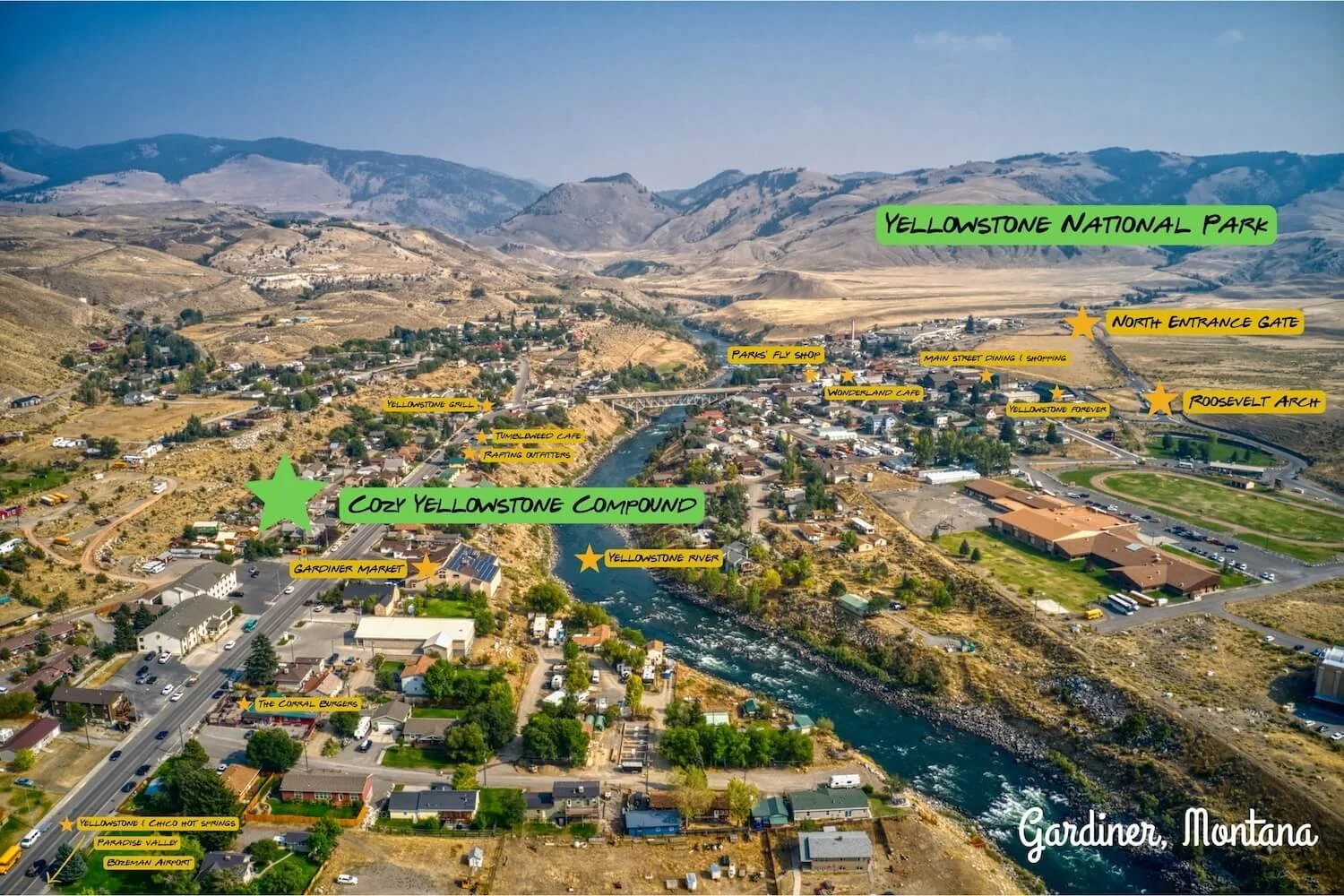
Yellowstone North Entrance Map
Here’s a map highlighting various attractions and points of interest near Yellowstone’s North Entrance.

What Is Yellowstone’s Northern Range?
Yellowstone’s Northern Range stretches between Gardiner, Mammoth Hot Springs, Tower-Roosevelt, Lamar Valley, and Cooke City. This region is one of the most important wildlife corridors in North America and is widely considered the best area in Yellowstone for wildlife watching.
Unlike Yellowstone’s forested interior, much of the Northern Range is open, which makes spotting wildlife significantly easier. You spend less time driving through dense lodgepole pine forest and more time looking across valleys, rivers, mountains, and sagebrush hillsides where wildlife and scenery are easier to view. This is the Yellowstone that many wildlife photographers, repeat visitors, and winter travelers fall in love with.
Yellowstone’s Northern Range deserves far more than a quick overview. It’s one of the most wildlife-rich and seasonally dynamic parts of the park, and understanding how to drive it completely changes the Yellowstone experience. Here’s our full guide to Yellowstone’s Northern Range, including pullouts, wildlife timing, seasonal differences, and how to plan a self-guided tour.
Who Should Stay Near Yellowstone’s North Entrance?
The North Entrance is especially great for:
repeat Yellowstone visitors
spring and fall visits
winter Yellowstone trips
split trips or recreation-heavy summer trips
photographers
wildlife watchers
scenic driving
visitors interested in Yellowstone beyond just geothermal attractions
We think almost everyone visiting Yellowstone should spend at least part of their trip here, even if you plan a split stay.
Many visitors split their trip between multiple areas of the park, spending part of their stay near the West Entrance for geothermal attractions and part near the North Entrance for wildlife watching, scenic driving, and the Northern Range.
Where To Stay Near Yellowstone’s North Entrance
Most visitors staying near Yellowstone’s North Entrance either stay in Gardiner, Montana, just outside the park, or at Mammoth Hot Springs Hotel inside Yellowstone.
Gardiner is the main gateway town for the North Entrance and one of the best places to stay for visitors focused on wildlife watching, Yellowstone’s Northern Range, winter trips, or year-round park access. Staying here makes it easier to reach Lamar Valley early in the morning, return for midday breaks, and spend evenings around Mammoth or the Northern Range without crossing huge sections of the park repeatedly.
Inside Yellowstone, Mammoth Hot Springs Hotel is the primary lodging option near the North Entrance and one of two in-park lodges open during the winter season. The location is excellent for visitors wanting immediate access to Mammoth Hot Springs and Yellowstone’s year-round road system.
Farther east along the Northern Range, Roosevelt Lodge operates seasonally near Tower-Roosevelt and provides one of the closest in-park lodging options to Lamar Valley.
For campers, Mammoth Campground is the only campground near Yellowstone’s North Entrance open year-round.
For those staying in Gardiner, we’d love to host you at the Cozy Yellowstone Compound. Our cabins are located less than a mile from Yellowstone’s North Entrance and are especially well-positioned for travelers planning wildlife-focused trips, Northern Range scenic drives, and year-round visits to the park.
What Is There To Do Near Yellowstone’s North Entrance?
Yellowstone’s North Entrance is best known for wildlife watching, scenic driving, and Yellowstone’s Northern Range, but there’s plenty to do both inside and outside the park.
Inside Yellowstone, visitors can explore Mammoth Hot Springs, drive through Lamar Valley looking for wildlife, hike trails near Mammoth and Tower-Roosevelt, and spend time scenic driving between Gardiner and Cooke City.
Outside the park, Gardiner and Paradise Valley offer whitewater rafting, fly fishing, horseback riding, hiking, hot springs, and other outdoor recreation opportunities throughout the year.
Some of the most popular activities near Yellowstone’s North Entrance include:
wildlife watching in Lamar Valley
exploring Mammoth Hot Springs
scenic driving through the Northern Range
rafting on the Yellowstone River
fly fishing in Paradise Valley
horseback riding near Gardiner and Roosevelt Lodge
hiking near Mammoth Hot Springs and Tower
soaking at Yellowstone Hot Springs or Chico Hot Springs
scenic driving through Paradise Valley
snowshoeing and cross-country skiing in winter
photography
visiting the Roosevelt Arch

Best Time To Visit Yellowstone’s North Entrance
One of the biggest strengths of the North Entrance is that it works well across every season. Spring brings some of the best wildlife viewing of the year, including baby bison, bear activity, elk calves, and pronghorn along the Northern Range.
Summer offers full park access and plentiful recreation, while fall is excellent for elk rut activity, cooler hiking temperatures, and fewer crowds.
Winter completely changes the experience here, with snow-covered valleys, steaming thermal features, roadside bison, wolf watching, and significantly quieter roads.
Read Next: The Best (and Worst) Times to Visit Yellowstone Explained
How Far Is Yellowstone’s North Entrance From Major Attractions?
Yellowstone distances tend to be more deceptive than visitors expect. Drive times inside the park are heavily affected by wildlife traffic jams, road construction, weather, slow speed limits, and scenic pullouts.
Plus, some of the best moments in Yellowstone happen between destinations. A drive to Lamar Valley may turn into an hour spent watching wolves through spotting scopes. A quick stop near Mammoth can become a roadside bison jam. Even short drives often take longer because you’ll want to pull over constantly.
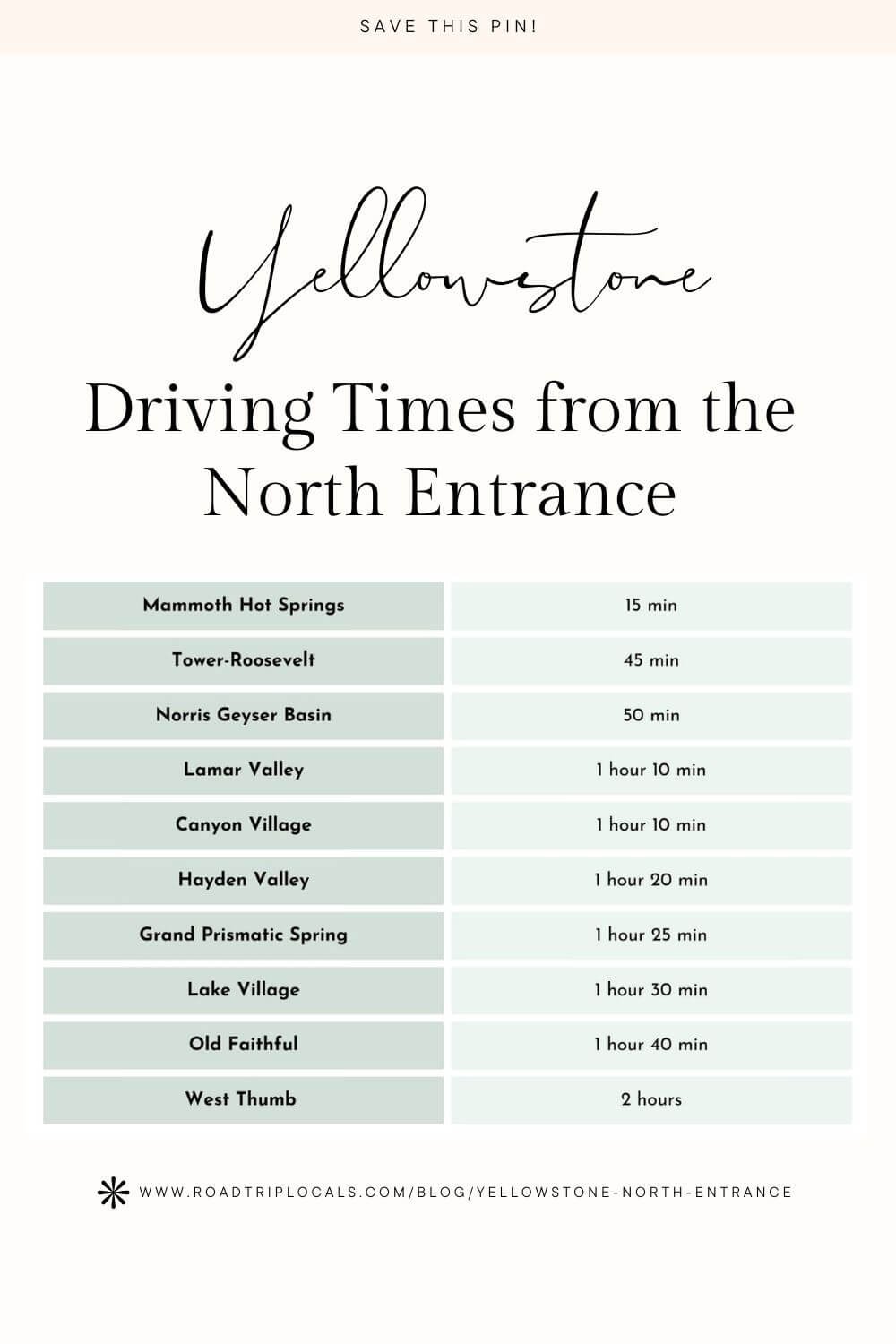
Approximate drive times from Yellowstone’s North Entrance include:
Mammoth Hot Springs: about 15 minutes
Tower-Roosevelt: about 45 minutes to 1 hour
Lamar Valley: about 1 hour to 1 hour 15 minutes
Cooke City: about 1.5 to 2 hours
Norris Geyser Basin: about 1 hour
Grand Prismatic Spring: about 1.5 hours
Old Faithful: about 1 hour 40 minutes
Canyon Village: about 1 to 1.5 hours
West Thumb Geyser Basin: about 2 hours
Grand Teton National Park: about 3 hours
The farther south you travel from the North Entrance, the more important it becomes to plan realistic full-day routes rather than trying to cram too many major stops into one day.
For a more detailed breakdown of Yellowstone drive times, route strategy, and wildlife delays, check out our full guide to Driving Times From Yellowstone’s North Entrance.
Where To Eat Near Yellowstone’s North Entrance
Gardiner has a surprisingly solid food scene for a small Yellowstone gateway town, especially considering its year-round tourism.
Here are some of our favorite places to eat in Gardiner:
Wonderland Cafe
Yellowstone Perk
Tumbleweed Cafe
The Corral
Outlaw Pizza
Gardiner Market
Bear’s Brew
Gardiner’s restaurant scene changes quite a bit throughout the year, especially during the shoulder seasons and winter.
Here’s a full breakdown of our favorite places to eat near Yellowstone’s North Entrance, including breakfast spots, coffee shops, quick lunches, dinner favorites, and what’s open when.
Still Planning?
Before your trip, don’t forget to check out:
And if you’re looking for a place to stay near Yellowstone’s North Entrance, we’d love to welcome you to the Cozy Yellowstone Compound in Gardiner, Montana!
Save this for later
Hover over the image below and click on the red “Save” button that pops up in the upper lefthand corner of the image to save this on Pinterest for later. (If you’re on mobile, you might have to tap the image first to see the red ‘Save’ button.)
Happy Travels!

More on Yellowstone
🏡 Staying Near the North Entrance? Explore the Cozy Yellowstone Compound in Gardiner, our small collection of cabins just minutes from the park gate.
🧳 Not Sure What to Pack? Check out our detailed Yellowstone Packing List, so you’re prepared for summer heat, shoulder-season cold snaps, or full winter conditions.
🦬 Still in Planning Mode? Browse our Yellowstone Hub for wildlife guides, seasonal breakdowns, scenic drives, and practical tips from years of visiting Yellowstone.
📚 Want a Step-by-Step Plan? Our All-Seasons Yellowstone Travel Guide walks you through where to stay, how to structure your days, and what to expect in every month of the year.