We spent more than 100 hours planning our Alaska trip, and we still made mistakes.
While none of them prevented us from visiting all 8 national parks in 21 days, there are still things I would do differently if I were planning Alaska today.
So if you're planning your own Alaska trip, here are things I wouldn’t do again.
Mistake #1: We Did Not Take the Rain Seriously Enough
Everyone tells you it rains in Alaska. We knew it rained in Alaska. We packed rain jackets. Yet we underestimated how much good rain gear matters in Alaska.
In other words, that raincoat sitting in your closet since high school is not going to cut it. (Said from personal experience.)
We were kayaking, hiking, camping, taking boats, standing outside to watch wildlife, and climbing into small planes. Since rain itself doesn't usually cancel plans in Alaska, and it rains a lot, you want to be prepared to do the day’s plans in the rain. Some outfitters provide or rent gear, but you'll still want good gear for everything else, so we recommend bringing your own and making sure it's actually waterproof before you go.
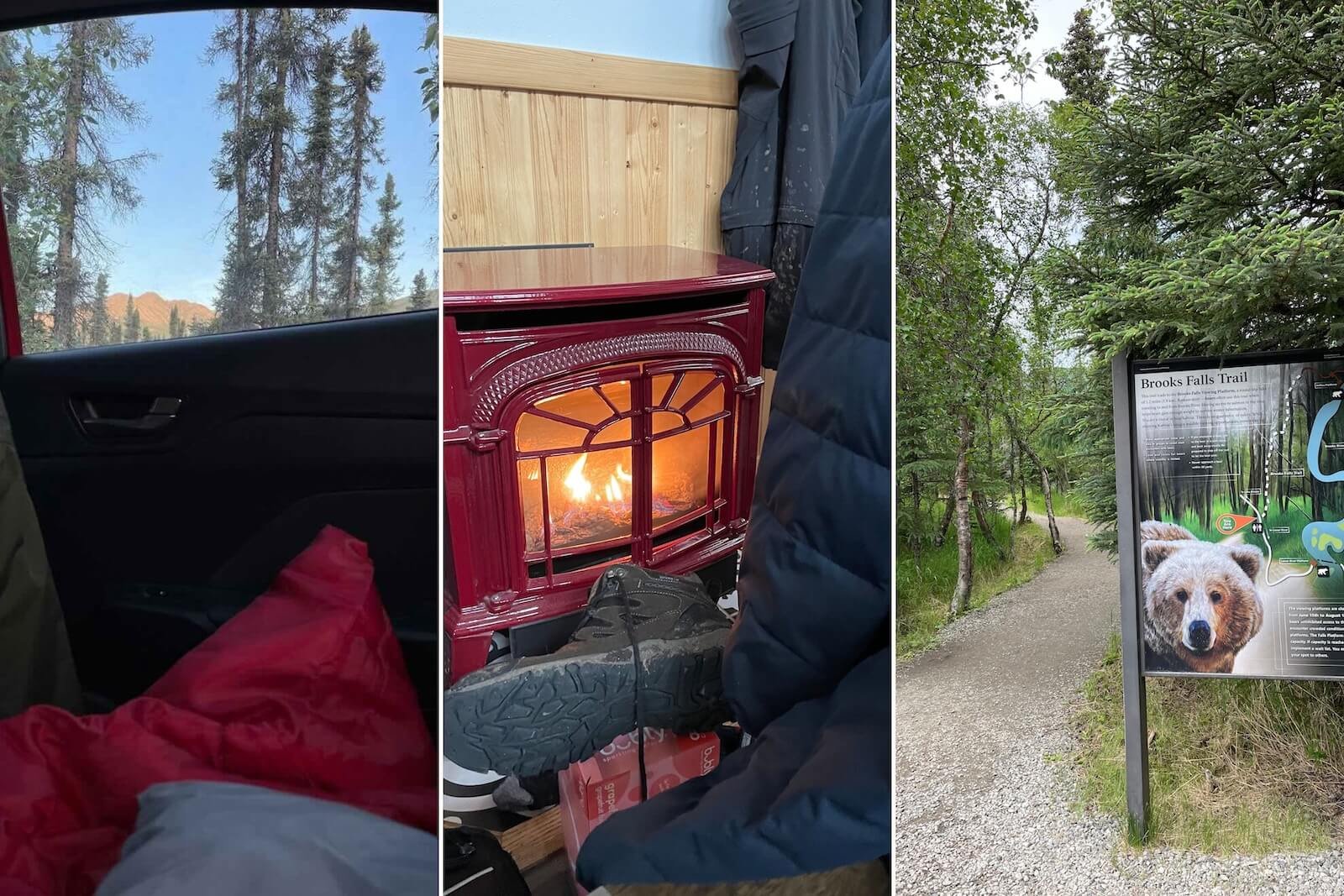
We learned this firsthand after hiking Kenai Fjords in the rain… and spending the rest of the evening drying our boots and clothes in front of the little electric fireplace in our Airbnb.
If I were packing for Alaska again, waterproof gear is one place I would not cut corners. I'd bring a rain jacket I had already tested in actual rain, waterproof hiking boots, and clothing that could handle getting wet and dry relatively quickly.
Read Next: Alaska Packing List: What to Pack for Summer in Alaska
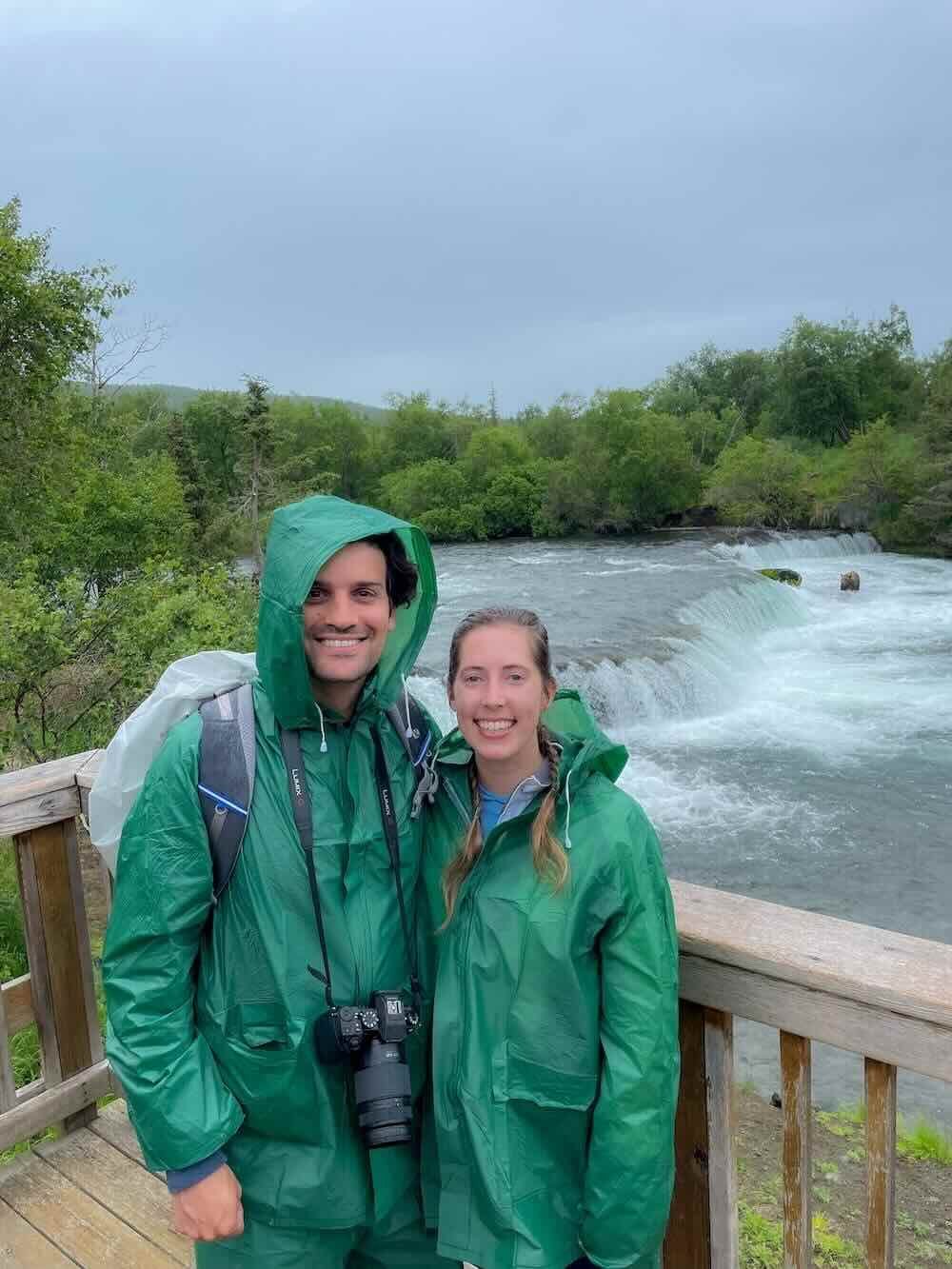
We ended up buying inexpensive rain coats and pants at the Walmart in Anchorage because what we brought wasn’t enough.
Mistake #2: We Didn’t Start Planning Early Enough
We started planning our Alaska trip in October for the following summer. That sounds early, but for Alaska, it wasn't early enough to get everything we wanted.
Brooks Lodge is the best example. It's the only traditional lodging at Brooks Camp in Katmai, and when we were planning, the reservation lottery for it took place about a year and a half in advance. We'd missed it before we even decided to go to Alaska.
So we turned to Brooks Camp Campground.
Those reservations are incredibly competitive too. Campsites during peak season can disappear within seconds of becoming available. The date we eventually secured became one of the reservations we had to build the rest of our itinerary around.
Katmai is an extreme example, but the same lesson showed up throughout our planning. Glacier Bay Lodge books well ahead. Flightseeing tours have limited seats and may only operate on certain days. Lodging options become more limited in remote areas. Even when something technically has availability, it may not have availability on the date that works with everything else you're trying to do.
You can absolutely plan an Alaska trip on shorter notice. You may even get lucky with cancellations. But if you already know you want to go, I wouldn't wait.
Read Next: 10 Things We Learned Planning Our Alaska Trip
Mistake #3: We Didn't Have Backup Transportation Options Ready
This is probably the biggest planning mistake we made. (Well, maybe outside of the rain gear.)
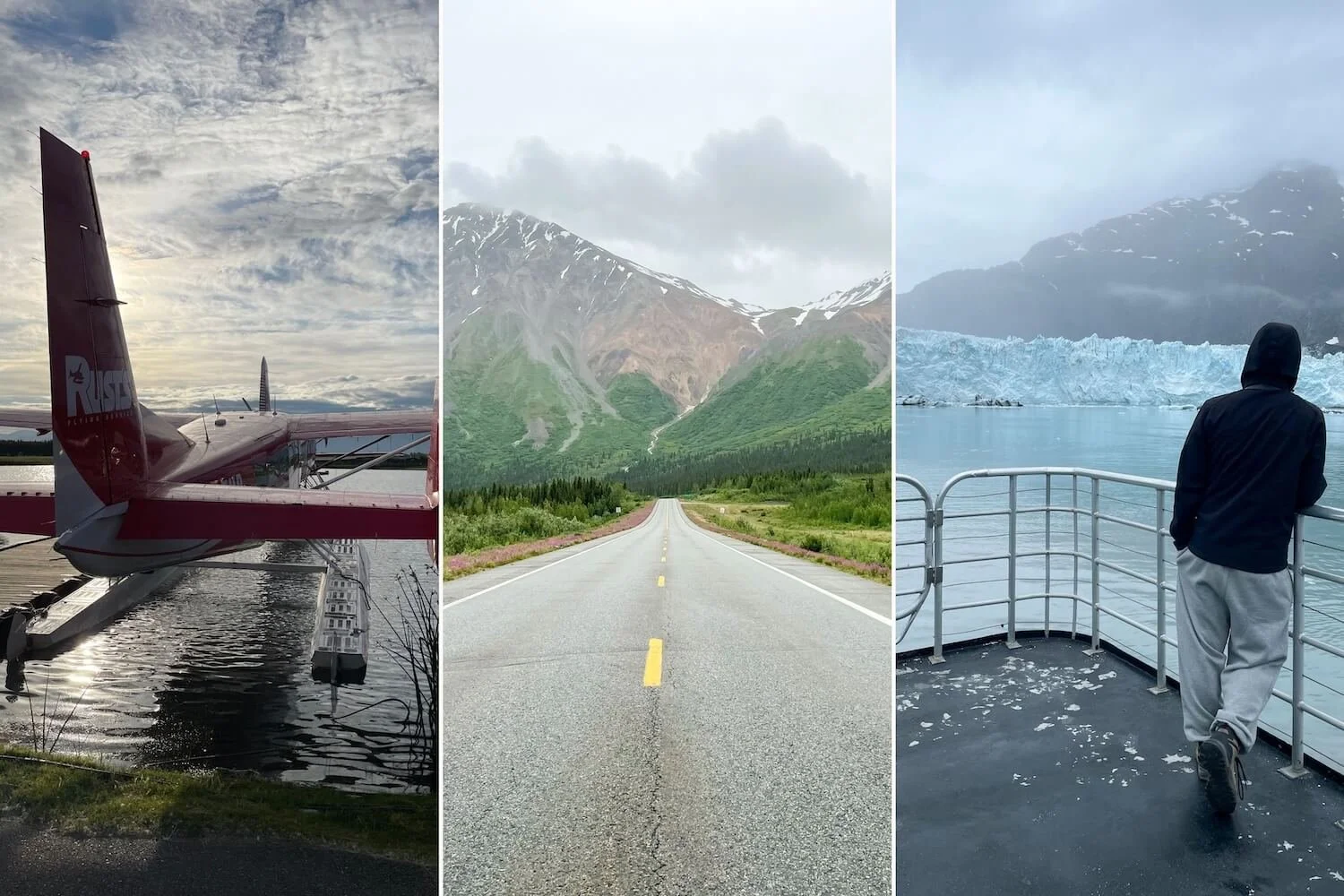
Our plan for Katmai was to fly Alaska Airlines from Anchorage to King Salmon and take a water taxi from King Salmon to Brooks Camp.
We knew Alaska weather could affect bush planes and that flightseeing trips could be canceled. What we didn't consider was the possibility that heavy winds could cancel the water taxi.
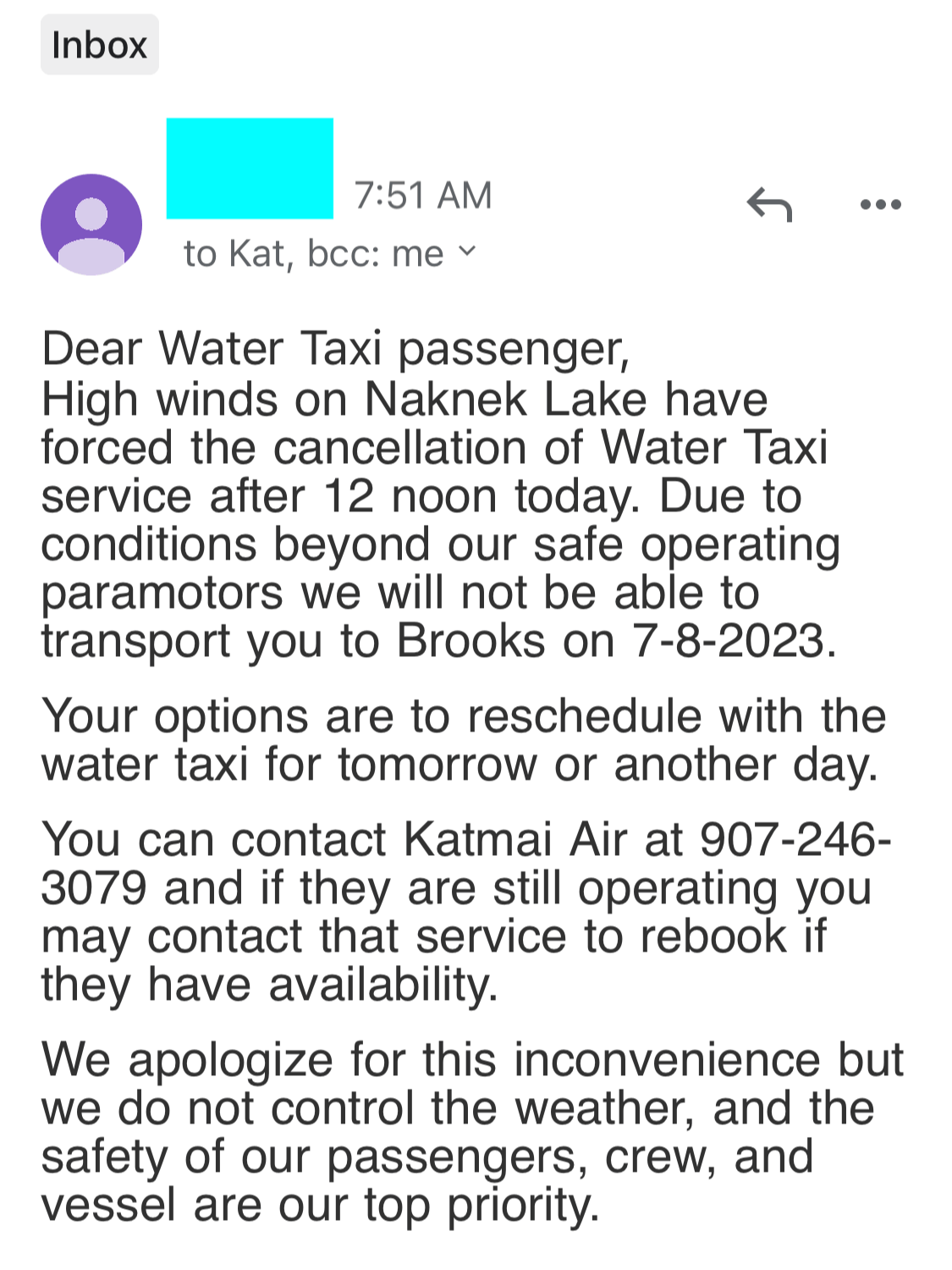
When we got through security at the Anchorage airport and checked our email, every water taxi to Brooks Camp that day had been canceled. We had a flight to King Salmon leaving shortly and a hard-to-get campsite waiting for us inside Katmai. But suddenly, we had no way to connect the two.
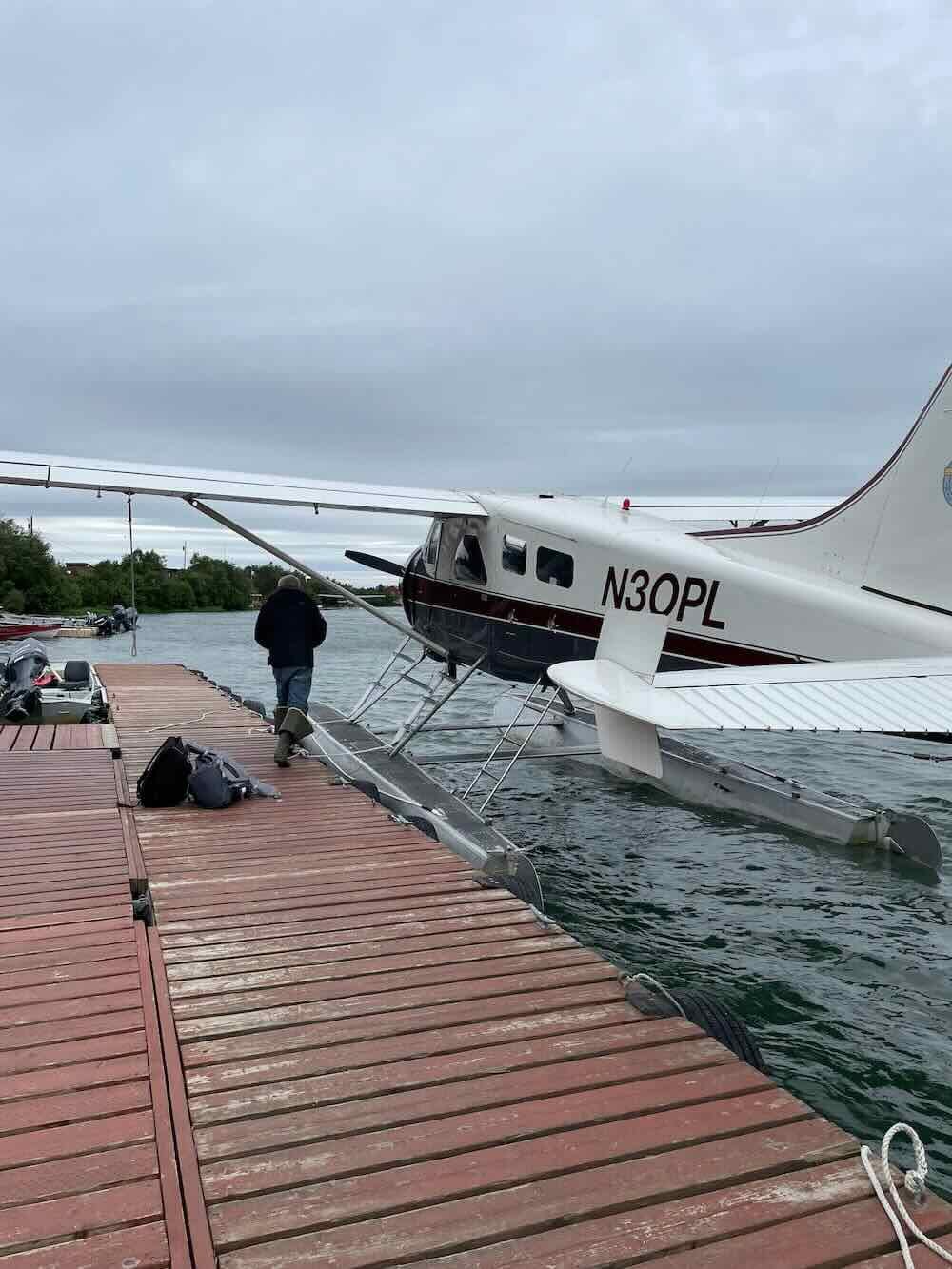
So we started Googling and calling seaplane companies from the gate. We got extraordinarily lucky. The couple sitting across the aisle from us had been booked on the same canceled water taxi and had already chartered a plane. They invited us to join them and split the cost. Then, while our Alaska Airlines flight was literally beginning to taxi, we found a last-minute cancellation for a second night at Brooks Camp that allowed us to return with them.
Great story. Terrible backup plan.
I wouldn't book two transportation options in advance. That's expensive, and cancellation policies don't necessarily make it practical anyway. I would research Plan B while booking Plan A.
For Katmai, our planning document should have included the names and phone numbers of the air taxis and charter companies flying between King Salmon and Brooks Camp. If the water taxi was canceled, we could have immediately started calling down the list instead of trying to research our options while boarding a plane.
I'd do the same anywhere in Alaska where one transportation connection determines whether you reach the next part of your trip.
Read Next: Alaska National Parks Ranked by How Hard They Are to Reach
Mistake #4: We Left Two Nights Without Lodging
We intentionally built flex days into our itinerary because several of our flights were weather-dependent. Our final Lake Clark flightseeing trip, for example, had a full flex day behind it so we could potentially reschedule if weather kept us grounded.
For those nights during the trip, we decided not to book lodging because we weren't completely sure where we'd end up. I wouldn't do that again.
When those nights arrived, we weren't enjoying the freedom of an open itinerary. We were looking at standard hotel rooms costing more than $400 per night and campgrounds without availability.
Next time, I'd still keep the flex days. I'd just put flexible lodging underneath them.
Look for a hotel with a generous cancellation policy. Reserve an inexpensive campground. Find something you can change or cancel if the weather sends you somewhere else.
You may lose a small amount of money if plans change, but I'd rather have a $30 campsite we don't use than discover at 7 p.m. that our realistic options for sleeping that night start at $400.
Read Next: What It Cost Us to Visit All 8 Alaska National Parks
Mistake #5: We Didn’t Buy Sleeping Pads
We bought some of our camping gear after arriving in Alaska because we only planned to camp a handful of nights. Instead of carrying a full camping setup on our flights to Alaska and around the state, we stopped at Walmart in Anchorage before the roadtrip portion of our trip and picked up what we needed.
We kept it basic… but a little too basic.
We had a tent and sleeping bags, but no sleeping pads. At Brooks Camp, we slept directly on the ground with the tent and sleeping bag beneath us. We were cold, but we were so excited about waking up and spending another day with the bears that we dealt with it.
Coldfoot was different. We were camping north of the Arctic Circle, temperatures dropped into the low 40s, and eventually we gave up on the tent and slept in the rental car.
If I were doing it again, I'd find a way to add sleeping pads. They don't just make the ground softer. They provide insulation between you and the cold ground, which was the part we underestimated.
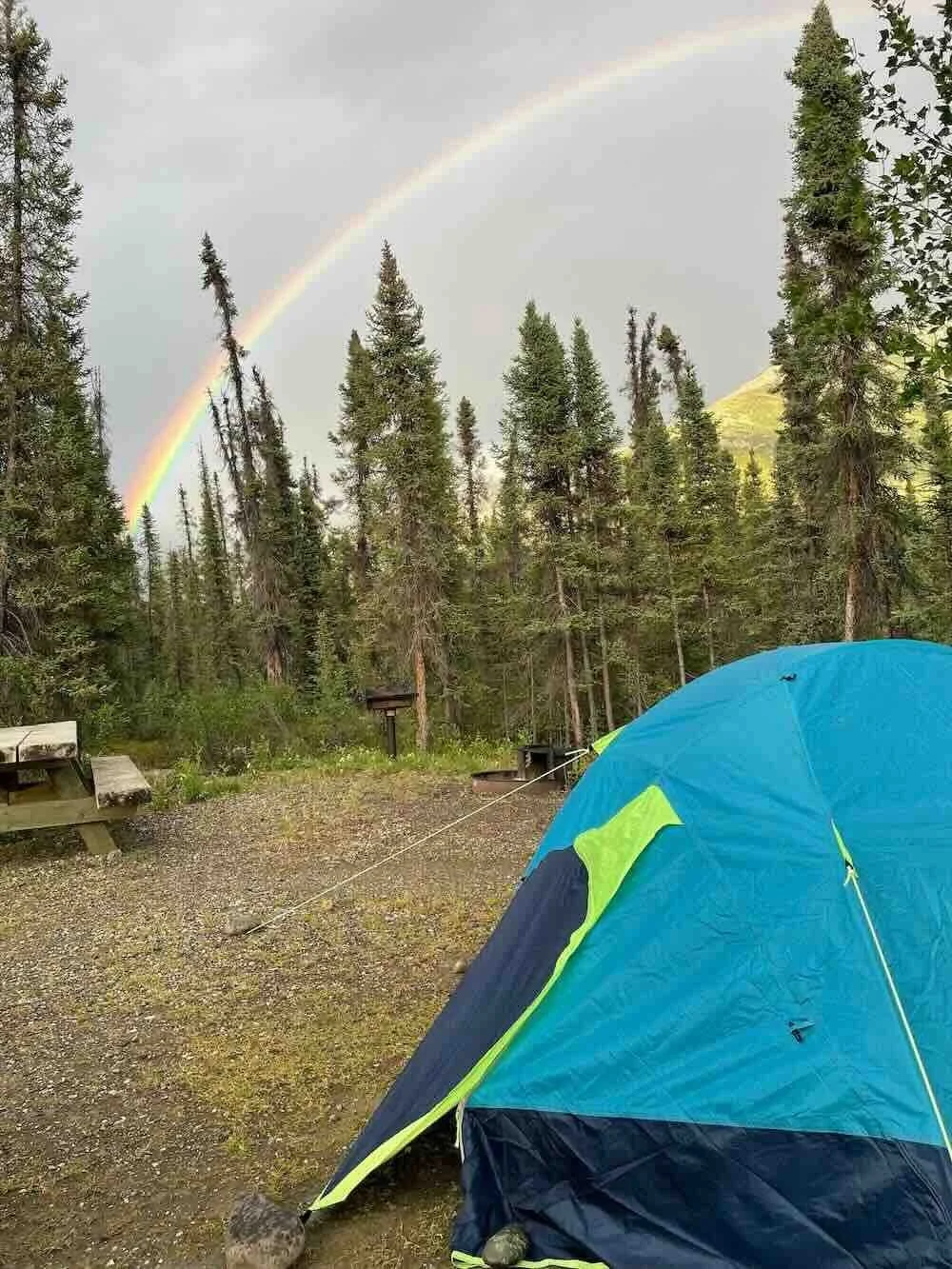
Starting in the tent…
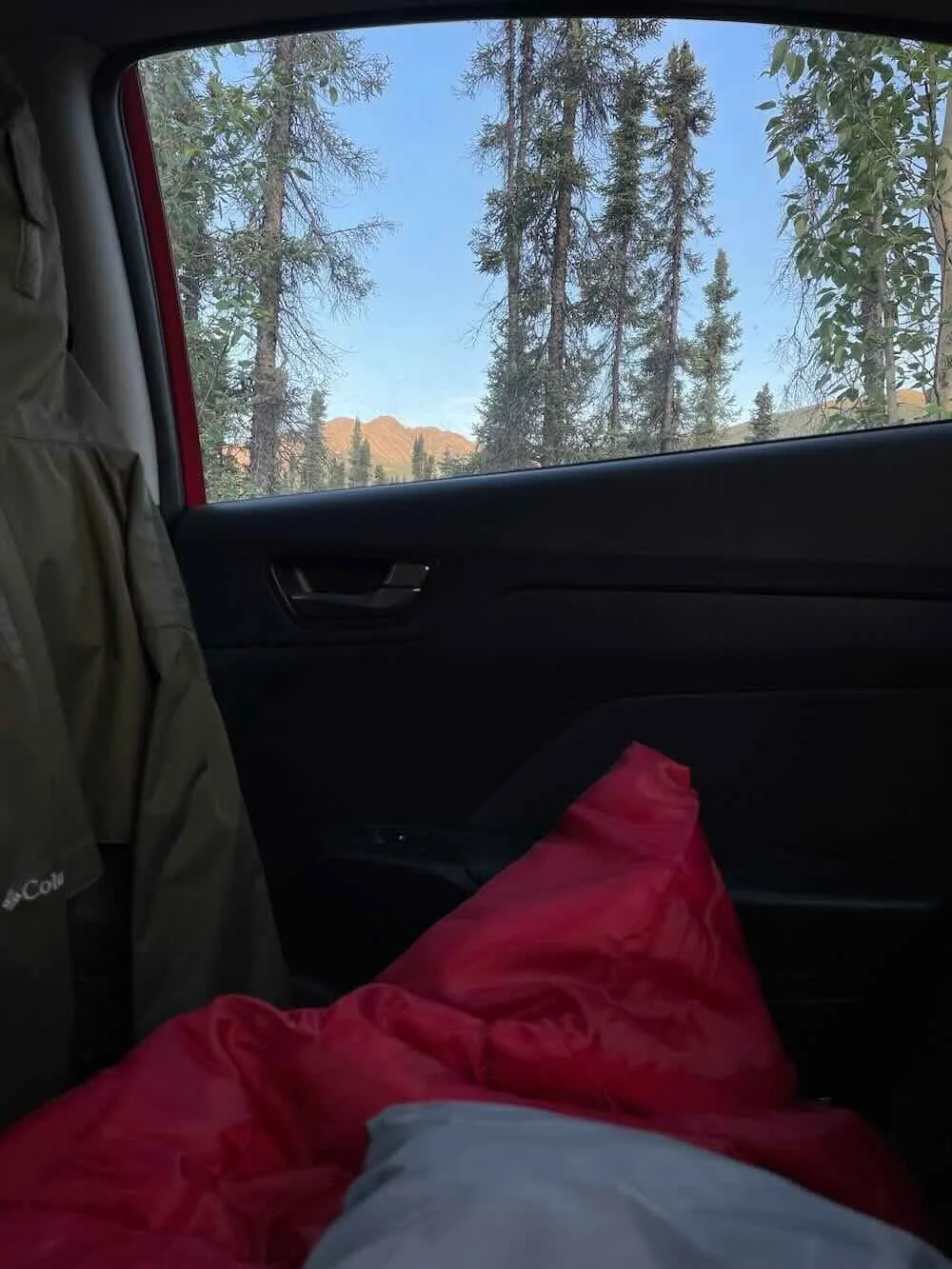
Ending in the car.
What I'm Glad We Did Do When Planning Alaska
There are also a few decisions I would make the same way again.
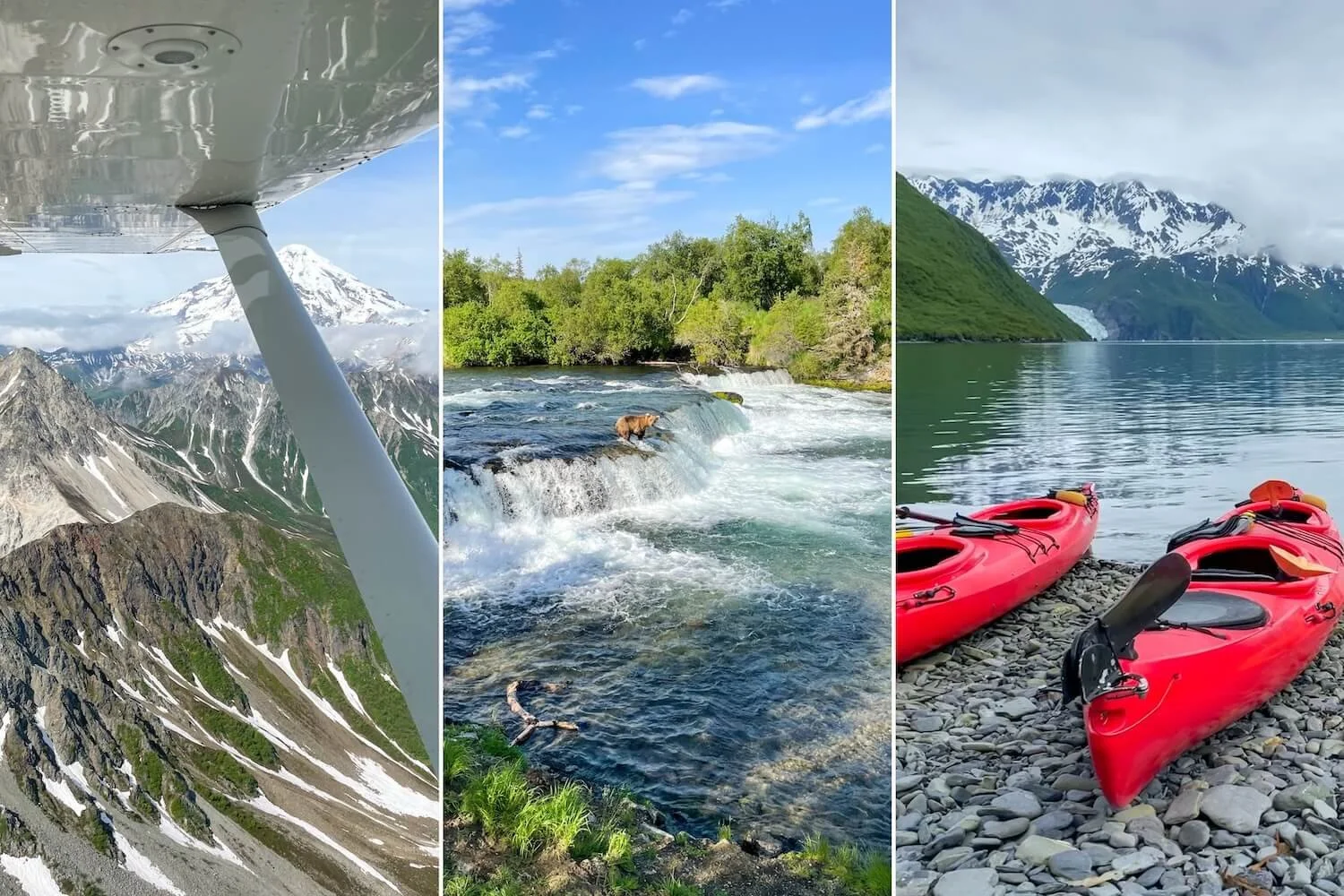
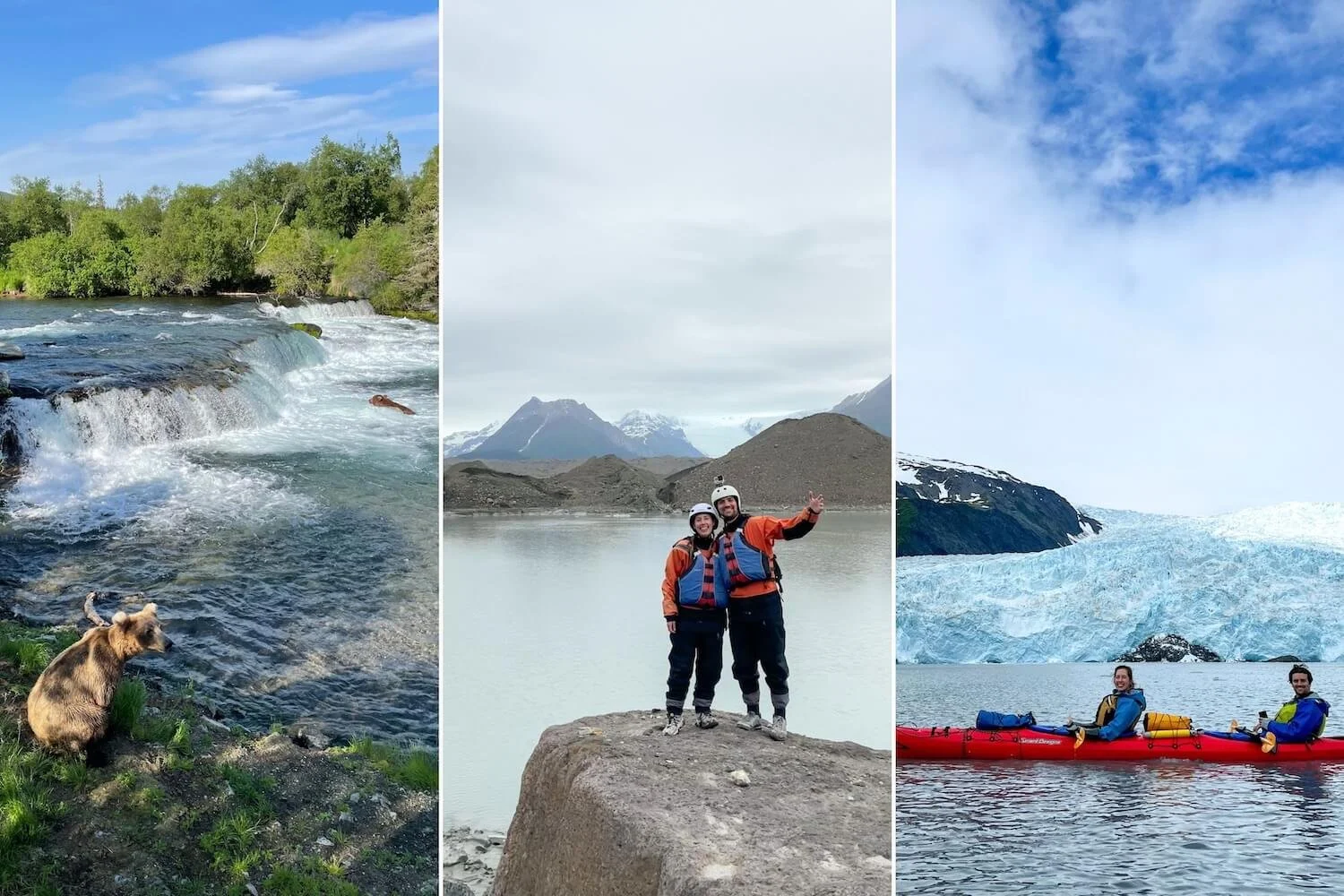
We spent money on experiences. This was a huge part of our Alaska budget, and I'm glad it was. We went dog sledding, ice climbing, sea kayaking, rafting, fishing, glacier hiking, flightseeing, and more. We wanted this trip to be full of things we'd never done before, and guides and tour operators made those experiences possible.
We stayed in the places we most wanted to experience. Glacier Bay Lodge put us inside Glacier Bay National Park. Staying in downtown Seward meant we could walk around town and down to the harbor. Camping at Brooks Camp gave us early mornings and evenings in Katmai after many of the day-trippers were gone. Those stays weren't always the cheapest option (except Brooks Camp!), but they gave us more time in the places we'd traveled to Alaska to experience, and it was the right call for us.
We brought mosquito head nets. Alaska's mosquitoes were large and in charge, especially in some of the more remote places we visited. A head net weighs almost nothing but can be used everywhere, so we highly recommend putting one in your bag.
We bought travel insurance for the first time. We'd never felt the need on our previous road trips, but Alaska was different. We had commercial flights, bush planes, remote transportation, expensive tours, and reservations that would be difficult or impossible to replace at the last minute. We didn't end up filing a claim, but I'm still glad we bought it. The peace of mind was worth it before and during the trip.
Read Next: Which Alaska National Parks Are Worth It?
Keep Planning Alaska
We've got three resources to help:
📘 Plan your trip with our Alaska National Parks Travel Guide. Get our 9-, 14-, and 21-day itineraries, plus the transportation, lodging, activities, and logistics we used to plan and visit all eight Alaska national parks.
🐻 Experience the adventure with Alaska Diaries. Come along for our full 21-day Great Alaskan Road Trip, from bush planes and bear jams to glacier kayaking, dog sledding, and everything in between.
🎒 Pack with our Alaska Packing List. See the clothing, gear, and travel essentials we packed for three weeks of Alaska travel.
Related Posts