How to Plan an Alaska Trip: What to Book First
Planning our Great Alaskan Road Trip took more than 100 hours. Sure, we were trying to visit all eight Alaska national parks in 21 days, but you don't have to be visiting all eight parks for Alaska planning to get complicated quickly.
Maybe you're spending a week between Denali and Kenai Fjords. Maybe seeing the bears at Katmai is the entire reason you're going. Or maybe you're adding Lake Clark or Glacier Bay to a longer Alaska trip.
Whatever your itinerary looks like, some parts of the trip are going to have a lot less flexibility than others. That’s why we recommend thinking about Alaska planning like a line of dominoes. Figure out which reservation has to come first, then build everything that depends on it around that.
Here’s how to build a trip to Alaska’s national parks.
First Book the Experience You Would Be Most Upset to Miss
Before you reserve a hotel in Anchorage or decide exactly how many nights to spend in Seward, identify the experience your trip is really built around.
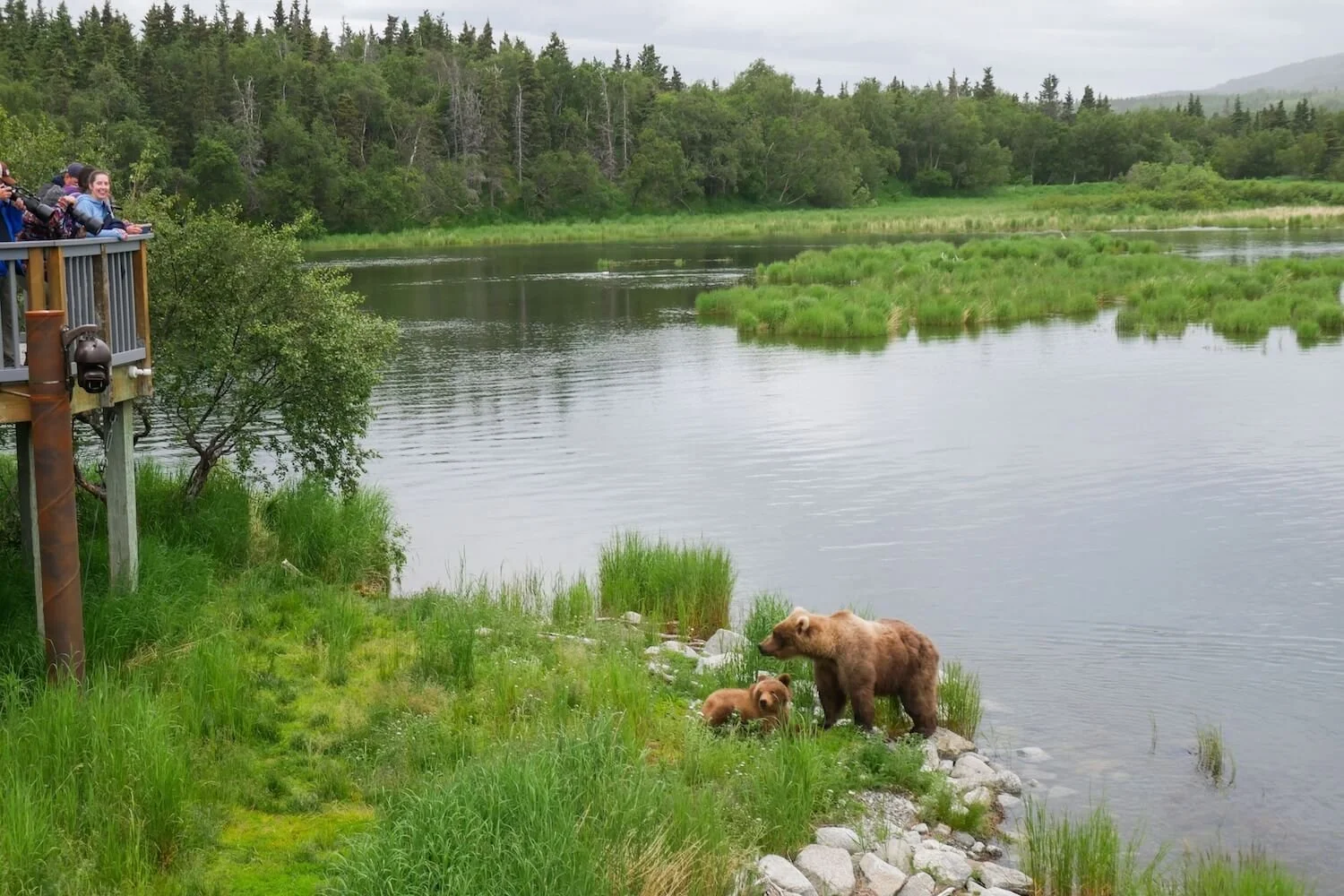
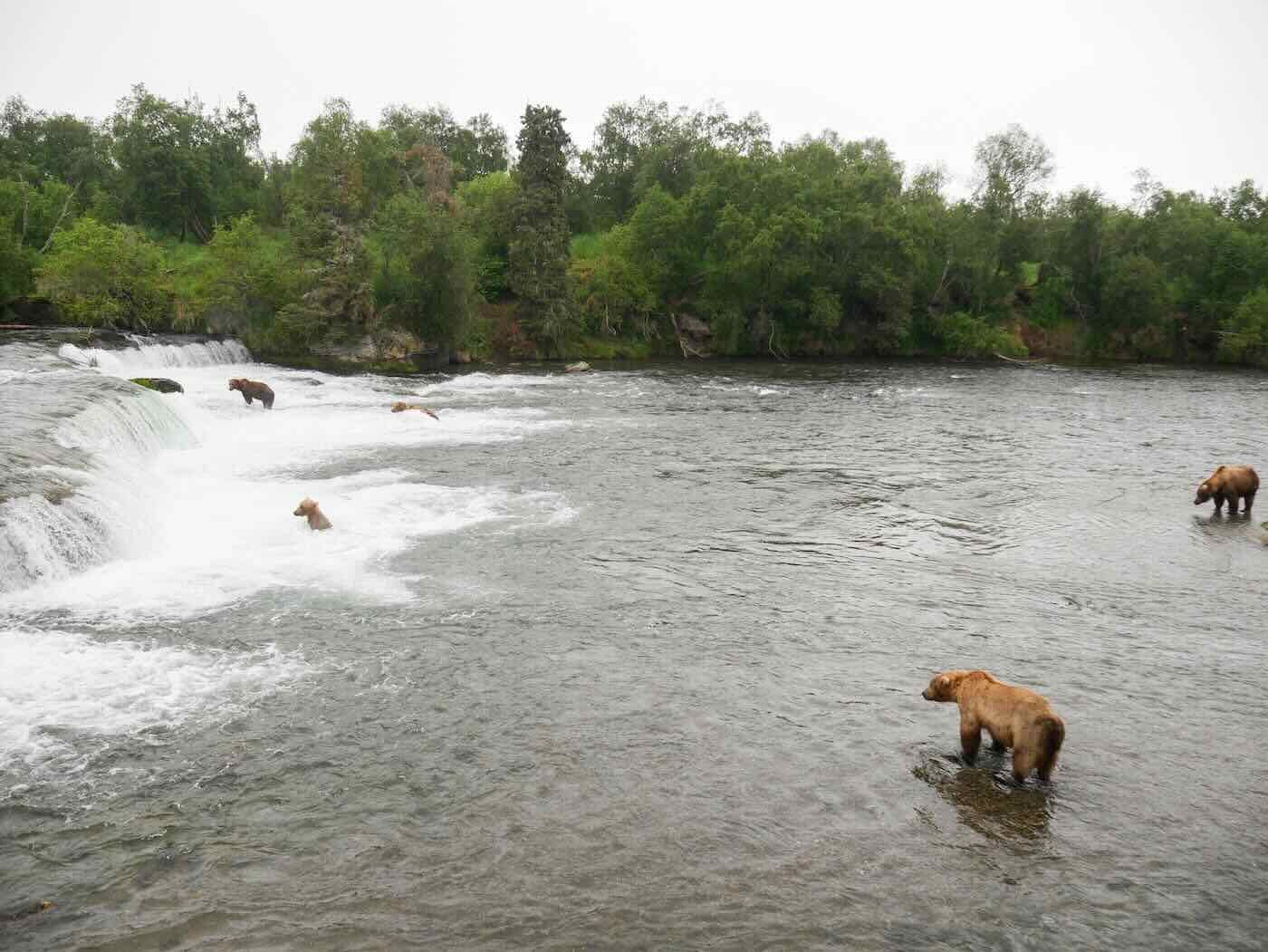
For us, one of the main experiences was spending a night in Brooks Camp in Katmai National Park.
Seeing the bears was Jonathan’s number one priority, and staying overnight would give us far more time than a day trip from Anchorage.
The problem was that Brooks Lodge reservations had already passed us by. The lodge uses a lottery roughly a year and a half ahead, and we had started planning too late. We joined the cancellation list and kept checking, but the only realistic way to stay overnight became Brooks Camp Campground.
That campground reservation became the first domino because we had very little control over the dates. Reservations opened at a specific time and typically disappeared within seconds, so whatever dates we managed to get would determine when we visited Katmai and, from there, how the rest of our Alaska itinerary fit together.
Your first domino may be different. It might be a room at Glacier Bay Lodge, a Denali bus reservation, a Kenai Fjords kayaking trip, a flight into Gates of the Arctic, or a specific bear-viewing date in Lake Clark.
Start with what matters most to you, especially if it has limited availability or no good substitute. Everything that is easier to replace can wait.
Brooks Falls, Katmai
Decide How You Will Reach the Park Before You Choose the Date
Alaska has five national parks you cannot drive into, so you also need to plan how you will physically reach the park, where that transportation begins, when it operates, how long it takes, and what happens after you arrive.
For example, getting to King Salmon is not the same as getting to Brooks Camp, flying over Lake Clark is not the same as landing inside Lake Clark, and driving to Coldfoot is not the same as entering Gates of the Arctic.
We spent a large amount of time comparing ways to reach Gates of the Arctic and Kobuk Valley. We could fly from Coldfoot, make a separate trip through Kotzebue, or look at options through Bettles. One route cost less but required another commercial flight, another place to stay, more time in transit, and additional weather flexibility. Another cost more but gave us one operator and the possibility of landing in both parks on the same day.
Before reserving any remote Alaska experience, I would ask: Where does the trip actually begin? Where will we land? Will we physically enter the national park? How much time will we spend on the ground? What transportation do we still need before or after the tour?
Those answers may change the date you choose, the town you stay in, and whether the experience is worth the price.
Price the Whole Transportation Chain, Not Just the Tour
The least expensive individual reservation is not always the least expensive way to plan the trip.
Our cheaper option for Gates of the Arctic and Kobuk Valley would have saved money on the flightseeing portion, but it also required another commercial flight, more lodging, and more days set aside in case weather interfered. Our notes estimated that visiting the parks through separate operators could save roughly $500 to $900, but it would add considerably more moving around.
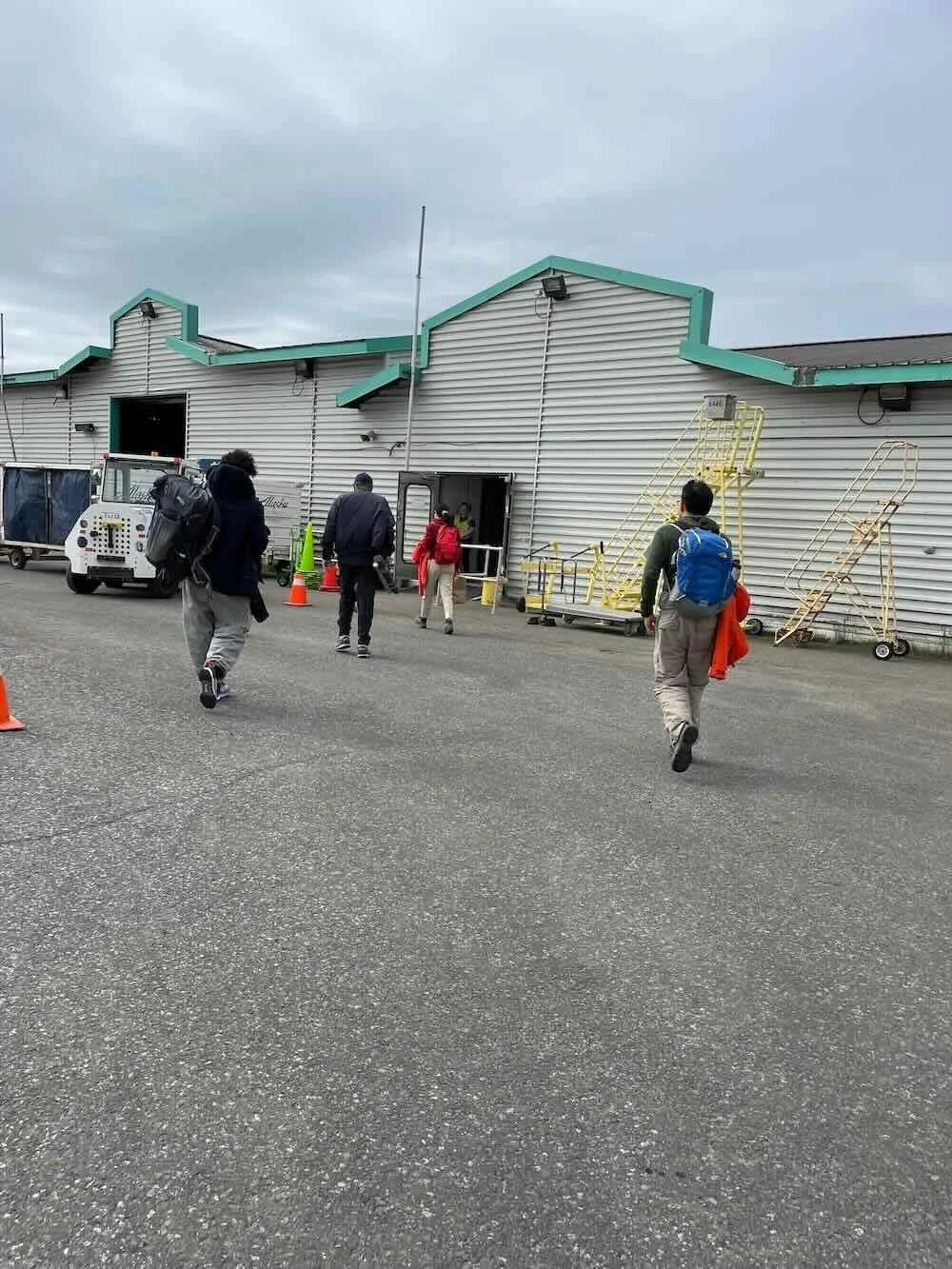
Katmai presented a different version of the same choice. A direct day trip from Anchorage to Brooks Camp was the simplest option, but it was also the most expensive and gave us the least amount of time in the park. Flying commercially to King Salmon and continuing by water taxi required more planning, but it was less expensive and allowed us to stay overnight.
When comparing options, add up the full chain: The tour or flight + Commercial airfare + Extra hotel nights + Rental car days + Parking. Then compare what each option gives you. Paying more may buy more time in the park, fewer opportunities for delays, or an easier route. Paying less may be the better choice if you have plenty of time and do not mind another travel day.
The important thing is knowing what you are trading.
Arriving at the King Salmon Airport
Decide How Much Financial Risk You’re Comfortable Carrying
Alaska was the first trip we ever purchased travel insurance for.
We had commercial flights, bush planes, remote lodging, specialty tours, a rental car, and other reservations stacked together during a relatively short summer season. If weather or a cancellation disrupted one expensive reservation, there was a chance it could affect another expensive reservation after it.
We also had vendors change or cancel pieces of the trip before we ever left home, so we knew rebooking wasn't hypothetical. And once we were in Alaska, weather became another variable we couldn't control.
Travel insurance made sense for the amount of money we had committed and the kind of trip we were taking. I wouldn't say every Alaska traveler automatically needs it. If you're driving between Anchorage, Seward, and Denali with flexible hotels and refundable reservations, your financial exposure may look different from ours.
But if your trip includes several nonrefundable reservations, remote flights, expensive excursions, or transportation that depends heavily on weather, I would price travel insurance while you're still booking the trip and decide whether the amount you could lose or have to rebook is an amount you're comfortable carrying yourself.
Plan the Night Before and the Night After Every Remote Experience
For each remote park, I would plan three pieces together: The night before + the experience itself + the night after.
When our Brooks Camp date moved, Katmai did not simply slide into another day. It changed where we were coming from, where we would stay, and how the surrounding parks fit together. The only campground availability we could make work fell later in the trip, when we were closer to Fairbanks than Anchorage. That one reservation changed our flights and the order of the route around it.
The same principles apply elsewhere in Alaska. If you have an early Kenai Fjords cruise, stay in Seward the night before. If you are flying into Lake Clark, be close enough to the departure point (usually Anchorage) that morning weather and traffic are not the first problems of the day. If your Denali experience ends late, do not assume you will be eager to begin a long drive afterward.
Treat those three pieces as one reservation.
Put Flex Days Where Weather Can Actually Change Your Plans
If your Alaska trip includes a bush plane, flightseeing tour, boat trip, or another experience that depends heavily on weather, consider building a flex day into your itinerary. A flex day is simply extra time you can use to try again if weather cancels something you really don't want to miss.
Where you put that day matters. If your Lake Clark flight is scheduled for Tuesday but your flex day isn't until Friday, it won't help much if you're already leaving Anchorage on Wednesday. Put the extra time immediately after the weather-dependent experience so you can use it for a second attempt before moving on.
We placed one flex day after our Gates of the Arctic and Kobuk Valley flight and another after Lake Clark. Those were the parts of the trip most likely to change because of weather. If either flight could not operate on the original date, we had another opportunity before leaving the area.
We also gave those days a useful Plan A. After Coldfoot, we could continue to Chena Hot Springs for after camping north of the Arctic Circle. After Lake Clark, we could spend another day in Anchorage or move our flight home.
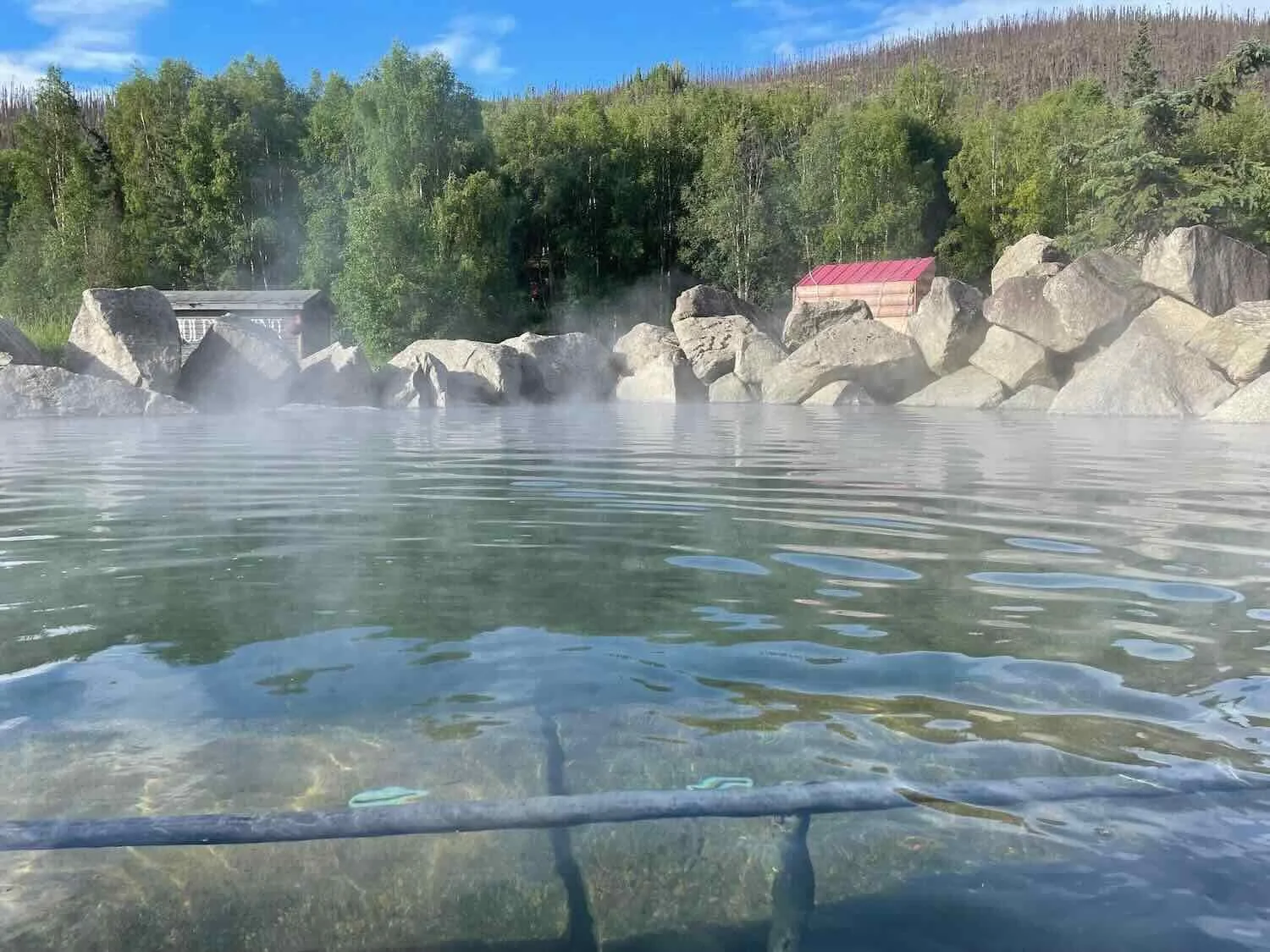
Both park flights operated on schedule, so we used the first day to recover at Chena and discovered that flying home one day earlier would save us nearly $900.
Soaking at Chena Hot Springs
Use Anchorage as a Tool, Not Just a Stop
Our original idea of Anchorage was that it would be where we flew into, picked up the rental car, and eventually flew home from. Instead, Anchorage appeared throughout the trip as a regular touchpoint.
We flew there after Glacier Bay, passed through while driving between Seward and Wrangell-St. Elias, picked up camping gear there, returned before Katmai, came back before Denali, and used it again for Lake Clark. It became the place where we parked the rental car, bought supplies, repacked, ate familiar food, and prepared for the next part of the trip.
It was also often the most practical flight hub. Routes that looked like they should work from Fairbanks or somewhere closer on the map frequently went through Anchorage anyway. Our extensive planning eventually reached the conclusion that flying from Anchorage seemed easiest for almost everything.
All that to say, I would not avoid Anchorage just because it feels like backtracking.
Confirm What the Tour Actually Includes
Before you book any Alaska tour, confirm exactly where it takes you and what you'll actually do.
A Lake Clark bear-viewing trip may take you to one area of the park but not another. A flightseeing tour may fly over a national park without landing. A trip associated with Gates of the Arctic may give you an incredible aerial view but little time on the ground.
We specifically confirmed that our Lake Clark trip would land in Chinitna Bay inside the national park because setting foot in the park mattered to us. We also compared Gates of the Arctic and Kobuk Valley operators based on where they planned to land, how long we would spend on the ground, and whether we could visit both parks in one day.
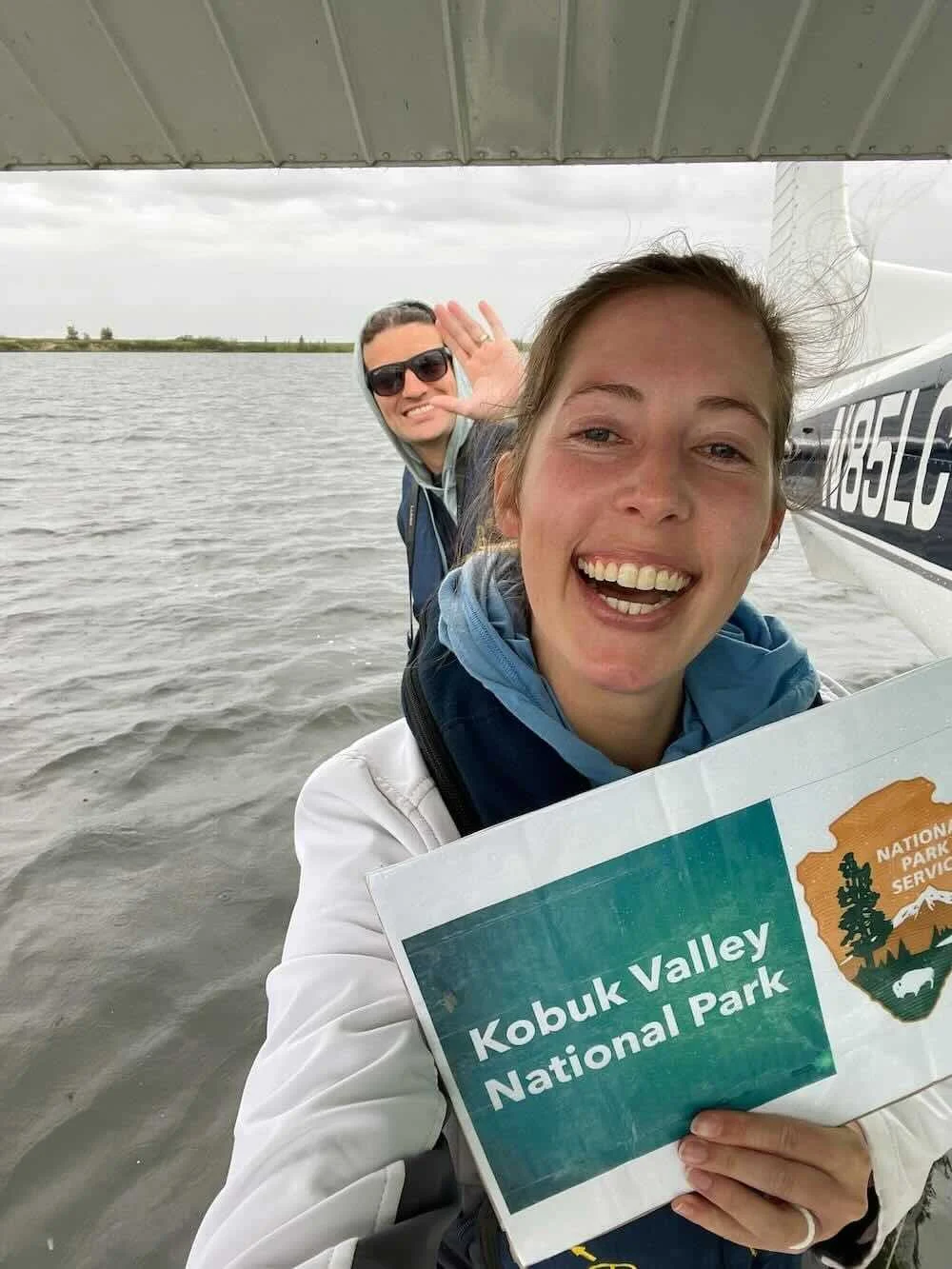
Our planned Kobuk Valley landing was the sand dunes. Weather changed that. A storm was moving through the park, and our pilot warned us that we might not reach Kobuk Valley at all. We decided to try, entered the park, and landed on an unnamed lake instead.
It still counted for the goal we had set, but it was not the experience we originally planned. Before booking, ask the operator to explain the likely itinerary in plain language.
Where might you land? How much time will you spend there? What are the common substitutes if weather blocks the first choice? What part of the experience is guaranteed, and what part is only the goal?
Build Some Downtime Into a Longer Trip
If you're planning a longer Alaska trip with multiple national parks, remote destinations, and transportation changes, build in somewhere to slow down.
Our 21-day itinerary included long drives, early flights, hiking, kayaking, dog sledding, ice climbing, rafting, camping, and a lot of packing and repacking. Chena Hot Springs became a much-needed reset after our time in Coldfoot.
You don't necessarily need a dedicated rest day. It could be two nights in the same hotel, a free evening after a long drive, or a slower morning between major activities. The longer and more complicated your trip gets, the more valuable a little downtime becomes.
Plan the Boring Things Before They Become Problems
Where will you buy bear spray? Where can you do laundry? Which days require packed lunches? Does the lodging have a kitchen? Where will you store luggage after checkout? What needs to be downloaded before you lose service?
These questions are much less exciting than choosing a glacier hike, but they matter more in Alaska than they do on many trips.
We knew we would spend time without reliable cell service, so we downloaded offline maps and printed our confirmations and itinerary. We bought camping equipment and mosquito supplies in Anchorage rather than carrying everything through our flights to Glacier Bay.
We also planned laundry stops because we packed light. When the laundromat we'd planned to use in Seward was unexpectedly closed, we had to find another option and eventually found a hotel that let us use its coin-operated machines. We planned another laundry stop at Chena Hot Springs later in the trip. It sounds like a boring thing to put on an Alaska itinerary, but when you're packing light for three weeks, knowing where you'll have clean clothes is a part of the planning.

All This Planning Should Buy You a Better Trip
More than 100 hours of planning sounds absolutely absurd until I think about what those hours actually bought us. They bought us enough time in Glacier Bay to kayak beneath glaciers and drink hot chocolate while watching them calve.
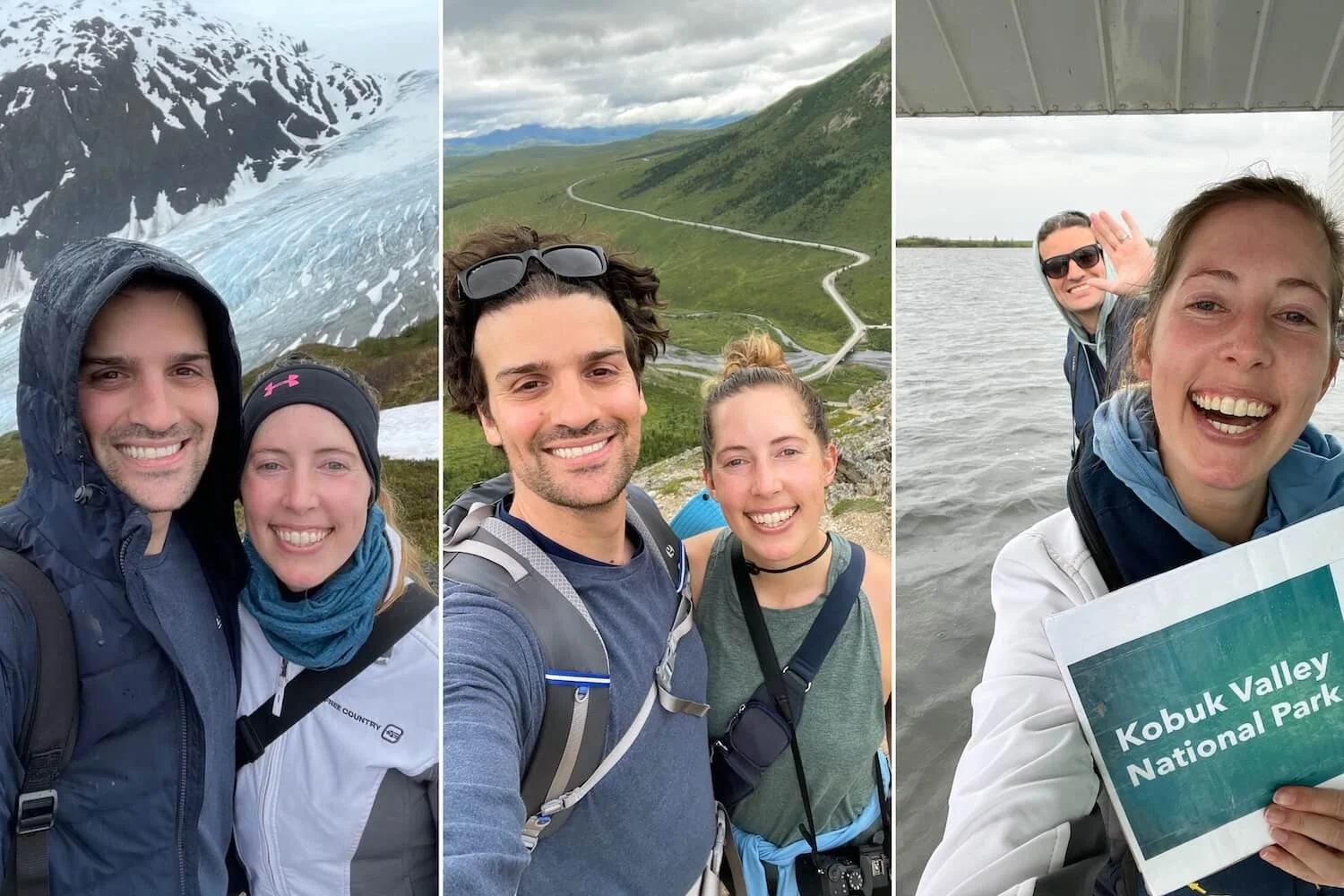
They got us onto a bush plane north of the Arctic Circle, into Gates of the Arctic and Kobuk Valley, and eventually alone beside Long Lake after our pilot dropped us off and flew away.
They made room for dog sledding on a glacier, ice climbing in Kenai Fjords, rafting near McCarthy, hiking Root Glacier, driving the Dalton Highway, and a lot of experiences we hadn't even known were possible when we first started researching Alaska.
And they gave us enough flexibility to keep going when the plan inevitably changed.
You don’t need to build the best Alaska itinerary, but I do recommend deciding ahead of time which pieces need to be protected so that when you finally get there, you can have the trip you came all that way to take.
Your Alaska Planning Order
If I were you plan one or more Alaska national parks, I would use this process:
First, choose the experiences you care about most. Not every possible stop. The ones the trip is truly for.
Second, check availability and transportation for those experiences. Confirm dates, departure points, where the trip enters the park, and how weather changes the plan.
Third, plan the night before and after each major reservation. Make sure the surrounding travel is realistic.
Fourth, compare the total cost of each route. Include flights, lodging, rental cars, extra days, and the amount of time you will actually spend in the park.
Fifth, place flex time beside the weather-dependent pieces. Give the most important experiences another chance.
Finally, fill in everything else. Hotels with more availability, shorter hikes, restaurants, scenic stops, laundry, groceries, and all the other parts that can move.
Keep Planning Your Alaska Trip
If you're planning your own Alaska adventure, we've put together a few resources to help you spend less time figuring everything out from scratch.
Use our Alaska National Parks Travel Guide to help build your route, figure out how to reach the parks, and decide what to do once you get there, with 9-, 14-, and 21-day itineraries you can use as a starting point.
Read Alaska Diaries to experience the trip before you take it. Come along for the bush planes, bears, glaciers, cancellations, mistakes, and adventures so Alaska can feel a little more familiar before you arrive, or simply because you want a fun Alaska story.
And use our Alaska Packing List to see the clothing, gear, and travel essentials we'd pack again, without sorting through hundreds of options yourself.
Related Posts